

When can children ride a bike
Children can ride a bike when they can fit it correctly, control it confidently and follow simple safety directions—not when they reach one fixed age.
What readiness looks like
Age is only a starting point. Before choosing a bicycle, check whether the child can listen and respond, look ahead while moving, steer intentionally and stop when asked. They should also show enough confidence to practise without freezing, rushing or repeatedly losing control.
A child who is not ready today may simply need more time or practice in a quiet, open area. Do not move to a larger bicycle to encourage progress. A bike that is too large can make starting, stopping and steering harder.
Measure before comparing bikes
Measure the child’s standing height without shoes. Then measure inseam from the floor to the crotch while the child stands upright. Compare those measurements with a prospective bike, but always have the child try the bicycle when possible.
During the fit check, confirm that the child can stand over the bike with usable clearance, reach the handlebars without stretching, turn the bars without losing balance and operate the brakes comfortably. Their feet must provide the ground contact appropriate to the bicycle and their present skill. If reach, stand-over or brake control is doubtful, do not rely on an age label or anticipated growth.
Use wheel size as a starting point
The XBikes ranges below narrow the search; they do not replace an individual fit check. When age and measured height point toward different sizes, prioritize measured height, inseam, reach, brake control and current confidence.
| Wheel size | Starting age | Rider height |
|---|---|---|
| 12 Inch | 3–4 | 34–40 in / 86–102 cm |
| 14 Inch | 3–6 | 37–45 in / 94–114 cm |
| 16 Inch | 4–7 | 40–48 in / 102–122 cm |
| 18 Inch | 5–9 | 43–52 in / 109–132 cm |
| 20 Inch | 7–12 | 48–60 in / 122–152 cm |
| 24 Inch | 10–14 | 54–64 in / 137–163 cm |
| 26 Inch | Youth and adults | Over 60 in / 153 cm |
Overlapping ranges are normal. They mean two wheel sizes may deserve comparison, not that either one will automatically fit. Have the child try each plausible size and reject any option that compromises control.
When training-wheel models are relevant
The three supplied catalog options are training-wheel bikes offered in 12, 14, 16 and 20 Inch labels. They are useful comparison points when the child’s measurements place them in one of those wheel-size ranges and the family specifically wants a training-wheel bicycle.
 Girls' Training Wheel Bike by XJD, 12–20 Inch Wheels – Blue
A training-wheel bike offered in Blue with 12, 14, 16 and 20 Inch size labels; relevant when the rider’s measurements and hands-on fit check support one of those sizes.
 XJD Girls' Bike with Training Wheels, 12/14/16/20 Inch – Purple
A Purple training-wheel option supplied in 12, 14, 16 and 20 Inch labels. Compare the appropriate size through stand-over, reach, brake control and the child’s current confidence.
 XJD Kids Bike for Girls – Pink, 12/14/16/20 Inch with Training Wheels
A Pink kids bike with training wheels, available in the supplied 12, 14, 16 and 20 Inch labels. It is relevant only when the chosen size passes an individual fit check.
Girls' Training Wheel Bike by XJD, 12–20 Inch Wheels – Blue, XJD Girls' Bike with Training Wheels, 12/14/16/20 Inch – Purple and XJD Kids Bike for Girls – Pink, 12/14/16/20 Inch with Training Wheels share the same supplied size choices: 12, 14, 16 and 20 Inch. Based on the available facts, the meaningful differences here are their exact catalog titles and stated colors; fit must be checked on the selected size.
These products are not direct options for a rider who needs an 18, 24 or 26 Inch bicycle. Their listed sizes may help with comparison, but another wheel size is not an equivalent substitute. They are also not automatically relevant merely because the child falls within an age band.
Make the first rides controlled
- Choose a quiet, level riding area away from traffic, slopes and obstacles.
- Fit a bicycle helmet so it sits level and secure, with straps adjusted according to the helmet manufacturer’s instructions.
- Let the child practise mounting, looking ahead, steering and stopping before adding distance or speed.
- Stay close enough to intervene, while allowing the child to demonstrate independent control.
- End the session if fatigue, fear or repeated loss of control appears.
Training wheels do not remove the need for supervision, correct fit or braking practice. For assembly, adjustments, maintenance, load limits, compatibility and torque, follow the exact product manual or use a qualified bicycle mechanic.
Decide whether your child can ride now
Move forward only when four answers are clear: the child falls within a plausible height range, the bicycle passes the hands-on fit check, the child can steer and stop reliably, and they can follow riding-area rules. If any answer is no, measure again, compare another size or pause and practise the missing skill. The right time to ride is when fit and control meet—not simply when a birthday arrives.
Bikes for your next adventure
-
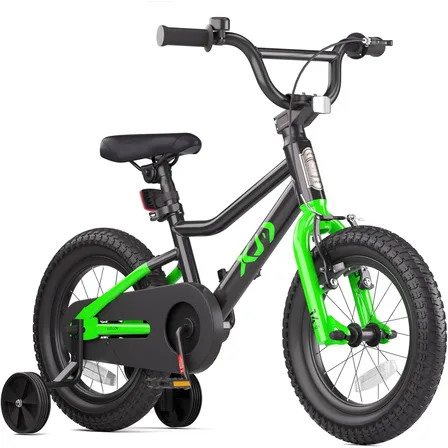
Black XJD Kids' BMX Bicycle with Training Wheels
The XJD Kids' BMX Bicycle with Training Wheels is built for children roughly 3 t…$99.99
$119.99 -
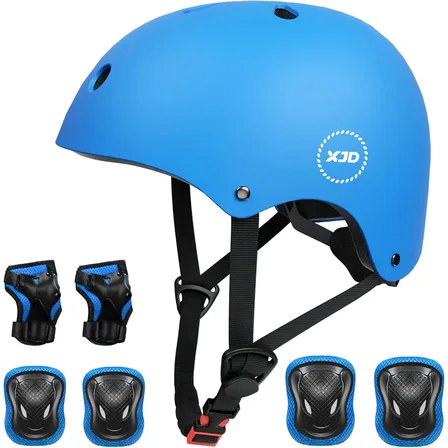
Blue XJD Helmet & Protective Gear Set for Kids, Sizes S/M
The Blue XJD Helmet & Protective Gear Set is made for kids roughly 3 to 8 years …$23.79
-
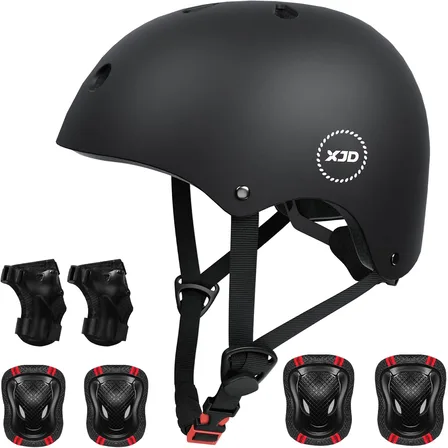
XJD Kids Helmet & Pad Set – Black, S/M/L
This XJD Kids Helmet & Pad Set in Black is designed for kids aged 3 to 8, pairin…$23.79
$27.99