

When can kid ride bike
A child can ride a bike when they can balance, steer, stop on command and control a correctly fitted bike. Measure height and inseam, then check reach and confidence before choosing.
Readiness comes before a birthday
Age gives parents a rough starting point, but it cannot show whether a child is ready today. A child should be able to follow simple directions, look ahead while moving, steer around an object and stop when asked. They also need enough confidence to practice without freezing, rushing or repeatedly losing control.
Start in a flat, open area away from traffic. Ask the child to walk the bike, turn it and operate its brakes before riding. If those actions are confusing or physically difficult, pause and try again later or arrange help from an experienced instructor.
Measure the child and compare wheel sizes
Measure the child’s standing height without shoes. Also measure inseam from the floor to the crotch, using a book held level between the legs to represent the saddle area. Height identifies a likely wheel-size range; inseam helps with the essential stand-over and starting checks.
| Wheel size | Age starting point | Rider height |
|---|---|---|
| 12 Inch | 3–4 | 34–40 in / 86–102 cm |
| 14 Inch | 3–6 | 37–45 in / 94–114 cm |
| 16 Inch | 4–7 | 40–48 in / 102–122 cm |
| 18 Inch | 5–9 | 43–52 in / 109–132 cm |
| 20 Inch | 7–12 | 48–60 in / 122–152 cm |
| 24 Inch | 10–14 | 54–64 in / 137–163 cm |
| 26 Inch | Youth and adults | Over 60 in / 153 cm |
These ranges are starting points, not proof of fit. When ranges overlap, compare both candidate sizes in person. Do not move up simply because a child is near a birthday or because a larger bike leaves room to grow.
Perform the fit and control check
Have the child try the actual bicycle. While standing over it, they need usable clearance rather than contact with the frame. Seated in a normal riding position, they should reach the handlebar without stretching, locking their arms or leaning awkwardly.
Next, confirm that the child can:
- Mount and dismount without being caught by the bicycle.
- Hold the handlebar and turn in both directions while staying composed.
- Reach and operate the available brake controls reliably.
- Start, coast and stop while remaining in control.
- Place their feet as required for a stable start and stop.
If reach, brake use or stand-over does not work, the bike is not an appropriate fit even when the age and height table appears to match. Do not buy an oversized bicycle for future growth.
When training-wheel options are relevant
Training wheels may be relevant when a child fits the bicycle but is still developing confidence with balance and independent starts. The supplied catalog option helps parents compare four listed wheel sizes within one training-wheel product: 12, 14, 16 and 20 inches.
The XJD Girls' Bike with Training Wheels, 12/14/16/20 Inch – Purple is listed in the Training Wheel Bikes category with 12 Inch, 14 Inch, 16 Inch and 20 Inch SKU labels. Those choices can be compared with the child’s measured height and then checked individually for stand-over, reach and brake control.
These particular catalog options are useful because they cover several early and intermediate XBikes size starting points while keeping the comparison within a training-wheel design. They do not remove the need to try the selected size.

This product is not relevant when the measured child needs an 18 Inch, 24 Inch or 26 Inch starting point, because those sizes are not among its supplied SKU labels. Its listed sizes are not substitutes for a missing size. It may also be unsuitable if the child cannot comfortably control the actual bike or no longer needs a training-wheel model.
Prepare for the first ride
Use a bicycle helmet that fits properly, sits level and has its straps adjusted according to the helmet manufacturer’s instructions. Choose a traffic-free practice space with a predictable surface, supervise closely and keep the first sessions short enough that fatigue does not undermine control.
Before use, follow the exact bicycle manual for assembly, adjustments, maintenance, compatibility and load limits. If the instructions are missing, unclear or beyond your experience, use a qualified bicycle mechanic rather than guessing at a procedure or setting.
Make the decision today
Your child can begin riding when readiness and fit agree: they can follow directions, balance or practice balance calmly, steer, stop, stand over the bike, reach the controls and operate the brakes. Measure height and inseam now, shortlist the matching wheel sizes, and have the child try each candidate. If any control check fails, choose a better-fitting option or wait before riding.
Bikes for your next adventure
-

Blue XJD Girls Bike with Training Wheels – 12/14/16 Inch
If you're shopping for a first pedal bike for a daughter roughly 3 to 8 years ol…$149
$169 -

XJD Kids Bike for Girls – Pink, 12/14/16/20 Inch with Training Wheels
The XJD Kids Bike for Girls in Pink is a training-wheel bike built to carry your…$139
$159 -
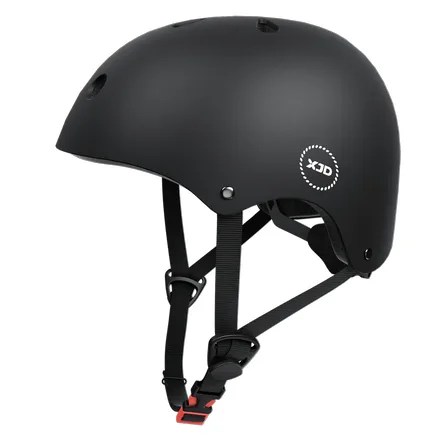
7-in-1 Kids Helmet & Protective Gear Set from XJD – Black or Blue
If you're outfitting one kid (or a couple of siblings) for biking, scootering, o…$59.99