

When can kid start riding.bike
A child can usually start riding a bike when they fit a 12 Inch bicycle and can control it confidently. XBikes places that starting point at ages 3–4 and 34–40 in (86–102 cm), but measured fit and readiness matter more than age.
Check readiness before choosing a wheel size
A birthday alone cannot show that a child is ready. Look for a child who can follow simple safety directions, stay attentive, steer deliberately and stop when asked. Hesitation is a reason to slow down, not to buy a larger bicycle.
Measure the child’s standing height and inseam without shoes. Height gives you a wheel-size starting point; inseam helps you check clearance when the actual bicycle is present. Then have the child try the bike rather than relying only on a chart or catalog label.
Use height to narrow the size
| Wheel size | XBikes age starting point | Rider height |
|---|---|---|
| 12 Inch | Ages 3–4 | 34–40 in / 86–102 cm |
| 14 Inch | Ages 3–6 | 37–45 in / 94–114 cm |
| 16 Inch | Ages 4–7 | 40–48 in / 102–122 cm |
| 18 Inch | Ages 5–9 | 43–52 in / 109–132 cm |
| 20 Inch | Ages 7–12 | 48–60 in / 122–152 cm |
| 24 Inch | Ages 10–14 | 54–64 in / 137–163 cm |
| 26 Inch | Youth and adults | Over 60 in / 153 cm |
Overlapping ranges are comparison points, not permission to choose the largest option. Begin with measured height, then confirm inseam clearance, reach, brake control and confidence on the exact bicycle. Do not buy an oversized bike solely to leave room for growth.
Perform the fit check on the actual bike
- Check stand-over clearance: With the child straddling the bicycle, confirm that the frame does not prevent a comfortable, controlled stance.
- Check the riding position: The child should reach the handlebar without an awkward stretch or losing a stable posture.
- Check steering: Ask the child to turn the handlebar both ways while remaining balanced and in control.
- Check stopping: Confirm that the child can reach and operate the bike’s braking controls reliably. Brake type is not supplied here, so inspect the exact bicycle.
- Check confidence: Let the child start, ride and stop in a traffic-free practice area under close adult supervision.
If any check fails, do not assume practice will correct a poor fit. Compare another size or setup. Follow the exact product manual for assembly, adjustments, compatibility, maintenance, load limits and torque; use a qualified bicycle mechanic when needed.
Where the supplied training-wheel bikes fit
The two catalog options help because they provide several wheel sizes around the usual starting stage and both are categorized as Training Wheel Bikes. They are relevant only after the child’s measurements and hands-on control point to one of their listed sizes.
 XJD Kids Bike for Girls – Pink, 12/14/16/20 Inch with Training Wheels
Offers listed 12, 14, 16 and 20 Inch sizes with training wheels, making it relevant for comparison after height, inseam, reach, brake control and confidence are checked.
 XJD Pink Girls' Bike – Kids 12/14/16 Inch Training Wheel Bicycle
Offers listed 12, 14 and 16 Inch sizes with training wheels. Consider it only when the child’s measured height and hands-on fit check support one of those sizes.
XJD Kids Bike for Girls – Pink, 12/14/16/20 Inch with Training Wheels lists 12 Inch, 14 Inch, 16 Inch and 20 Inch options. That makes it useful for comparing multiple chart ranges, from the 12 Inch starting point through a 20 Inch option for taller riders.
XJD Pink Girls' Bike – Kids 12/14/16 Inch Training Wheel Bicycle lists 12 Inch, 14 Inch and 16 Inch options. It is relevant when the child’s measured height falls within those starting ranges and the individual fit check succeeds.
Training wheels do not make an oversized or poorly controlled bicycle suitable. The word Kids in either title is a catalog label, not evidence that the bicycle fits a particular child. Neither supplied listing includes an 18 Inch or 24 Inch option, so these products are not substitutes when the fit check points to either of those sizes.
Prepare for the first ride
Use a bicycle helmet that fits properly, sits level and has straps positioned according to the helmet manufacturer’s instructions. Choose a flat area away from vehicles and other hazards, keep practice short, and provide direct adult supervision. Before each session, confirm that the bicycle appears correctly assembled and functional; consult its manual or a qualified mechanic rather than guessing about adjustments.
Progress only when the child can repeatedly steer and stop under control. A child who fits the chart but freezes, cannot reach the controls or cannot stop reliably is not ready for that bicycle yet.
Make the start decision
Measure height and inseam now, shortlist the matching wheel sizes, and arrange an actual try-on. Start riding only when stand-over clearance, reach, brake operation and confidence all pass together; if they do not, wait or compare a better-fitting size rather than sizing up for future growth.
Bikes for your next adventure
-

XJD Kids Bike for Girls – Pink, 12/14/16/20 Inch with Training Wheels
The XJD Kids Bike for Girls in Pink is a training-wheel bike built to carry your…$139
$159 -

Blue XJD Girls Bike with Training Wheels – 12/14/16 Inch
If you're shopping for a first pedal bike for a daughter roughly 3 to 8 years ol…$149
$169 -
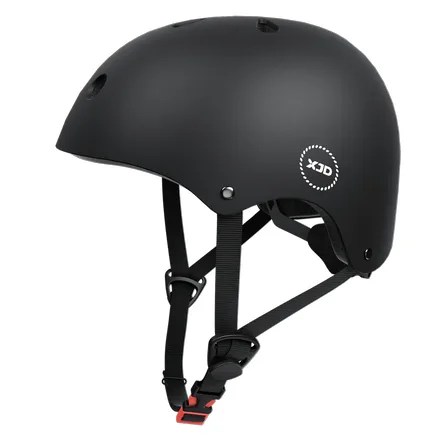
7-in-1 Kids Helmet & Protective Gear Set from XJD – Black or Blue
If you're outfitting one kid (or a couple of siblings) for biking, scootering, o…$59.99