

When can i take my baby on a bike ride
Do not take a baby on a bicycle before 12 months. After that, wait until your child can sit well unsupported, has enough neck strength to support a properly fitted bicycle helmet, and meets every requirement in the child seat or trailer manual.
The readiness decision
The American Academy of Pediatrics advises that infants younger than 12 months should not be carried on a bicycle: they are too young for a rear-mounted seat and too young to wear a bicycle helmet. Do not carry a baby in a backpack or front carrier while cycling.
Reaching the first birthday is only a starting point, not automatic clearance. Before riding, confirm all of the following:
- Your child sits steadily without support for the entire planned ride.
- Your child’s neck can support their head while wearing a lightweight bicycle helmet.
- A bicycle helmet fits properly rather than merely being labeled for a particular age.
- Your child falls within the passenger age, size and load limits stated in the exact seat or trailer manual.
- The carrier is explicitly compatible with your bicycle and has been installed as its manufacturer directs.
If your child was premature, has delayed head or trunk control, or has a relevant medical condition, ask their pediatrician before riding.
Measure and compare before buying equipment
Measure your child’s current weight and height, and measure head circumference where the helmet manufacturer instructs. Compare those measurements directly with the helmet and carrier specifications. Do not estimate from clothing size or assume that an age label proves fit.
Check the helmet on your child. U.S. Consumer Product Safety Commission guidance says it should be comfortable and snug, sit level rather than tilted back, and remain secure with the chin strap buckled. Adjust its straps exactly as the manufacturer instructs. If a suitable helmet cannot fit correctly, postpone the ride.
For carrier assembly, attachment points, load limits, bicycle compatibility and torque settings, follow the exact product manual. Have a qualified bicycle mechanic check the setup if any requirement or mounting step is uncertain.
Prepare for the first ride
- Inspect the bicycle and carrier according to their manuals before loading your child.
- Practice mounting, dismounting, starting, turning and braking without the child first; a passenger changes balance and increases braking distance.
- Choose a short ride in calm weather on a quiet, low-traffic route or separated path.
- Secure the child using every restraint required by the carrier manufacturer, then recheck the helmet position and straps.
- Ride cautiously, avoid abrupt maneuvers and stop if the child slumps, becomes distressed or cannot hold a stable head position.
Why the supplied bikes are not baby carriers
The two catalog options below help distinguish riding with a baby from choosing a first pedal bike for an older child. Both are training-wheel bicycles in 12-, 14- and 16-inch supplied SKU labels; neither is presented in the supplied facts as a child seat, trailer or baby-transport product.
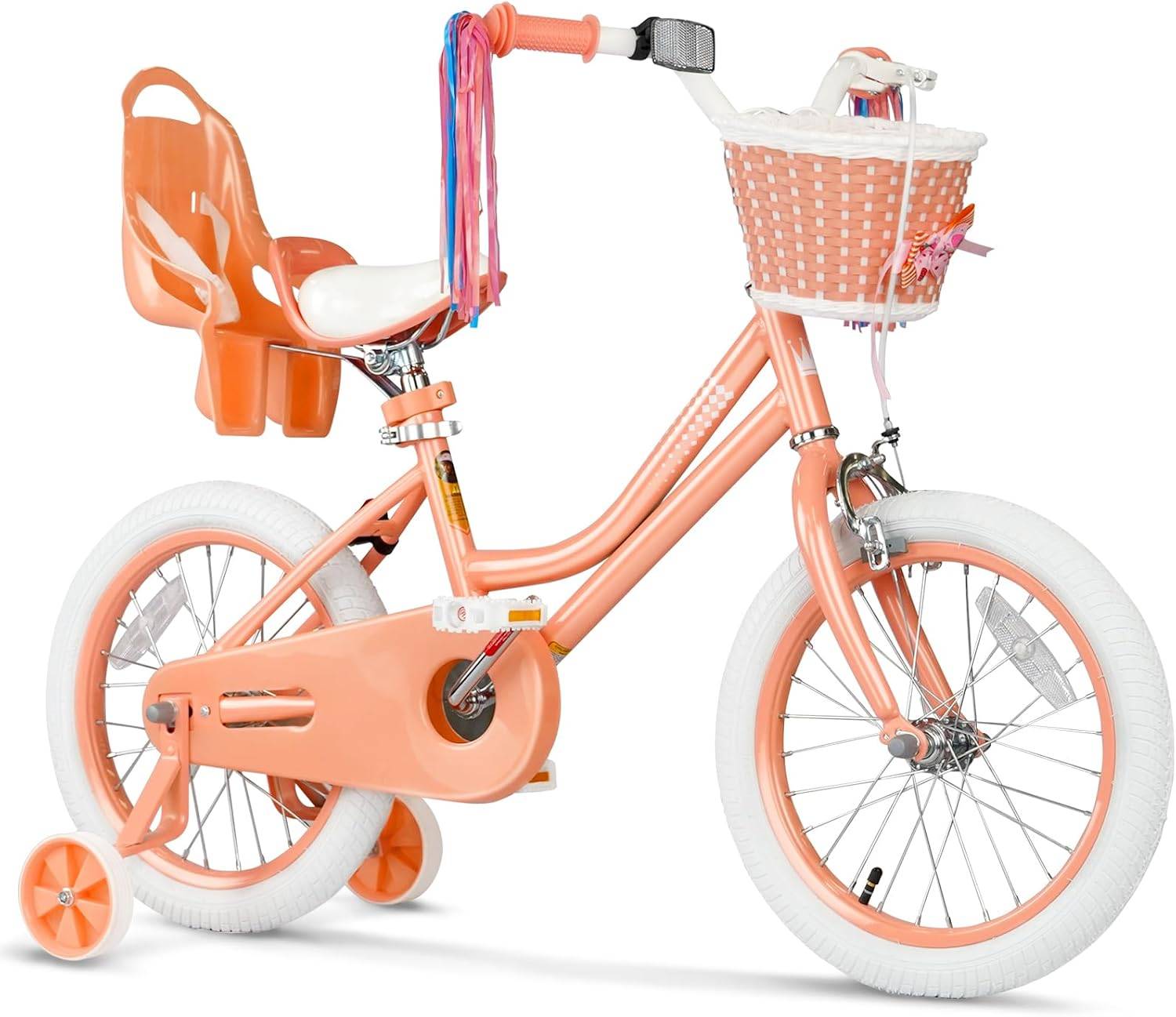 Girls 12/14/16 Inch Kids Bike by XJD with Training Wheels – Peach
A training-wheel bicycle with supplied 12-, 14- and 16-inch options. It is relevant later for an independently riding child after an individual fit check, not for carrying a baby.
 XJD Light Purple Girls Bike with Basket, Training Wheels, 12/14/16/20 Inch
A light purple training-wheel bike with a basket and supplied 12-, 14- and 16-inch SKU labels. It is a later-stage pedal-bike comparison, not baby passenger equipment.
The Girls 12/14/16 Inch Kids Bike by XJD with Training Wheels – Peach is offered in supplied 12-, 14- and 16-inch labels. The XJD Light Purple Girls Bike with Basket, Training Wheels, 12/14/16/20 Inch also has training wheels, while its supplied available SKU labels are 12, 14 and 16 inches. The “20 Inch” wording is part of its exact catalog title, but a 20-inch available SKU is not established by the supplied facts.
These bikes become relevant only when a child is ready to control and ride a bicycle independently; they do not answer the need to carry a baby. Their smallest supplied size, 12 inches, has an XBikes starting point of ages 3–4 and rider height 34–40 inches (86–102 cm), so it is not a substitute for infant passenger equipment.
When your child is ready for a pedal bike
For later comparison, XBikes uses these starting points for the supplied sizes: 12 inches for 34–40 inches (86–102 cm), ages 3–4; 14 inches for 37–45 inches (94–114 cm), ages 3–6; and 16 inches for 40–48 inches (102–122 cm), ages 4–7.
Age alone does not determine fit. Measure standing height and inseam, then have the child try the bicycle. Check stand-over clearance, reach, brake control and current confidence. Do not buy an oversized bicycle for growth. Follow the exact bike manual or use a qualified bicycle mechanic for assembly and adjustments.
Your next decision
If your baby is under 12 months, wait. If your child is at least 12 months but cannot sit unsupported, support a helmet steadily or meet the carrier manual’s limits, wait again. Proceed only after every readiness, helmet and carrier check passes; consider the supplied training-wheel bikes later, when measured fit and independent riding ability make a 12-, 14- or 16-inch bicycle appropriate.
Bikes for your next adventure
-
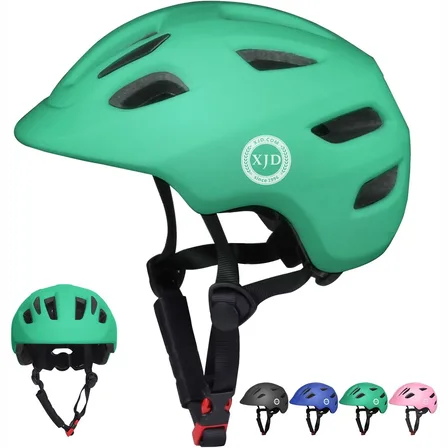
Green XJD Toddler Bike Helmet with Adjustable Fit, XS (46–51 cm)
The XJD toddler bike helmet in Green is built for the youngest riders — the size…$20.39
$23.99 -

Kids Bike Helmet by XJD for Boys & Girls – Black, Blue, Green, Pink, Purple
The XJD Kids Bike Helmet covers a wide 2-to-8-year age range thanks to two head-…$59.99
-

Kids Bike Helmet by XJD for Girls – Pink
The XJD Kids Bike Helmet in Pink is a lightweight multi-sport helmet for girls r…$59.99
$99