

When can kids pedal a bike
Kids can pedal a bike when they can reach and turn the pedals, control the handlebars and brakes, and remain confident on a correctly fitted bike. Age is only a starting point.
What “ready to pedal” means
A child is ready when fit, coordination and control come together. While seated, the child should be able to place each foot securely on a pedal and move it through a complete rotation without rocking sharply from side to side or stretching a leg to its limit.
Before riding independently, check that the child can start, steer, slow and stop without panic. They should understand a simple instruction such as “stop here” and be willing to try. Reluctance, repeated loss of control or an awkward reach means it is better to pause and reassess rather than push through.
Measure before choosing a wheel size
Measure the child’s standing height without shoes. Also measure inseam from the floor to the crotch, using a book held level between the legs to represent the saddle area. Compare those measurements with the actual bicycle: the child needs suitable stand-over clearance, a manageable reach to the handlebars and easy access to the brake controls.
Have the child try the bicycle whenever possible. Following the fit principles emphasized by the American Academy of Pediatrics, do not choose an oversized bike merely to leave room for growth. A bike that matches an age band can still be unsuitable if the rider cannot stand over it comfortably, steer it or operate its brakes.
Use wheel size as a starting point
| Wheel size | Starting age | Rider height |
|---|---|---|
| 12 Inch | 3–4 | 34–40 in / 86–102 cm |
| 14 Inch | 3–6 | 37–45 in / 94–114 cm |
| 16 Inch | 4–7 | 40–48 in / 102–122 cm |
| 18 Inch | 5–9 | 43–52 in / 109–132 cm |
| 20 Inch | 7–12 | 48–60 in / 122–152 cm |
| 24 Inch | 10–14 | 54–64 in / 137–163 cm |
| 26 Inch | Youth and adults | Over 60 in / 153 cm |
These XBikes ranges narrow the search; they do not confirm fit. Where ranges overlap, prioritize measured height, inseam, reach, brake control and current confidence. Never move up a size solely because the child is at the upper end of an age range.
How the supplied bikes relate to readiness
The supplied catalog options provide wheel-size comparison points from first pedal-bike sizes through larger youth sizes. The Pink 12/14/16/20" XJD Girls Bike with Training Wheels & Basket offers 12, 14, 16 and 20 Inch labels, so its listed variants can be compared with several points in the table. Training wheels are part of this product’s catalog description, but their presence does not replace the individual checks for reach, pedaling and control.
The 26-Inch XJD Beach Cruiser Bike for Girls – Purple, V-Brake has 20, 24 and 26 Inch variants in the supplied labels, while the XJD 24-Inch Green Beach Cruiser Bike with U-Brake has supplied 24 and 26 Inch variants. These larger options are relevant only when the rider’s measurements and control match those starting points. Brake wording in the names identifies the catalog products; the child must still be able to reach and operate the controls on the exact bike.
These particular catalog options help answer the question by letting a parent compare a child’s measurements with listed 12, 14, 16, 20, 24 and 26 Inch choices before arranging an individual fit check.
 Pink 12/14/16/20" XJD Girls Bike with Training Wheels & Basket
Available in 12, 14, 16 and 20 Inch labels, this training-wheel bike spans several XBikes starting points. Select only after checking the child’s height, inseam, reach, brake control and confidence.
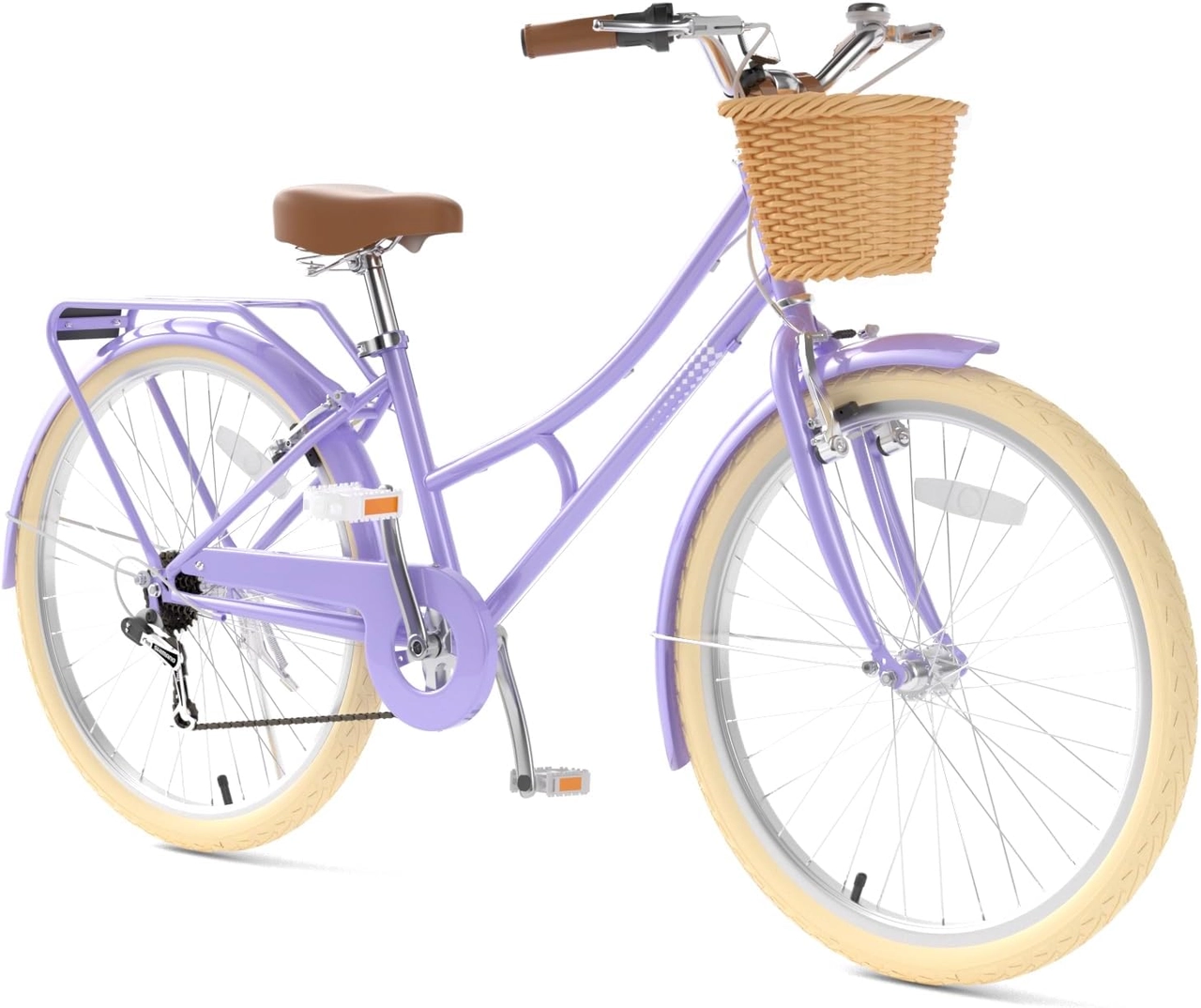 26-Inch XJD Beach Cruiser Bike for Girls – Purple, V-Brake
Its supplied variants include 20, 24 and 26 Inch choices. It is relevant to taller riders only when the child’s measurements, reach and ability to operate the controls support the selected size.
 XJD 24-Inch Green Beach Cruiser Bike with U-Brake
This beach cruiser has supplied 24 and 26 Inch variants. Use it as a larger-wheel comparison for riders whose measured height and individual fit check match those XBikes starting points.
Do a short readiness check
- Confirm the child can stand over the bicycle comfortably and stabilize it.
- Check that the seated rider can reach both pedals through their full rotation without straining.
- Ask the child to hold a straight line, make a controlled turn and look ahead.
- Verify that the child can reach and operate the brake controls, then stop where asked.
- Repeat at low speed in a level area away from traffic. Stop if fear or loss of control persists.
A properly fitting bicycle helmet is required for the riding check. Following U.S. Consumer Product Safety Commission guidance, it should fit properly, sit level and have its straps adjusted according to the helmet manufacturer’s instructions.
Decide what to do next
If the child fits the bike, completes full pedal rotations and can steer and stop calmly, begin with short, supervised practice. If feet slip from the pedals, the child stretches to reach them, cannot operate the brakes or struggles to control the bike, recheck the setup and compare a more suitable size rather than waiting for the child to “grow into” the current one.
For assembly, maintenance, compatibility, load limits or torque, follow the manual for the exact product or consult a qualified bicycle mechanic. The practical answer to when a child can pedal is therefore: after measurements and a hands-on fit check show that this child can pedal, steer and stop this bicycle under control.
Bikes for your next adventure
-
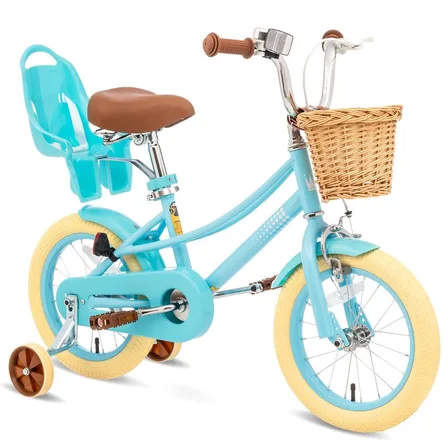
Girls' Training Wheel Bike by XJD, 12–20 Inch Wheels – Blue
This XJD girls' training wheel bike in Blue covers one of the widest fit ranges …$139
$159 -

XJD Kids Bike for Girls – Pink, 12/14/16/20 Inch with Training Wheels
The XJD Kids Bike for Girls in Pink is a training-wheel bike built to carry your…$139
$159 -

Pink 12/14/16/20" XJD Girls Bike with Training Wheels & Basket
The Pink XJD Girls Bike with Training Wheels & Basket is a first-bike pick f…$65.99
$75.99