

When can kids ride a pedal bike
Most kids can ride a pedal bike when they can balance, steer, start, stop and reach the brakes confidently on a correctly fitted bicycle. Age is only a starting point: measure the child’s height, check inseam clearance and confirm control before deciding.
Signs a child is ready to pedal
A child does not need to reach a particular birthday before trying pedals. Readiness is practical. They should be able to sit securely, look ahead while moving, steer around an obstacle and follow simple instructions. Experience gliding on a balance bike can help, but it is not a requirement.
Before riding independently, check whether the child can begin moving without being pushed continuously and stop on request. They should understand that stopping requires action rather than simply putting their feet down at speed. Choose a quiet, level practice area away from traffic while these skills are developing.
Measure before comparing wheel sizes
Measure the child’s standing height without shoes, then measure the inseam from the floor to the crotch. Height helps narrow the wheel-size range; inseam helps determine whether the individual frame provides suitable stand-over clearance. Two bicycles with the same wheel size can still fit differently, so the child must try the actual bicycle.
| Wheel size | Starting age | Rider height |
|---|---|---|
| 12 Inch | 3–4 | 34–40 in / 86–102 cm |
| 14 Inch | 3–6 | 37–45 in / 94–114 cm |
| 16 Inch | 4–7 | 40–48 in / 102–122 cm |
| 18 Inch | 5–9 | 43–52 in / 109–132 cm |
| 20 Inch | 7–12 | 48–60 in / 122–152 cm |
| 24 Inch | 10–14 | 54–64 in / 137–163 cm |
| 26 Inch | Youth and adults | Over 60 in / 153 cm |
These XBikes ranges are starting points, not permission to skip a fit check. When age and measured height suggest different sizes, prioritize measured height, inseam, reach, brake control and current confidence.
Use a hands-on fit check
Have the child try the bicycle rather than buying an oversized model for future growth. Check these points before accepting the fit:
- Stand-over: The child can straddle the bicycle with useful clearance instead of being pressed against the frame.
- Reach: They can hold the handlebar and steer without stretching, locking their arms or losing a stable seated position.
- Brake control: Their hands reach and operate the controls confidently while they maintain steering control.
- Starts and stops: They can set off and make controlled stops appropriate to their present ability.
- Confidence: The bicycle does not feel intimidating, unwieldy or difficult to turn at low speed.
If any of these checks fail, compare another size or frame rather than assuming the child will quickly grow into the bicycle.
How the supplied XBikes options relate
The 26-Inch XJD Beach Cruiser Bike for Girls – Purple, V-Brake is a beach cruiser catalog option whose listed SKU labels cover 20 Inch, 24 Inch and 26 Inch choices in specified colors. That makes the listing useful for comparing three later-stage wheel-size starting points against a child’s measurements; the title itself describes the Purple / 26 Inch version and does not establish fit.
These particular catalog options help answer the readiness question only after measurement: 20 Inch begins at 48–60 inches in rider height, 24 Inch at 54–64 inches, and 26 Inch above 60 inches. A matching range means “try this size,” not “buy without checking.”

The catalog lists Mint Green and Pink labels at 20, 24 and 26 Inch, plus Purple at 26 Inch. Color does not change the fitting decision. Do not infer current inventory, frame geometry or suitability from a SKU label; confirm the exact variant and have the child perform the same stand-over, reach and control checks.
Prepare for the first pedal sessions
Use a properly fitted bicycle helmet. It should sit level and its straps should be adjusted according to the helmet manufacturer’s instructions. Practice in a flat, open area with a predictable surface, beginning with short starts, straight riding, gentle turns and controlled stops.
Do not improvise assembly, maintenance, compatibility or adjustment procedures. Follow the manual for the exact bicycle and component, or ask a qualified bicycle mechanic when the instructions or condition of the bike are uncertain.
Make the decision
Your child is ready for a pedal bike when readiness skills and individual fit agree: they can balance and steer, their measured height falls near the intended size range, they have adequate stand-over clearance, and they can comfortably reach and operate the brakes. Measure today, shortlist the indicated wheel size, then let the child try the exact bicycle. If control or confidence is missing, keep practicing or choose a better-fitting size before moving to pedals.
Bikes for your next adventure
-
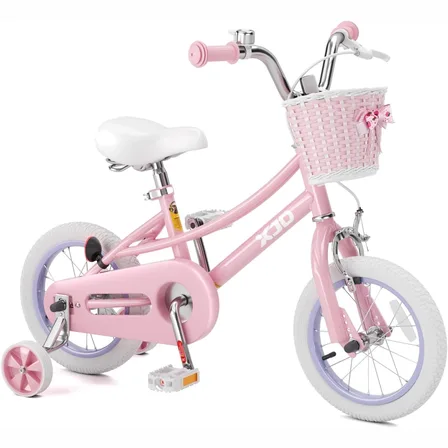
Pink 12/14/16/20" XJD Girls Bike with Training Wheels & Basket
The Pink XJD Girls Bike with Training Wheels & Basket is a first-bike pick f…$65.99
$75.99 -
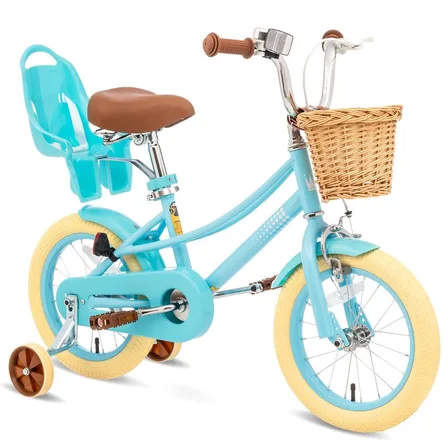
Girls' Training Wheel Bike by XJD, 12–20 Inch Wheels – Blue
This XJD girls' training wheel bike in Blue covers one of the widest fit ranges …$139
$159 -

Blue XJD Girls Bike with Training Wheels – 12/14/16 Inch
If you're shopping for a first pedal bike for a daughter roughly 3 to 8 years ol…$149
$169