

When can my baby ride in a bike seat
A baby can ride in a bike seat only after meeting the seat maker’s minimum age, size and developmental rules, while wearing a properly fitted helmet. A birthday alone is not enough.
Check readiness before choosing a seat
Start with the instructions for the exact child seat you intend to use. Confirm every stated minimum and maximum, including age, body weight, height and any developmental requirement. Do not estimate these measurements or assume that one brand’s limits apply to another.
Your baby must have the head and neck control required by the seat manufacturer, including while wearing a helmet. The helmet adds weight and changes how the head rests against the seat. If your child cannot maintain the required position throughout a ride, wait. Ask your child’s healthcare professional when developmental readiness is uncertain.
Measure and compare these details
- Current body weight: Weigh your baby and compare the result with the seat’s permitted range.
- Current height: Measure without shoes and check the seat maker’s height limit and harness positioning instructions.
- Helmet fit: Use a bicycle helmet that fits properly, sits level and has straps adjusted according to its manufacturer’s directions.
- Seat fit: Check that the harness, foot supports and retention features can be adjusted exactly as the manual requires.
- Bicycle compatibility: Confirm the bicycle, frame, rack and mounting location are approved for that particular child seat.
If any measurement falls outside the allowed range, or the harness and supports cannot be positioned correctly, that seat is not appropriate yet—even if your baby has reached a commonly suggested age.
Confirm the bicycle can accept the seat
A child being ready does not make every bicycle suitable. Before installation, compare the child-seat manual with the bicycle manual. Check the specified frame or rack requirements, mounting restrictions and load limits. Details such as tubing shape, rack rating, cable routing and clearance can affect compatibility.
Do not improvise hardware or invent a mounting procedure. For assembly, maintenance, compatibility, load limits and torque values not stated in the manuals, use a qualified bicycle mechanic. After installation, follow the seat maker’s required pre-ride checks and reinspection schedule.
What the supplied bikes can—and cannot—tell you
The catalog options below are complete beach cruiser bicycles, not baby bike seats. They help by showing possible host-bicycle size comparisons, but the supplied facts do not establish child-seat compatibility, rack capacity or mounting approval. Neither bicycle should be treated as a substitute for a purpose-made child seat or its manual.
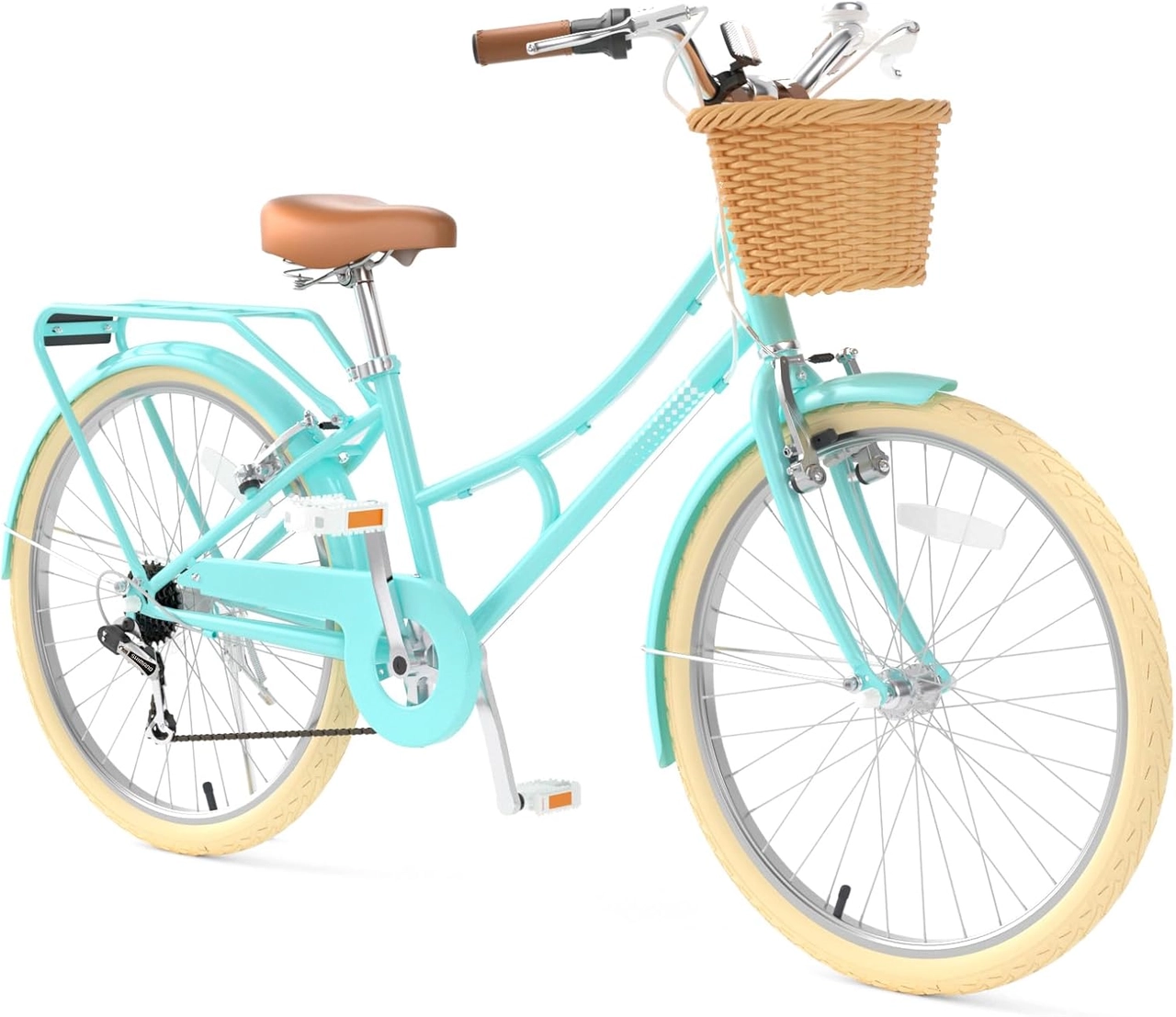 XJD 24-Inch Green Beach Cruiser Bike with U-Brake
A complete beach cruiser offered in 24-inch and 26-inch SKU labels. It is useful only as a host-bicycle size comparison; the supplied facts do not confirm baby-seat compatibility or mounting capacity.
 Pink XJD Beach Cruiser Bike, 24"/26", U-Brake
This beach cruiser has 24-inch and 26-inch options and a U-brake. It is not a baby seat, and the supplied catalog facts do not establish rack, mount, load-limit or child-seat compatibility.
The XJD 24-Inch Green Beach Cruiser Bike with U-Brake is offered in Green / 24 Inch, Pink / 24 Inch and Pink / 26 Inch labels. The Pink XJD Beach Cruiser Bike, 24"/26", U-Brake is offered in 24 Inch and 26 Inch labels. Wheel size identifies a bicycle option; it does not show whether a baby seat fits.
Under the XBikes starting points, a 24-inch bicycle corresponds to rider heights of 54–64 inches (137–163 cm) and ages 10–14, while a 26-inch bicycle is a starting point for youth and adults over 60 inches (153 cm). These figures concern the person controlling the bicycle, not the passenger. The rider still needs an individual check of height, inseam, reach, brake control and confidence.
Run a complete pre-ride check
- Verify that the baby still meets every requirement in the child-seat manual.
- Fit the helmet level and adjust its straps exactly as directed by the helmet manufacturer.
- Secure the harness and foot restraints according to the seat instructions, without adding unapproved padding or accessories.
- Inspect the mount and bicycle using both manuals; stop if anything is loose, damaged or unclear.
- Make sure the adult rider can mount, balance, steer, stop and operate the brakes confidently with the changed load.
- Begin only in a controlled setting and end the ride if the child’s position or comfort changes.
Decide whether today is the right day
Ride today only if your baby meets the exact seat’s age, size and developmental conditions, the helmet fits correctly, the bicycle and mount are expressly compatible, and the rider remains fully in control. If one answer is missing, wait and check the manuals or consult a qualified bicycle mechanic; if readiness is uncertain, consult your child’s healthcare professional before the first ride.
Bikes for your next adventure
-
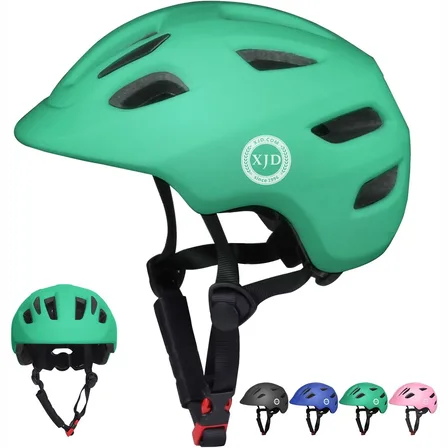
Green XJD Toddler Bike Helmet with Adjustable Fit, XS (46–51 cm)
The XJD toddler bike helmet in Green is built for the youngest riders — the size…$20.39
$23.99 -

Kids Bike Helmet by XJD for Boys & Girls – Black, Blue, Green, Pink, Purple
The XJD Kids Bike Helmet covers a wide 2-to-8-year age range thanks to two head-…$59.99
-

Kids Bike Helmet by XJD for Girls – Pink
The XJD Kids Bike Helmet in Pink is a lightweight multi-sport helmet for girls r…$59.99
$99