

When can you put a baby on a bike seat
You can put a baby in a bicycle child seat only when the child can sit upright unsupported, meets every limit in the seat manual, and can wear a properly fitted helmet. There is no single birthday that makes every baby ready.
Check the child before checking the calendar
Start with abilities and measurements, not age alone. Observe whether the child can maintain a stable, upright head and seated position for the whole planned ride. A child who slumps, cannot support their head consistently, or cannot wear the required helmet is not ready.
Measure the child’s current weight and height, then compare both with the child-seat manufacturer’s stated limits. Check any minimum developmental or age requirement in that exact manual as well. Do not estimate, round up, or assume that one seat’s limits apply to another model. If readiness is uncertain, ask the child’s pediatrician before riding.
Confirm that the seat, bicycle and rider work together
A developmentally ready child still needs a compatible setup. Identify the exact bicycle and child-seat models, then read both manuals. Confirm the permitted mounting location, attachment points, child limits and bicycle compatibility. Follow the specified assembly, maintenance and torque instructions; if any information is missing or unclear, use a qualified bicycle mechanic.
Also compare the adult rider’s size and control with the complete loaded setup. The rider should be able to mount, stop, balance and operate the brakes confidently while the bicycle is stationary and at very low speed. A child seat changes balance and handling. If the bicycle feels unstable or the rider cannot control it comfortably, do not carry the child.
Use this go-or-wait checklist
- Go only if: the child sits upright unsupported, has steady head control, fits every manual limit, and wears a properly fitted bicycle helmet.
- Go only if: the child seat is explicitly compatible with the exact bicycle and is installed according to its manual.
- Go only if: the adult can reach the ground as needed, operate the brakes, and control the loaded bicycle confidently.
- Wait if: any limit, mounting detail, fastener instruction or compatibility requirement cannot be verified.
- Wait if: the child slumps, the helmet does not fit, straps cannot be adjusted correctly, or the adult feels uncertain about balance.
A bicycle helmet should sit level, fit properly and use its straps exactly as its manufacturer directs. Before carrying a child, practice with the empty seat and then follow the seat maker’s guidance for any further setup checks. Choose a quiet, controlled place for the first ride and keep it short enough to reassess comfort and control.
What the supplied XBikes products can—and cannot—show
None of the supplied products is identified as a baby bicycle seat, so these bicycles are not evidence that a baby seat will fit. They are useful only as catalog comparison points for choosing the bicycle itself or for a later stage when a child rides independently. Compatibility with a passenger seat must come from the exact bicycle and seat manuals.
The following catalog options help answer the title by separating an adult or youth bicycle decision from a child’s own wheel-size fit decision. They do not replace a compatible child carrier or its instructions.
 Pink XJD Beach Cruiser Bike, 24"/26", U-Brake
A 24 Inch or 26 Inch beach cruiser comparison for the adult or youth rider; its supplied facts do not establish compatibility with a baby bicycle seat.
 Flower Pink XJD Girls Bike with Doll Seat & Basket
Its 12, 14 and 16 Inch options illustrate independent child-rider sizing. The catalog’s doll seat wording does not mean it can carry a baby or child.
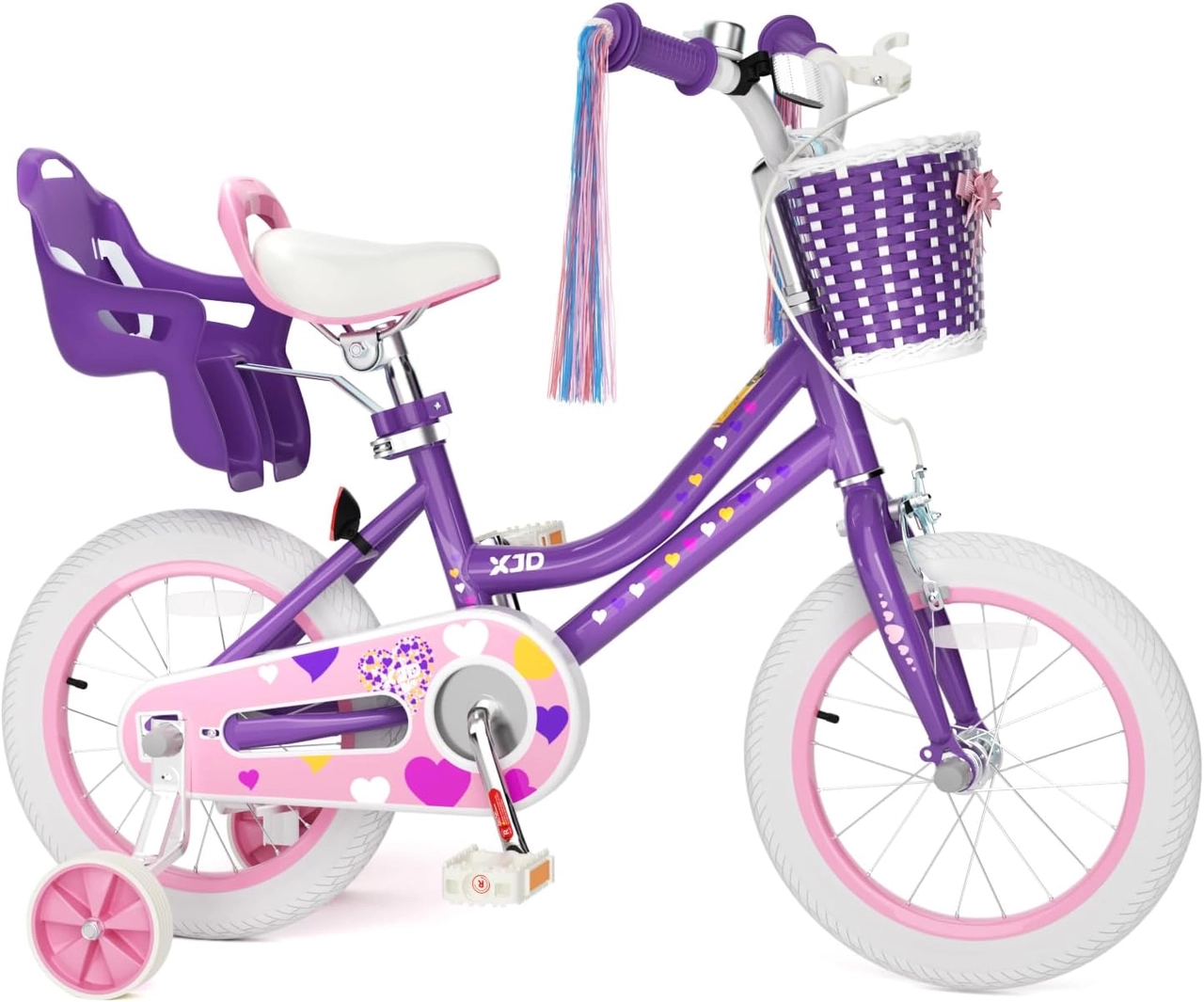 Purple XJD Girls' Bike with Doll Seat & Basket
This model offers 12, 14 and 16 Inch options for independent rider fit comparisons. Its named doll seat is not evidence of child-passenger capability.
The Pink XJD Beach Cruiser Bike, 24"/26", U-Brake is offered in 24 Inch and 26 Inch labels. XBikes uses 24 Inch as a starting point for ages 10–14 and heights 54–64 in / 137–163 cm; 26 Inch is a starting point for youth and adults over 60 in / 153 cm. Those figures describe rider sizing, not child-seat compatibility.
The Flower Pink XJD Girls Bike with Doll Seat & Basket and Purple XJD Girls' Bike with Doll Seat & Basket each have 12 Inch, 14 Inch and 16 Inch options. Their doll seats are part of the product titles and must not be treated as seats for carrying babies or children.
| Wheel label | XBikes starting point |
|---|---|
| 12 Inch | Ages 3–4; 34–40 in / 86–102 cm |
| 14 Inch | Ages 3–6; 37–45 in / 94–114 cm |
| 16 Inch | Ages 4–7; 40–48 in / 102–122 cm |
For an independent rider, measure height and inseam, then have the child try the bicycle. Check stand-over clearance, reach, brake control and present confidence. Do not buy an oversized bicycle merely for growth; age and wheel size are starting points, not proof of fit.
Make the decision
Put the baby on a bicycle child seat only after unsupported sitting and head control, helmet fit, manual limits, bicycle compatibility, correct installation and adult control all check out. If even one item is unresolved, wait and verify it with the manuals, the pediatrician or a qualified bicycle mechanic before the first ride.
Bikes for your next adventure
-
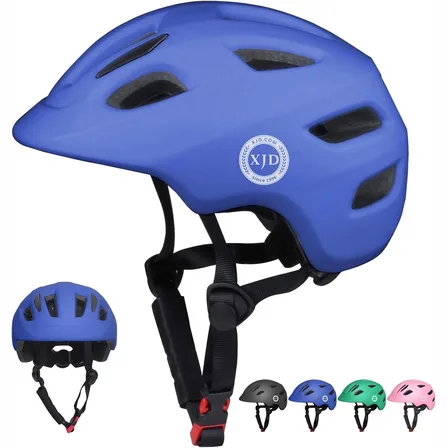
Blue XJD Kids' Bike Helmet, Adjustable Fit – Sizes XS & S
The Blue XJD Kids' Bike Helmet is a lightweight, adjustable helmet for toddlers …$20.39
-

Kids Bike Helmet by XJD for Boys & Girls – Black, Blue, Green, Pink, Purple
The XJD Kids Bike Helmet covers a wide 2-to-8-year age range thanks to two head-…$59.99
-

Kids Bike Helmet by XJD for Girls – Pink
The XJD Kids Bike Helmet in Pink is a lightweight multi-sport helmet for girls r…$59.99
$99