

When can you put baby in bike seat
A baby can ride in a bicycle passenger seat only when they can sit upright unsupported, maintain steady head control in a properly fitted helmet, and meet every limit in the seat manual. If any check fails, wait.
Check readiness before age
There is no single birthday that makes every baby ready. Development, the passenger seat’s instructions, the bicycle, and local rules all matter. Do not use age alone or move a child into a seat because another child used one at that age.
Before riding, confirm that your child can remain upright without being propped up and can keep their head stable while wearing the intended helmet. If you are uncertain about neck control, posture, or a medical condition, ask the child’s healthcare professional before planning a ride.
Measure and compare the passenger seat limits
Measure the child’s current weight and height, then compare both with the exact passenger-seat manual. Check any stated minimums and maximums, required developmental stage, harness adjustment range, and helmet-clearance guidance. Do not estimate these limits or borrow specifications from a similar-looking model.
- Child: current height, current weight, unsupported sitting, head control, and helmet fit.
- Passenger seat: all size and load limits, harness position, foot support, and required mounting system stated in its manual.
- Bicycle: explicit compatibility with that seat and mounting method.
- Rider: ability to start, stop, balance, turn, and dismount with the changed load.
If a limit, compatibility statement, assembly step, or torque value is missing, consult the exact product manual or a qualified bicycle mechanic. A secure-looking improvised installation is not a substitute for documented compatibility.
Fit the helmet and restraint
The helmet must be the correct size, sit level, and have its straps adjusted according to the helmet manufacturer’s instructions. Replace guesswork with a fit check each time, especially after growth or a clothing change.
Use every restraint and foot-retention feature exactly as the passenger-seat manual directs. Clothing, straps, shoelaces, and feet must remain away from wheels and other moving parts. Never add cushions or alter the seat unless its manufacturer specifically permits it.
Test the complete setup before carrying the child
Have a qualified bicycle mechanic check the installation if you cannot verify it confidently. Then practise with the bicycle unloaded in a traffic-free area. A passenger seat changes balance, steering, stopping, mounting, and dismounting; the bicycle may also feel less stable while stationary.
- Inspect the mount, seat, restraints, wheels, and brakes as directed by their manuals.
- Choose a short, calm route away from traffic, steep slopes, rough surfaces, and sudden manoeuvres.
- Load and unload the child only while the bicycle is securely controlled by an adult.
- Stop if the child slumps, cannot keep their head steady, defeats the restraint, or becomes distressed.
Why the supplied bike is a later-stage comparison
The supplied catalog item is not a bicycle passenger seat. The Flower Pink XJD Girls Bike with Doll Seat & Basket is listed as a training-wheel bike in 12 Inch, 14 Inch, and 16 Inch sizes. Its doll seat does not establish that it can carry a baby or child. These options help only when comparing a later stage in which the child may be ready to ride their own bicycle.

For that later stage, XBikes lists 12 Inch as a starting point for ages 3–4 and heights 34–40 in / 86–102 cm; 14 Inch for ages 3–6 and heights 37–45 in / 94–114 cm; and 16 Inch for ages 4–7 and heights 40–48 in / 102–122 cm. These ranges are starting points, not proof of fit.
Have the child try the bicycle. Prioritize measured height and inseam, comfortable stand-over, manageable reach, brake control, and present confidence. Do not buy an oversized bicycle for growth. The Flower Pink XJD Girls Bike with Doll Seat & Basket is relevant only if the child is transitioning to their own training-wheel bicycle and one of its supplied wheel sizes passes an individual fit check.
Make the decision
Put the baby in a bicycle passenger seat only after unsupported sitting and steady helmeted head control are clear, the child fits every manual limit, the seat is documented as compatible with the bicycle, the helmet and restraints fit correctly, and the adult can control the loaded setup. Otherwise, wait and remeasure later. Do not use the catalog training-wheel bike or its doll seat to carry a baby.
Bikes for your next adventure
-
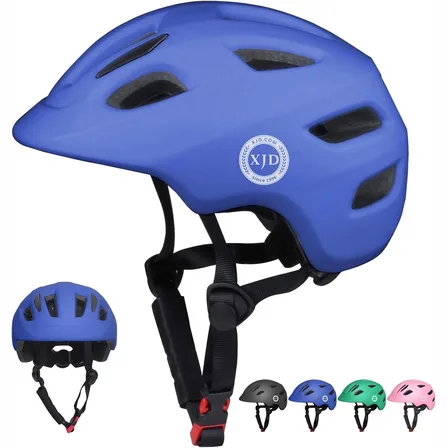
Blue XJD Kids' Bike Helmet, Adjustable Fit – Sizes XS & S
The Blue XJD Kids' Bike Helmet is a lightweight, adjustable helmet for toddlers …$20.39
-

Kids Bike Helmet by XJD for Boys & Girls – Black, Blue, Green, Pink, Purple
The XJD Kids Bike Helmet covers a wide 2-to-8-year age range thanks to two head-…$59.99
-

Kids Bike Helmet by XJD for Girls – Pink
The XJD Kids Bike Helmet in Pink is a lightweight multi-sport helmet for girls r…$59.99
$99