

When can you put baby on bike seat
A baby can ride in a bicycle passenger seat only after sitting unsupported steadily, controlling the head and neck, fitting the restraint and helmet, and meeting every limit in the seat manual. Age alone is not enough.
Check readiness before planning a ride
First confirm that the child can remain upright without being propped up or supported. The child must maintain stable head and neck control while wearing a properly fitted bicycle helmet. If the helmet’s weight causes the head to tip or the child cannot stay upright consistently, wait.
Ask the child’s pediatrician when developmental readiness is uncertain, especially after premature birth or when a medical or developmental condition affects posture or head control. Also check local passenger laws because minimum ages and permitted equipment can vary. A legal minimum does not replace an individual readiness assessment.
Measure and compare the actual child and seat
Do not rely on a general age label. Record the child’s current weight and height, then compare both with the minimum and maximum limits in the exact passenger-seat manual. Check the restraint’s permitted fit and confirm that the child’s body position matches the manual’s instructions.
- Weight and height: Both must fall inside the manufacturer’s stated range.
- Helmet fit: The helmet should be the correct size, sit level, and use its straps exactly as its manufacturer directs.
- Restraint fit: Use every required strap and buckle, with no improvised padding or modification.
- Seat position: Confirm that hands, feet, clothing and straps cannot reach moving wheels or other bicycle parts.
If a limit, mounting detail or compatibility rule is missing, do not guess. Consult the exact manuals for the passenger seat and bicycle or ask a qualified bicycle mechanic.
Confirm bicycle and mounting compatibility
A ready child still needs compatible equipment. Determine whether the seat attaches to a frame, rack or another specified mounting point, then verify that the bicycle and any rack are approved for that arrangement. Follow the manuals for assembly, load limits, fasteners, maintenance and inspections. No universal torque value or mounting procedure applies to every seat.
Before carrying the child, check that the bicycle remains controllable with the added load. Practice mounting, dismounting, starting, stopping and balancing without the child in the seat. Never leave a child unattended in a bicycle passenger seat, including while the bicycle is supported by a kickstand.
What the supplied XBikes products are—and are not
The supplied catalog options are children’s training-wheel bicycles with doll seats, not baby passenger seats. They help answer the title by showing a later, child-rider stage and by preventing confusion between a doll seat and equipment designed to carry a child. A doll seat must never be used to transport a baby.
 Purple XJD Girls' Bike with Doll Seat & Basket
A training-wheel bicycle offered in 12, 14 and 16 Inch sizes. Its doll seat is not a baby passenger seat; use the listed sizes only as later-stage fit comparison points.
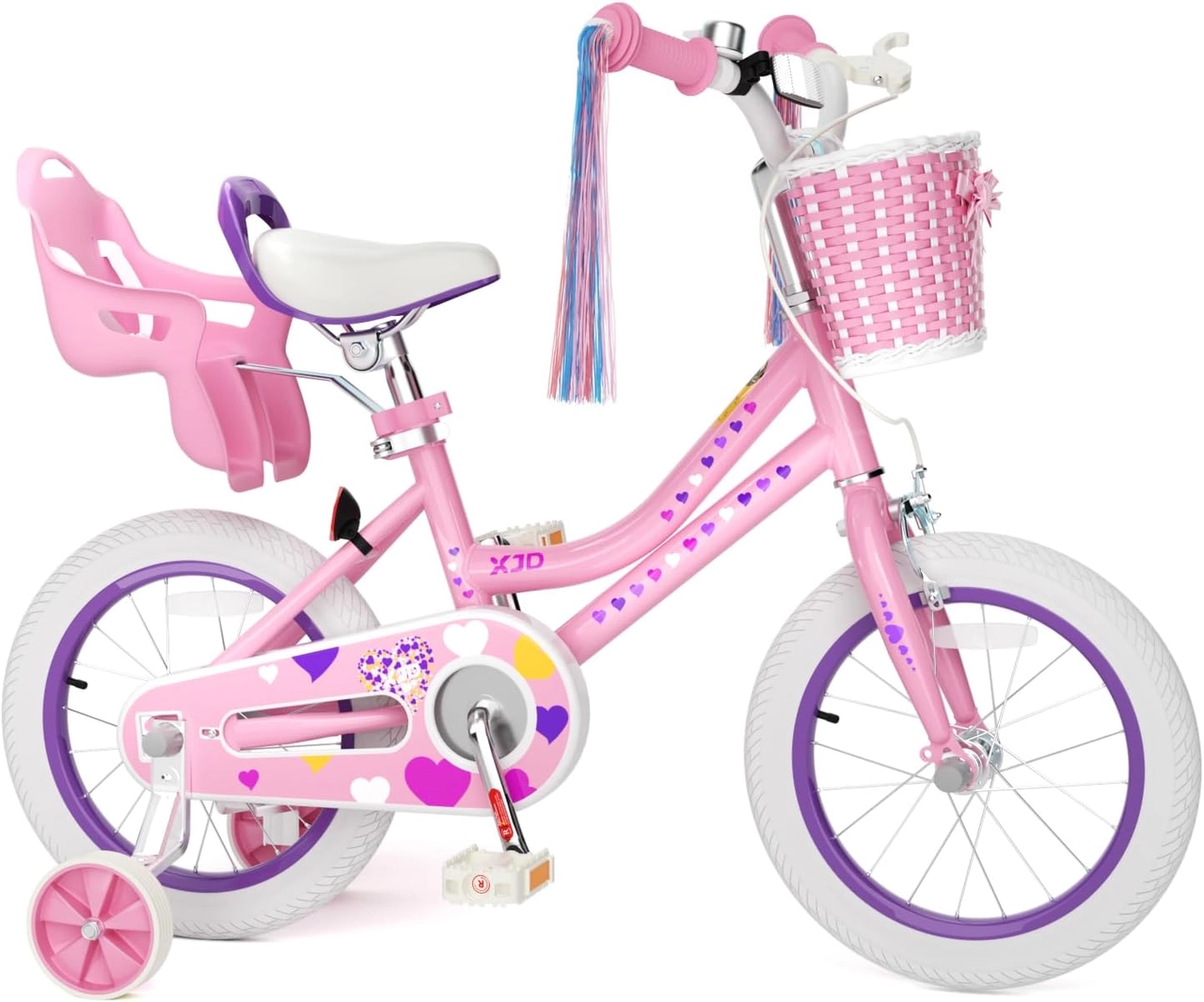 Pink Girls' 12/14/16" Bike by XJD – Basket & Doll Seat
Available in 12, 14 and 16 Inch catalog choices with a basket and doll seat. It is relevant for a later child-rider stage, not for carrying a baby.
Purple XJD Girls' Bike with Doll Seat & Basket is listed in 12 Inch, 14 Inch and 16 Inch sizes. Pink Girls' 12/14/16" Bike by XJD – Basket & Doll Seat offers the same three listed wheel-size choices. Those catalog facts support a wheel-size comparison only; they do not establish passenger-seat compatibility, load capacity or suitability for transporting a baby.
When these bikes may become relevant
These two products become relevant only when the child is ready to ride a bicycle rather than travel as a passenger. Use measured rider height as the starting point: 12 Inch corresponds to 34–40 in (86–102 cm), 14 Inch to 37–45 in (94–114 cm), and 16 Inch to 40–48 in (102–122 cm). The XBikes age starting points are 3–4, 3–6 and 4–7 respectively, but age must not decide the size.
Have the child try the bicycle. Check stand-over clearance, reach, brake control and current confidence, and do not choose an oversized bicycle merely to allow room for growth. Where size ranges overlap, select according to actual control and fit rather than assuming the larger wheel is better.
Make the decision in this order
- Confirm steady unsupported sitting plus reliable head and neck control while helmeted.
- Measure the child and compare the results with every stated passenger-seat limit.
- Verify the seat, bicycle and mounting-point compatibility in their exact manuals.
- Fit the helmet level and adjust its straps according to its instructions.
- Have a qualified bicycle mechanic inspect the setup if any mounting or compatibility point remains uncertain.
Put the baby in the passenger seat only when every readiness, fit, legal and manual requirement is satisfied; if any one is unclear or unmet, postpone the ride. Consider the two catalog bicycles later, when the child is independently ready for a properly fitted 12, 14 or 16 Inch training-wheel bike.
Bikes for your next adventure
-
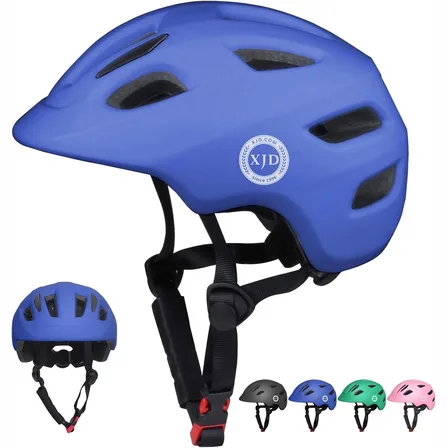
Blue XJD Kids' Bike Helmet, Adjustable Fit – Sizes XS & S
The Blue XJD Kids' Bike Helmet is a lightweight, adjustable helmet for toddlers …$20.39
-

Kids Bike Helmet by XJD for Boys & Girls – Black, Blue, Green, Pink, Purple
The XJD Kids Bike Helmet covers a wide 2-to-8-year age range thanks to two head-…$59.99
-

Kids Bike Helmet by XJD for Girls – Pink
The XJD Kids Bike Helmet in Pink is a lightweight multi-sport helmet for girls r…$59.99
$99