

When can kids start to ride a bike
Kids can start to ride a bike when they fit an appropriately sized bicycle and can balance, steer, stop and follow simple directions. Age is only a starting point: measure height and inseam, then confirm control on the actual bike.
What determines whether a child is ready?
Readiness has two parts: physical fit and current ability. A child should be able to sit or stand securely, hold the handlebar without stretching, steer predictably and operate the brakes. They should also understand instructions such as stopping, waiting and looking ahead.
Confidence matters. A hesitant child may benefit from more walking, scooting or balance practice before pedaling. An eager child still needs close adult supervision and a correctly fitting bicycle. There is no need to meet a birthday deadline.
Measure before choosing a wheel size
Measure the child without shoes while they stand straight against a wall. Record total height. For inseam, measure from the floor to the crotch with the feet slightly apart. Compare the measured height with these XBikes starting points, then arrange an individual fit check.
| Wheel size | Age starting point | Rider height |
|---|---|---|
| 12 Inch | 3–4 | 34–40 in / 86–102 cm |
| 14 Inch | 3–6 | 37–45 in / 94–114 cm |
| 16 Inch | 4–7 | 40–48 in / 102–122 cm |
| 18 Inch | 5–9 | 43–52 in / 109–132 cm |
| 20 Inch | 7–12 | 48–60 in / 122–152 cm |
| 24 Inch | 10–14 | 54–64 in / 137–163 cm |
| 26 Inch | Youth and adults | Over 60 in / 153 cm |
Overlapping ranges are normal. They mean that height alone cannot settle the choice. Inseam clearance, reach, brake control and confidence decide between nearby sizes. Do not choose an oversized bicycle simply to leave room for growth.
Check the child on the actual bicycle
Have the child try the bike rather than relying on a size label. Use this short sequence:
- Stand-over: Ask the child to straddle the bicycle with both feet planted. They need comfortable clearance and should not be forced onto tiptoes.
- Seated position: Confirm that they can get on and off without losing control and can place their feet securely as needed.
- Reach: Their hands should reach the handlebar naturally, without a pronounced forward stretch or locked arms.
- Brakes: Check that they can reach and operate the fitted controls reliably. Do not assume small hands can manage them.
- Movement: In a traffic-free practice area, watch for controlled starting, straight steering, turning and stopping.
If any check fails, compare an adjacent size or a different bicycle geometry. Wheel diameter is useful for narrowing the search, but it does not guarantee fit.
Where the supplied training-wheel options fit
The catalog offers the XJD Girls Bike for Kids Ages 3-8, 12/14/16 Inch with Training Wheels – Purple in 12 Inch, 14 Inch and 16 Inch labels. Those three options let families compare nearby starting sizes for smaller riders, while the training-wheel category may be relevant to a child who is not yet balancing independently. The “Ages 3-8” wording is a catalog label, not evidence that every child in that span fits.
These particular catalog options help answer when a child can start because their available wheel sizes cover the earliest XBikes height starting points: 12 Inch for 34–40 in / 86–102 cm, 14 Inch for 37–45 in / 94–114 cm and 16 Inch for 40–48 in / 102–122 cm. They are not relevant if the child needs an 18 Inch or larger fit, and a smaller option must never substitute for the size the individual check supports.
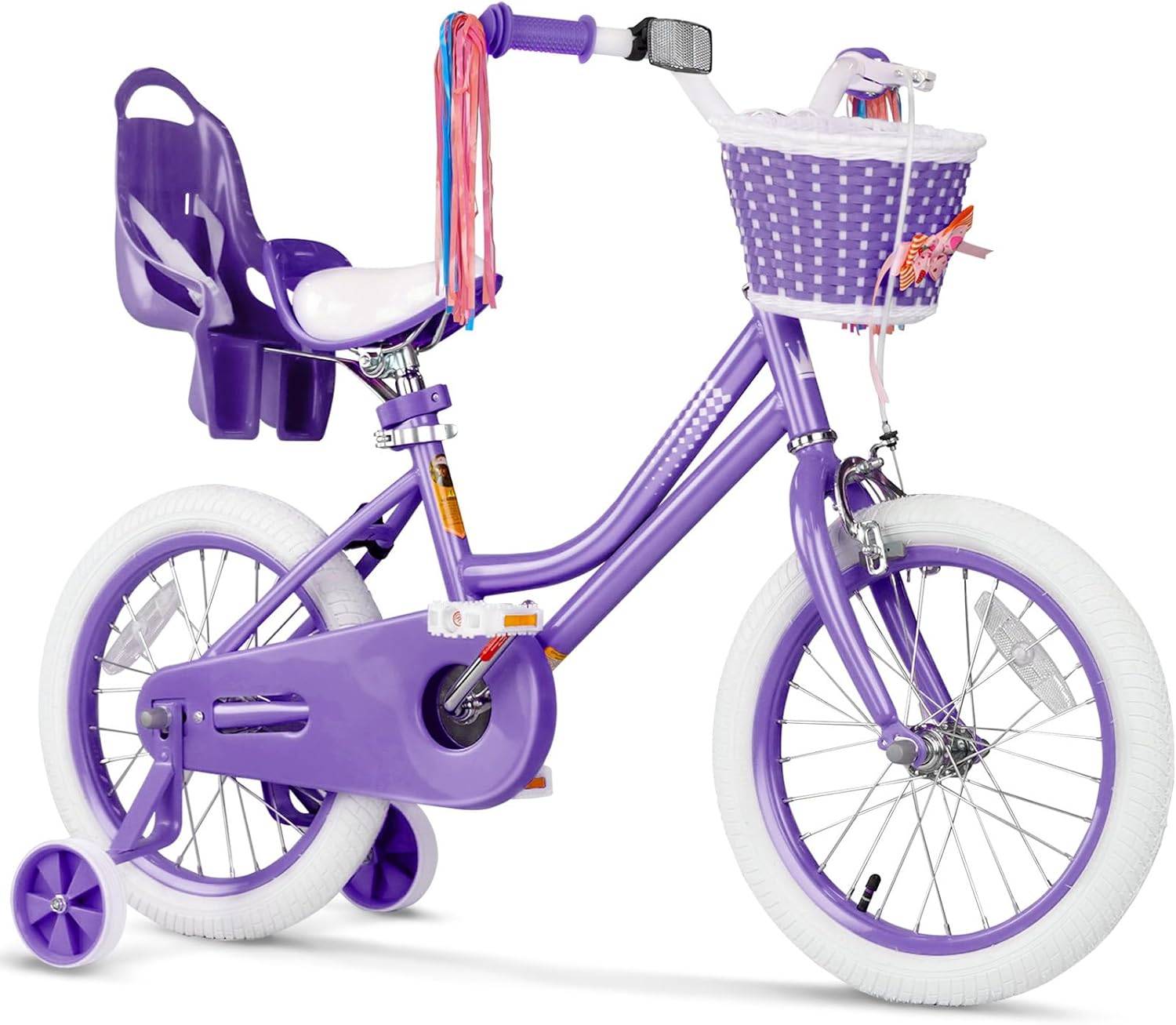
Training wheels can provide lateral support while a child learns pedaling and steering, but their presence does not correct poor reach, inadequate clearance or unusable brakes. Follow the exact product manual for assembly, adjustment, maintenance, compatibility and load limits. If anything is unclear, use a qualified bicycle mechanic.
Prepare for the first rides
Choose a flat, open area away from vehicles, slopes and obstacles. Keep the first sessions short enough that fatigue does not replace control. An adult should remain close and give one instruction at a time.
A bicycle helmet must fit properly, sit level and have its straps adjusted according to the helmet manufacturer’s instructions. Recheck the fit rather than assuming an older helmet still suits a growing child.
Decision: let the child start when their measured height narrows the wheel-size choice and an actual-bike check confirms stand-over clearance, comfortable reach, reliable brake use and enough confidence to steer and stop. If those checks do not pass today, choose a better-fitting option or pause and practise before riding.
Bikes for your next adventure
-

XJD Kids Bike for Girls – Pink, 12/14/16/20 Inch with Training Wheels
The XJD Kids Bike for Girls in Pink is a training-wheel bike built to carry your…$139
$159 -
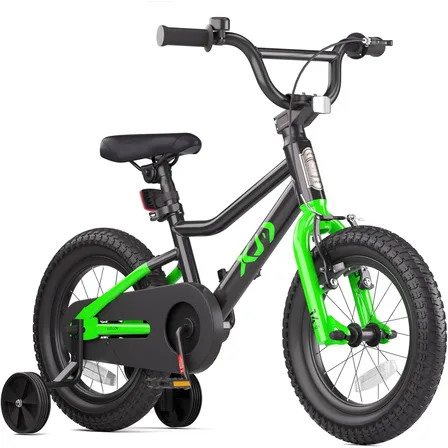
Black XJD Kids' BMX Bicycle with Training Wheels
The XJD Kids' BMX Bicycle with Training Wheels is built for children roughly 3 t…$99.99
$119.99 -

Black XJD Kids Bike for Boys – 12, 14 & 16 Inch Sizes
For a son between roughly 3 and 8 years old, the XJD Kids Bike in Black covers t…$169
$199