

When can my child ride a bike
Your child can ride a bike when they can fit the bike, balance with suitable support, steer, stop and follow simple safety directions—not at one fixed age.
Check readiness before choosing a wheel size
Age is only a starting point. A child is more likely to be ready when they want to try, can walk or run steadily, understand instructions such as “stop” and “wait,” and can stay focused in the riding area. Hesitation is not failure; it may simply mean they need a smaller bike, more support or another attempt later.
Before buying, measure the child’s standing height and inseam. Then have them try the actual bicycle whenever possible. Compare those measurements with the size ranges below, but make the final decision from the child’s position and control on that specific bike.
Use height to find the sizes worth trying
| Wheel size | Age starting point | Rider height |
|---|---|---|
| 12 Inch | 3–4 | 34–40 in / 86–102 cm |
| 14 Inch | 3–6 | 37–45 in / 94–114 cm |
| 16 Inch | 4–7 | 40–48 in / 102–122 cm |
| 18 Inch | 5–9 | 43–52 in / 109–132 cm |
| 20 Inch | 7–12 | 48–60 in / 122–152 cm |
| 24 Inch | 10–14 | 54–64 in / 137–163 cm |
| 26 Inch | Youth and adults | Over 60 in / 153 cm |
Overlapping ranges are intentional: children of the same age can need different sizes. Start with measured height, then compare inseam, reach, brake control and confidence. Never move up merely because a birthday or age range suggests it.
Perform the individual fit check
Have the child stand over the bicycle and confirm that the frame does not prevent a comfortable, controlled stance. Seated, they should reach the handlebars without stretching, twisting or locking their arms. They also need to operate the bicycle’s stopping control reliably with their hands or feet, according to the bike’s design.
- Standing: Can the child support the bike and step away without becoming trapped or tipping immediately?
- Seated: Can they hold the bars, look ahead and turn both ways while remaining composed?
- Stopping: Can they reach and use the brake system firmly and repeatedly?
- Confidence: Can they start, steer and stop with the level of assistance currently being used?
If any answer is no, try a different fit or pause. Do not buy an oversized bicycle for the child to grow into; extra size can reduce their ability to stand over, steer and stop under control.
When the supplied training-wheel bikes are relevant
The catalog options below are relevant when the fit check points to 12, 14 or 16 Inch wheels and the child currently needs training wheels. The Girls 12/14/16 Inch Kids Bike by XJD with Training Wheels – Peach has supplied size labels of 12 Inch, 14 Inch and 16 Inch. The XJD Light Purple Girls Bike with Basket, Training Wheels, 12/14/16/20 Inch also has supplied catalog labels of 12 Inch, 14 Inch and 16 Inch; although “20 Inch” appears in its exact product title, it is not among the supplied available SKU labels, so verify the selectable size rather than relying on the title.
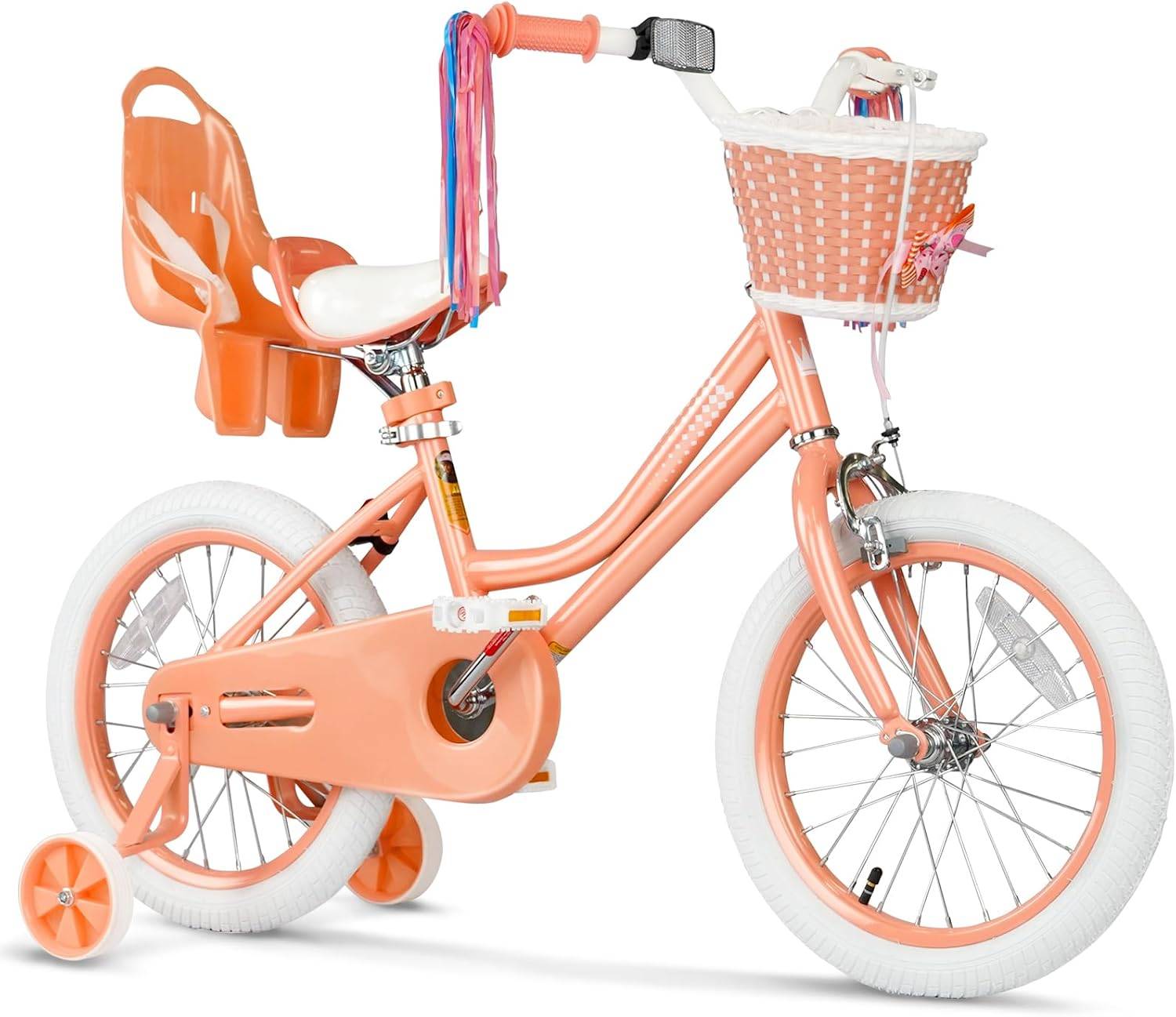 Girls 12/14/16 Inch Kids Bike by XJD with Training Wheels – Peach
Relevant when an individual fit check indicates a 12, 14 or 16 Inch training-wheel bike; those are the supplied available size labels for this peach model.
 XJD Light Purple Girls Bike with Basket, Training Wheels, 12/14/16/20 Inch
A training-wheel comparison option with supplied 12, 14 and 16 Inch SKU labels. Although its exact title mentions 20 Inch, that size is not included in the supplied available labels.
These bikes help compare three early wheel-size starting points and share the catalog classification “Training Wheel Bikes.” They are not appropriate merely because the child likes a color or basket, and they should not substitute for an 18, 20, 24 or 26 Inch fit. If the child’s measurements and test ride indicate one of those other sizes, continue the search in that exact size.
Prepare the first riding session
Use a properly fitting bicycle helmet that sits level and has its straps adjusted according to the helmet manufacturer’s instructions. Choose a quiet, open riding area away from traffic, steep slopes and obstacles. An adult should remain close enough to intervene while allowing the child to practice looking ahead, steering and stopping.
Training wheels can provide support, but their presence does not prove that a bike fits or that a child can control it. Check the bicycle before each session and follow the exact product manual for assembly, adjustment and maintenance. If the manual is missing, a component is loose or the required procedure is unclear, use a qualified bicycle mechanic rather than guessing at compatibility, load limits or torque.
Decide whether your child can ride now
Measure height and inseam today, identify the matching wheel-size range, and arrange an actual fit check. Let the child ride now only if they can stand over the bike, reach comfortably, steer, stop and follow directions with their present level of support. Otherwise, change the size or setup—or wait and try again without treating age alone as the deadline.
Bikes for your next adventure
-
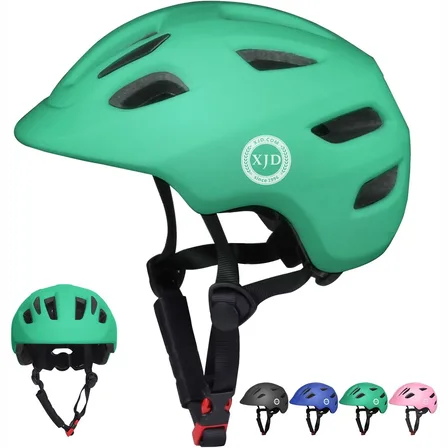
Green XJD Toddler Bike Helmet with Adjustable Fit, XS (46–51 cm)
The XJD toddler bike helmet in Green is built for the youngest riders — the size…$20.39
$23.99 -

Kids Bike Helmet by XJD for Boys & Girls – Black, Blue, Green, Pink, Purple
The XJD Kids Bike Helmet covers a wide 2-to-8-year age range thanks to two head-…$59.99
-

Kids Bike Helmet by XJD for Girls – Pink
The XJD Kids Bike Helmet in Pink is a lightweight multi-sport helmet for girls r…$59.99
$99