

When can my baby ride in a bike trailer
A baby can ride in a bike trailer only when the child meets the trailer maker’s minimum requirements, can maintain the required seated posture and head control, and fits within every stated limit. Age alone is not enough.
Check the trailer manual before checking the calendar
There is no universal age that overrides the instructions for a particular trailer. Find the exact model manual and identify its minimum passenger requirements, permitted seating arrangement, child-support instructions, and height and load limits. If the manual is missing or unclear, contact the manufacturer or ask a qualified bicycle mechanic before riding.
Do not assume that an infant insert, car seat or other accessory makes a younger passenger suitable. Use only accessories and configurations that the exact trailer manual permits. Also check local passenger and helmet rules, which may set additional requirements.
Assess whether your baby is developmentally ready
Before a moving ride, confirm that your baby can hold their head steady and maintain the seated position required by the trailer without collapsing or repeatedly slumping. Observe this while the trailer is stationary and the child is secured exactly as its instructions describe.
If head control, posture, prematurity, a medical condition or recent surgery creates any uncertainty, ask the child’s pediatric clinician. A manufacturer’s minimum age or size is a threshold, not proof that every child at that point is ready.
Measure and compare the actual fit
Write down the child’s current height and weight, then compare both with the manual rather than relying on an estimate. Seat the child in the approved configuration and check that their body, head support and required helmet have adequate clearance. The child should remain in the intended position throughout the stationary check.
- Confirm the child meets every minimum requirement in the manual.
- Confirm height and weight remain within the stated limits.
- Check that the restraint can be adjusted as directed, without improvisation.
- Make sure clothing or a helmet does not prevent the required fit.
- Stop using the trailer configuration when any limit is reached or the fit no longer works.
If the trailer instructions require a helmet, choose one that fits properly, sits level and has its straps adjusted according to the helmet manufacturer’s directions, consistent with U.S. Consumer Product Safety Commission guidance.
Inspect the complete bike-and-trailer setup
Passenger readiness is only one part of the decision. Confirm that the towing bicycle and trailer are compatible, and assemble and attach them exactly as their manuals specify. Follow the manuals for maintenance, load distribution, fasteners and any torque settings; those details vary and should not be guessed.
Before carrying the child, inspect the tires, attachment points, restraint system and any required retention device described by the manufacturer. If assembly, wear or compatibility is uncertain, use a qualified bicycle mechanic. Begin only in a low-risk setting allowed by the manuals, and stop if the child cannot maintain the required position.
Why the supplied XBikes products are comparison points only
The supplied products are children’s BMX bicycles with training wheels, not bike trailers. They therefore cannot establish when a baby is ready for trailer travel. They become relevant later, when a child is being assessed for an independently ridden bicycle, and they illustrate why measured fit matters more than an age assumption.
 XJD Girls BMX Bike 12/14/16 Inch with Training Wheels – Pink Blue
A 12, 14 or 16 Inch kids’ BMX bicycle with training wheels. It is relevant only as a later independent-riding comparison, not as a bike trailer or evidence of infant trailer readiness.
 XJD Boys & Girls BMX Bike with Training Wheels, 12/14/16" – Blue
Available with 12, 14 or 16 Inch labels and training wheels. This children’s BMX bicycle helps distinguish future bicycle fit checks from the separate requirements for carrying a baby in a trailer.
XJD Girls BMX Bike 12/14/16 Inch with Training Wheels – Pink Blue and XJD Boys & Girls BMX Bike with Training Wheels, 12/14/16" – Blue are each offered in 12 Inch, 14 Inch and 16 Inch labels. Those are bicycle wheel-size options, not trailer sizes or substitutes for a trailer.
| Wheel size | XBikes starting age | Rider-height starting point |
|---|---|---|
| 12 Inch | 3–4 | 34–40 in / 86–102 cm |
| 14 Inch | 3–6 | 37–45 in / 94–114 cm |
| 16 Inch | 4–7 | 40–48 in / 102–122 cm |
These ranges are starting points for bicycle selection only. When that later stage arrives, measure the rider and have them try the bicycle. Check stand-over clearance, reach, brake control and present confidence. Do not buy an oversized bicycle merely for growth; this follows American Academy of Pediatrics guidance to prioritize the child’s actual control and fit.
Make the decision in this order
- Locate the exact trailer manual and local passenger rules.
- Measure your baby’s current height and weight.
- Confirm the manual permits the child’s age, size and seating configuration.
- Check steady head control and seated posture while stationary.
- Verify bicycle compatibility, assembly and attachment instructions.
- Ask a pediatric clinician or qualified bicycle mechanic about any unresolved concern.
Ride with your baby only when every manual requirement, developmental check and fit check is satisfied at the same time; if one is uncertain, postpone the trailer ride.
Bikes for your next adventure
-

Kids Bike Helmet by XJD for Girls – Pink
The XJD Kids Bike Helmet in Pink is a lightweight multi-sport helmet for girls r…$59.99
$99 -

Blue XJD Kids Bike Helmet for Boys & Girls
The Blue XJD Kids Bike Helmet is a lightweight, adjustable multi-sport helmet fo…$59.99
$99 -
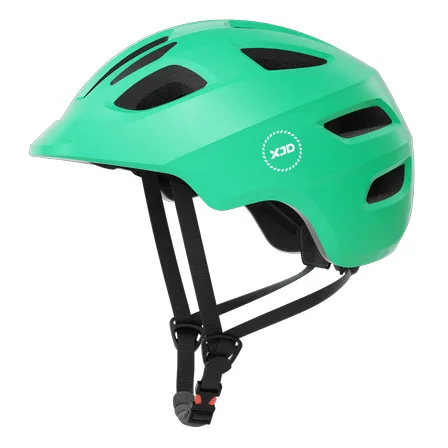
Green XJD Kids Bike Helmet for Boys & Girls
The Green XJD Kids Bike Helmet is a lightweight multi-sport helmet for toddlers …$59.99
$99