

When can kids ride in the bike carrier
Kids can ride in a bike carrier only when they meet every requirement in that carrier’s manual, can maintain the required riding position, and fit securely within all stated limits.
Check the carrier manual before judging by age
There is no single age that applies to every child and every carrier. A rear or front child seat and a bicycle trailer may have different requirements. Find the exact model manual and compare its minimum developmental requirements, permitted child size, load limit, harness fit and helmet instructions with your child today.
Do not estimate a missing limit or rely on another model’s instructions. If the label or manual is unavailable, contact the manufacturer or ask a qualified bicycle mechanic to identify the carrier and confirm whether it can be used as intended.
What to measure and observe
Before the first ride, record the child’s current height and weight so they can be checked against the exact carrier limits. Then examine how the child sits in the carrier rather than assuming that chronological age proves readiness.
- Posture: Confirm that the child can maintain the position required by the manual for the entire ride, including while wearing a properly fitted helmet.
- Harness fit: Use every restraint exactly as the carrier manufacturer directs. The child should not be able to slip out or interfere with the bicycle.
- Body clearance: Check that hands, feet, clothing and straps remain contained and away from wheels, spokes and other moving parts.
- Space: Make sure the child and helmet are not cramped against the carrier structure and that the carrier has not been outgrown.
- Behavior: The child must be able to remain seated and secured. A child who repeatedly unfastens restraints or leans outside the intended position is not ready for that setup.
If even one requirement is not met, postpone the ride. Development, dimensions and behavior matter more than choosing a date from a birthday alone.
Confirm the bicycle and carrier work together
A child may fit the carrier while the complete setup is still unsuitable. Verify that the carrier is compatible with the bicycle, mounting location and any rack or attachment hardware. Follow the exact manuals for assembly, maintenance, load limits and fastener torque; none of those details should be guessed.
Before carrying a child, inspect the attachment, restraints, wheels and brakes as directed by the manufacturers. If compatibility is unclear, parts are missing, or the carrier moves unexpectedly, do not ride until a qualified bicycle mechanic has checked the setup. The adult rider should first practice controlling the loaded bicycle in a traffic-free area without the child aboard, using an appropriate substitute load only if the carrier manual permits and explains it.
Helmet fit is a separate requirement
A carrier harness does not replace a helmet. The U.S. Consumer Product Safety Commission advises that a bicycle helmet must fit properly, sit level and have its straps used according to the helmet manufacturer’s instructions. Check the fit on the actual child rather than relying only on the size printed on the helmet.
Also compare the helmeted child with the carrier’s available headroom and positioning instructions. If the helmet is forced forward, pushed out of level or pressed into an unsuitable position, stop and resolve the fit problem rather than loosening the harness.
When the catalog bicycle becomes relevant
The supplied product is a bicycle for a child or youth to ride, not a verified child carrier. The XJD Kids Beach Cruiser Bicycle, Rear Rack & V-Brakes, Mint Green is offered in 20 Inch, 24 Inch and 26 Inch labels. Its rear rack does not establish that a child carrier can be mounted there; compatibility, load limits and installation must come from the exact manuals or a qualified mechanic.
These catalog sizes help only when comparing a transition from being carried to riding independently. They do not determine readiness for a carrier, and they are not substitutes for a carrier model or its instructions.

If the child is ready to ride independently
Use measured height as the starting point, then require an individual fit check. The relevant XBikes starting points for the supplied bicycle are:
| Wheel label | Starting age | Rider height |
|---|---|---|
| 20 Inch | 7–12 | 48–60 in / 122–152 cm |
| 24 Inch | 10–14 | 54–64 in / 137–163 cm |
| 26 Inch | Youth and adults | Over 60 in / 153 cm |
Age is only a starting point. Have the child try the bicycle and check measured height, inseam, stand-over clearance, reach, brake control and present confidence. Following pediatric guidance, do not buy an oversized bicycle merely for growth. The rider must be able to control it now and reach and operate the brakes appropriately.
Make the decision today
Use the carrier only if your child meets every developmental and dimensional requirement in its exact manual, fits the restraints and helmet correctly, stays securely positioned, and the carrier is confirmed compatible with the bicycle. Otherwise, wait or have the setup assessed. If considering independent riding instead, measure the child and try the matching bicycle size before choosing it.
Bikes for your next adventure
-
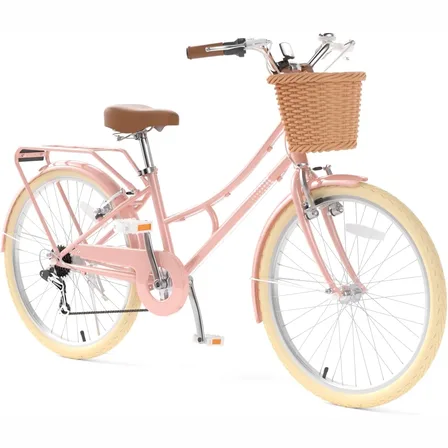
XJD Pink Beach Cruiser for Girls – Rear Rack & V-Brake
The XJD Pink Beach Cruiser for girls is the step-up bike for riders who've outgr…$179.99
$209.99 -
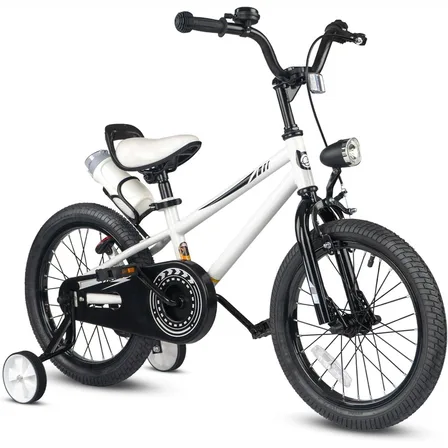
XJD Kids' Training Wheel Bike for Boys & Girls, 12/14/16 Inch – White
The XJD kids' training wheel bike in White is made for riders ages 3–8 (roughly …$169
$199 -

Kids Bike Helmet by XJD for Boys & Girls – Black, Blue, Green, Pink, Purple
The XJD Kids Bike Helmet covers a wide 2-to-8-year age range thanks to two head-…$59.99