

When can you bring baby on bike
Bring a baby on a bike only when the child can maintain a stable seated posture, meets every requirement in the child-seat or trailer manual, and can wear a properly fitted bicycle helmet. If any condition is uncertain, wait and ask the child’s pediatrician.
Do not decide by age alone
There is no single birthday that makes bicycle travel appropriate for every baby. Development, carrier design, local rules and helmet fit all matter. Check the carrier manufacturer’s stated minimum requirements and restrictions for the exact model; do not substitute a general age recommendation.
Before riding, the baby should have the head and trunk control required by the carrier manual and remain stable while seated and secured. A child who slumps, cannot tolerate the riding position or cannot use an appropriate helmet is not ready. Premature birth, low muscle tone, medical conditions or developmental concerns are reasons to consult a pediatrician before making the decision.
What to measure and verify
- Child measurements: Measure current height and weight, plus any other dimensions required by the carrier manual. Compare the actual measurements with that model’s limits rather than relying on clothing size or age.
- Helmet fit: Use the helmet manufacturer’s sizing method. The helmet must fit properly, sit level and have its straps adjusted according to its instructions.
- Harness fit: Confirm that the carrier’s restraint can be adjusted for the child without slack, pinching or an unstable seated position.
- Bicycle compatibility: Verify that the bicycle, frame, rack or attachment point is expressly compatible with the chosen carrier.
- Total load: Include the child, carrier and anything else carried. Follow the bicycle and carrier manuals for load limits; do not estimate them.
If a manual is missing, unclear or conflicts with another component’s instructions, do not ride until the manufacturer or a qualified bicycle mechanic confirms the setup.
Compare a child seat with a trailer
Compare only models approved for bicycle use and suitable for the child’s present measurements and development. A mounted child seat places the passenger and attachment on the bicycle, so mounting compatibility and the bicycle’s handling under load require particular attention. A trailer has its own hitch and passenger compartment, so hitch compatibility, restraint fit and the trailer manual’s requirements become decisive.
Neither format overrides a minimum requirement in its manual. Check local laws as well, because passenger, helmet and equipment rules can differ by location. When choosing between formats, favor the option whose complete instructions your child and bicycle can satisfy now—not one intended for future growth.
Make a controlled pre-ride check
- Have a qualified bicycle mechanic inspect the bicycle and carrier installation if you are not certain about assembly, compatibility or fastener requirements.
- With the bicycle stationary and supported by an adult, check the child’s seated position, harness and helmet.
- Confirm that straps, clothing, feet and hands cannot reach moving parts, following the carrier instructions.
- Test the loaded bicycle without the child in a quiet, traffic-free area so the adult rider can assess mounting, balance, braking and turning.
- For the first passenger ride, choose a short, calm route away from traffic, steep descents and rough surfaces. Stop immediately if the child’s position changes or the equipment behaves unexpectedly.
Recheck fit before every ride. Babies grow quickly, and a previously acceptable harness or helmet adjustment may no longer be correct.
Why the supplied bicycle is a later-stage comparison
The supplied catalog option helps distinguish carrying a baby from fitting an older child to a bicycle of their own. Its wheel sizes are comparison points for a future transition, not baby-passenger equipment and not substitutes for a child seat or trailer.

The XJD Pink Beach Cruiser for Girls – Rear Rack & V-Brake is listed in 20 Inch, 24 Inch and 26 Inch options. Although its title mentions a rear rack, the supplied facts do not establish that the rack accepts a child seat or state any load limit. Use the exact product manual or a qualified bicycle mechanic for compatibility, assembly and load questions.
When the child is ready to ride independently
For the listed bicycle, XBikes’ starting points are: 20 Inch for ages 7–12 and heights 48–60 in (122–152 cm); 24 Inch for ages 10–14 and heights 54–64 in (137–163 cm); and 26 Inch for youth and adults over 60 in (153 cm). These are starting points only.
Measure the rider’s height and inseam, then have the child try the bicycle. Check stand-over clearance, reach, brake control and current confidence. Do not buy an oversized bicycle merely for growth, and treat any age wording in a product title as a catalog label rather than fit evidence.
Your decision for the next ride
Ride with the baby only if development, measurements, helmet fit, restraint fit, bicycle compatibility, equipment limits and local rules all agree today. If even one check fails—or the child cannot remain stable in the required position—do not improvise: postpone the ride and resolve that specific issue first.
Bikes for your next adventure
-
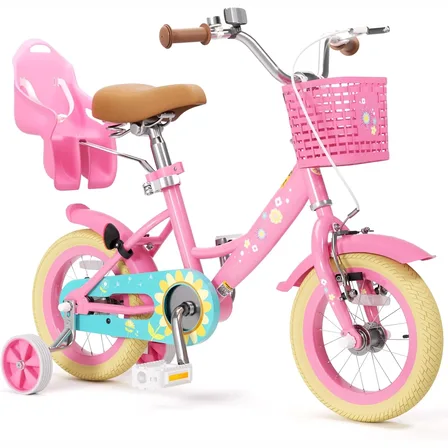
Flower Pink XJD Girls Bike with Doll Seat & Basket
The XJD Flower Pink girls' bike is made for riders 71–122 cm tall (roughly ages …$69.99
-
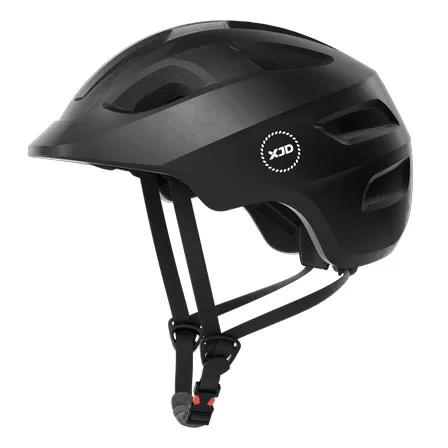
Kids Multi-Sport Bike Helmet by XJD – Black
7 reviews
The XJD Kids Multi-Sport Bike Helmet in Black is a lightweight, adjustable helme…$59.99
$49 -
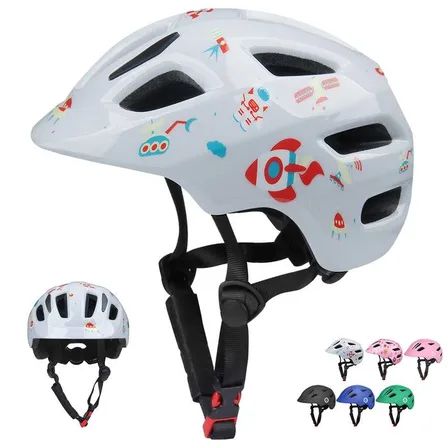
White Astronaut Bike Helmet for Kids by XJD – Toddler to Youth Sizes
4 reviews
The XJD White Astronaut kids' bike helmet is made for toddlers through younger e…$59.99