

When can you put a baby in a bike seat
Put a baby in a bike seat only when they can sit upright unsupported, have steady head and neck control, and meet every requirement in the seat and bicycle manuals.
The readiness test matters more than a birthday
A calendar age alone cannot show that a baby is ready. During an ordinary ride, acceleration, braking, turns and bumps place forces on the child’s head and body. A baby must be able to maintain an upright position and keep their head stable while wearing a correctly fitted bicycle helmet.
If head control is inconsistent, the child slumps, or the helmet overwhelms their posture, wait. If readiness is uncertain because of development, prematurity or a medical condition, ask the child’s pediatrician before riding.
Also check applicable local rules. They may set requirements for child passengers, helmets, approved seating positions or where cycling with a passenger is permitted.
What to measure and compare before installation
Do not rely on the child seat’s appearance or an estimated age range. Record the child’s current measurements, then compare them with the exact manual and labels for the seat:
- Current body weight: It must remain within the seat’s stated load limits.
- Current height and seated position: Confirm that the harness, foot supports and protective areas can be adjusted as the manufacturer directs.
- Helmet fit: The helmet must be the correct size, sit level and use its straps according to the helmet manufacturer’s instructions.
- Posture: Check that the child can remain upright without slumping or losing head control.
Next, compare the seat with the bicycle. Mounting points, frame or rack compatibility, allowable loads, clearances and installation hardware are product-specific. Follow both manuals exactly. If either manual is missing, unclear or appears to conflict with the other, do not improvise; use a qualified bicycle mechanic.
Check the complete setup, not just the child seat
A child who is developmentally ready can still be unsafe in an unsuitable or poorly installed setup. Confirm that the seat is securely installed as specified, the harness and foot restraints adjust correctly, and no part of the child or seat can interfere with the wheels, steering, pedaling or brakes.
The adult rider must be able to mount, balance, steer, brake and dismount while managing the changed weight distribution. Practice without the child in a quiet, traffic-free area first, using an equivalent load only if the product manual permits it. Never invent a test load or installation procedure.
Before every ride, perform the checks required by the manuals. For assembly details, fastener torque, maintenance intervals, load limits and replacement parts, use the exact manufacturer instructions or a qualified mechanic.
When to wait or stop using the seat
Wait if the baby cannot sit unsupported, lacks dependable head and neck control, cannot maintain posture in a properly fitted helmet, or does not meet the manufacturer’s requirements. Do not ride if the seat and bicycle are incompatible, installation is uncertain, a required restraint cannot be adjusted, or the adult cannot control the loaded bicycle confidently.
Stop using the seat when the child exceeds any stated limit, no longer fits the harness or foot supports as directed, or the seat becomes damaged. A child becoming restless, trying to escape the restraints or repeatedly losing a stable position is also a reason to end the ride and reassess.
How the supplied XBikes products relate
The supplied catalog products are training-wheel bicycles, not baby passenger seats. They do not answer seat mounting, passenger readiness or compatibility questions. They become relevant later, when comparing a child’s first independently ridden bicycle. Their 12-, 14- and 16-inch choices are nearest-stage comparison points, not substitutes for a baby bike seat.
 Blue XJD Girls Bike with Training Wheels – 12/14/16 Inch
A Training Wheel Bike offered with 12 Inch, 14 Inch and 16 Inch SKU labels. It is relevant only as a later independent-riding comparison, not as a baby passenger seat or evidence of seat compatibility.
 XJD Boys 12/14/16" Training Wheel Bike – Blue
This Training Wheel Bike has 12 Inch, 14 Inch and 16 Inch SKU labels. It may help compare later first-bike sizing, but the supplied facts do not make it a baby seat or establish passenger-seat compatibility.
Blue XJD Girls Bike with Training Wheels – 12/14/16 Inch and XJD Boys 12/14/16" Training Wheel Bike – Blue are both listed as Training Wheel Bikes with 12 Inch, 14 Inch and 16 Inch SKU labels. The supplied facts do not establish passenger-seat compatibility or make either bicycle suitable for carrying a baby.
| Wheel size | XBikes age starting point | Rider-height starting point |
|---|---|---|
| 12 Inch | Ages 3–4 | 34–40 in / 86–102 cm |
| 14 Inch | Ages 3–6 | 37–45 in / 94–114 cm |
| 16 Inch | Ages 4–7 | 40–48 in / 102–122 cm |
These figures are starting points only. When that later stage arrives, measure the rider’s height and inseam, then have the child try the bicycle. Check stand-over clearance, reach, brake control and current confidence. Do not buy an oversized bicycle merely for growth.
Your next decision
If the baby cannot pass every readiness, helmet-fit, manual-limit and compatibility check today, wait. If they can, have the installation verified when uncertain, practice controlling the loaded bicycle, and begin only under conditions that let the adult stop and balance confidently.
Bikes for your next adventure
-
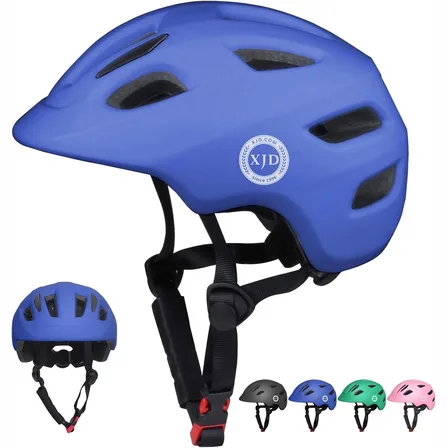
Blue XJD Kids' Bike Helmet, Adjustable Fit – Sizes XS & S
The Blue XJD Kids' Bike Helmet is a lightweight, adjustable helmet for toddlers …$20.39
-

Kids Bike Helmet by XJD for Boys & Girls – Black, Blue, Green, Pink, Purple
The XJD Kids Bike Helmet covers a wide 2-to-8-year age range thanks to two head-…$59.99
-

Kids Bike Helmet by XJD for Girls – Pink
The XJD Kids Bike Helmet in Pink is a lightweight multi-sport helmet for girls r…$59.99
$99