

When can baby sit in bike seat
A baby can sit in a bicycle child seat only after they can sit upright unsupported, steadily control their head and neck, and meet the seat maker’s stated limits. Age alone is not enough.
Check readiness before planning a ride
Watch the child sit on a firm, level surface without being propped up. They should remain upright and keep their head controlled during ordinary movement. A baby who slumps, topples, needs support, or cannot comfortably hold up a properly fitted helmet is not ready for a bike seat.
Development varies, so do not use another child’s timeline as the deciding factor. If your baby was born prematurely, has low muscle tone, or has a condition affecting posture or head control, ask their pediatric clinician before riding.
Compare the baby with the exact seat requirements
“Can sit unsupported” is only the first gate. Check the manual and labels for the exact child seat and bicycle, then confirm all of the following:
- The child falls within every stated size and load limit.
- The seat is compatible with the bicycle and its mounting location.
- The harness can be adjusted snugly and used exactly as directed.
- The child’s feet and clothing can remain secured away from wheels and moving parts.
- The bicycle can be handled and parked without losing control under the changed load.
Do not guess about compatibility, load limits, assembly, fastener torque, or maintenance. Follow the exact manuals, or have a qualified bicycle mechanic inspect the installation. Also check applicable local rules, which may set additional requirements for child passengers.
Make the helmet part of the readiness check
A bicycle helmet must fit properly, sit level, and have its straps adjusted according to the helmet manufacturer’s instructions. It should not tip back, slide around, or interfere with the child’s ability to hold their head naturally.
If the correct helmet overwhelms the baby’s posture or head control, postpone the ride. Never add cushions, alter a helmet, or improvise a harness arrangement unless the relevant manufacturer explicitly permits it.
Do a stationary check before the first trip
- Install and inspect the child seat exactly as its manual specifies.
- Place the bicycle on stable ground while another adult steadies it.
- Secure the child using every provided restraint and foot-retention feature.
- Check that the child stays upright and that nothing reaches the wheels.
- Practice mounting, dismounting, starting, stopping, and turning without the child aboard.
- For the first ride, choose a short, calm route and stop if the child slumps, becomes distressed, or the bicycle feels difficult to control.
Why the supplied bicycle is a later-stage comparison
The Light Pink XJD Girls' Bicycle with Basket & Training Wheels is a training-wheel bicycle offered in 12 Inch, 14 Inch, 16 Inch, and 20 Inch labels. It is not identified in the supplied catalog facts as a baby passenger seat, so it does not solve the immediate question of carrying a baby. It becomes relevant later, when a child is ready to ride and can be individually fitted to a bicycle.
These catalog options help distinguish passenger-seat readiness from independent bicycle fit: their wheel sizes provide later-stage comparison points, not substitutes for a compatible child seat.

When the training-wheel bicycle becomes relevant
| Available size | XBikes starting point |
|---|---|
| 12 Inch | Ages 3–4; height 34–40 in / 86–102 cm |
| 14 Inch | Ages 3–6; height 37–45 in / 94–114 cm |
| 16 Inch | Ages 4–7; height 40–48 in / 102–122 cm |
| 20 Inch | Ages 7–12; height 48–60 in / 122–152 cm |
These are starting points, not proof of fit. Measure the child’s standing height and inseam, then have them try the bicycle. Check stand-over clearance, reach, brake control, and present confidence. Do not buy an oversized bicycle merely to allow room for growth.
Make the decision
Use three separate yes-or-no checks: the baby can sit upright unsupported with reliable head control; the baby meets every requirement in the exact child-seat manual; and a properly fitted helmet can be worn without compromising posture. If any answer is no or uncertain, wait. If all are yes, verify the installation and bicycle compatibility with the manuals or a qualified bicycle mechanic before taking a short first ride.
Bikes for your next adventure
-
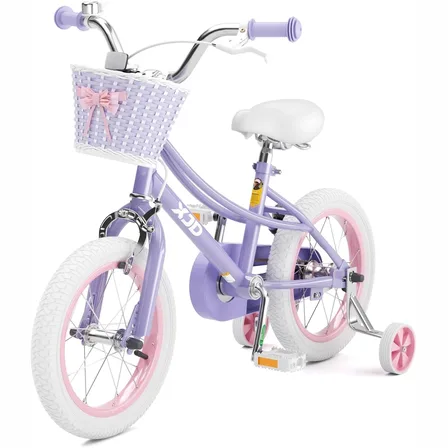
Girls' Training Wheel Bike by XJD with Basket – Purple
If you're shopping for a first bike for a girl roughly 3 to 12 years old (91–152…$75.99
-
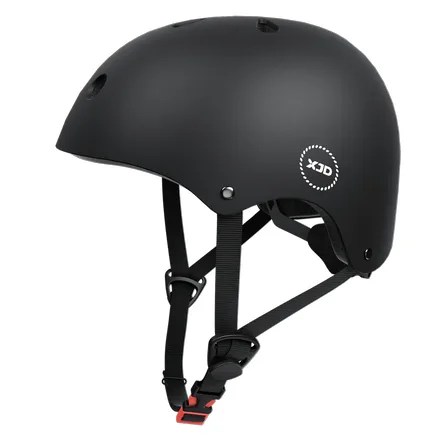
7-in-1 Kids Helmet & Protective Gear Set from XJD – Black or Blue
If you're outfitting one kid (or a couple of siblings) for biking, scootering, o…$59.99
-
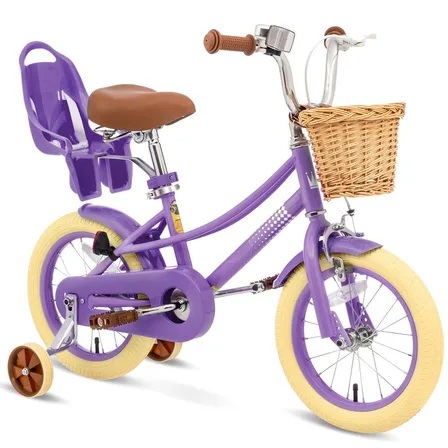
XJD Girls' Bike with Training Wheels, 12/14/16/20 Inch – Purple
The XJD girls' bike with training wheels in Purple is built to grow with your ri…$139
$159