

When can baby go in bike seat
A baby can go in a bicycle passenger seat only after meeting every age, developmental, size and weight rule in that seat’s manual and local law. Confirm that the seat fits the bicycle, the baby can wear a properly fitted helmet, and the adult rider can control the loaded bike. If any requirement is unclear, do not ride yet.
Check readiness before choosing a date
There is no single birthday that makes every baby ready for every bike seat. Passenger-seat designs and rules differ, so begin with the exact manufacturer’s instructions. Check the stated minimum age, minimum and maximum passenger measurements, required developmental abilities, load limit, bicycle compatibility and permitted mounting position. Do not estimate missing limits or transfer specifications from another model.
Compare those requirements with the baby’s current measurements and abilities, not the size they are expected to reach soon. A baby must also be able to use the required helmet without the helmet or seat pushing the head into an unsafe position. If you cannot confidently interpret the instructions, ask the seat manufacturer or a qualified bicycle mechanic before carrying the child.
Measure and compare these points
- Body measurements: Measure the child exactly as the passenger-seat manual directs and compare the results with every stated limit.
- Development: Confirm each head-control, posture or sitting requirement named by the manufacturer; passing a weight limit alone is not enough.
- Helmet fit: Use a bicycle helmet that fits properly, sits level and has straps adjusted according to its manufacturer’s instructions.
- Seat fit: Verify that the specific passenger seat and mounting system are approved for the exact bicycle and installation position.
- Adult control: Consider the changed balance during mounting, stopping and low-speed riding. If control is uncertain, postpone carrying the baby.
What to do before the first ride
- Read the passenger-seat and bicycle manuals together, including all compatibility, assembly, load and maintenance instructions.
- Have a qualified bicycle mechanic check the installation whenever the manuals are unclear, parts appear incompatible or the mounting system cannot be verified.
- Adjust the child restraints and foot protection exactly as directed. Never invent a fastening method or substitute an unspecified component.
- Fit the helmet before placing the child in the seat and make sure the seating position does not disturb that fit.
- Practise mounting, dismounting, starting, stopping and turning without the baby, using an appropriate substitute load only if the product manual permits it.
- Choose a short, calm first outing only after every check passes. Stop if the child’s position changes or the bicycle becomes difficult to control.
These catalog bikes are not baby passenger seats
The supplied XBikes products are training-wheel bicycles in child wheel sizes. They can help a family compare later independent-riding options, but they do not answer passenger-seat compatibility and must not be used as substitutes for a bicycle child seat. In particular, the words “Doll Seat” in one product title describe a catalog feature; they do not establish a place for carrying a baby.
These particular catalog options are relevant only when the child is ready to ride a bicycle rather than travel as a passenger. Their available wheel sizes provide comparison points for that separate transition.
 Pink Girls' 12/14/16" Bike by XJD – Basket & Doll Seat
A training-wheel bicycle offered in 12 Inch, 14 Inch and 16 Inch sizes. Its catalog-listed doll seat is not evidence that it can carry a baby as a passenger.
 Light Pink XJD Girls' Bicycle with Basket & Training Wheels
A training-wheel bicycle available in 12 Inch, 14 Inch, 16 Inch and 20 Inch sizes. It is relevant to later independent-rider fitting, not baby passenger-seat readiness.
 Blue XJD Girls Bike with Training Wheels – 12/14/16 Inch
A training-wheel bicycle supplied in 12 Inch, 14 Inch and 16 Inch sizes. Use its sizes only as starting points for a child’s later individual bicycle fit check.
How the three training-wheel bikes compare
Pink Girls' 12/14/16" Bike by XJD – Basket & Doll Seat is listed in 12 Inch, 14 Inch and 16 Inch sizes. Its doll seat must not be treated as a baby passenger seat.
Light Pink XJD Girls' Bicycle with Basket & Training Wheels is available in 12 Inch, 14 Inch, 16 Inch and 20 Inch sizes. It offers the broadest supplied size list, but that does not determine an individual child’s fit.
Blue XJD Girls Bike with Training Wheels – 12/14/16 Inch is listed in 12 Inch, 14 Inch and 16 Inch sizes. Like the other two products, it is categorized as a training-wheel bike, not a baby-carrying accessory.
For later independent riding, XBikes uses these starting points: 12 Inch for heights 34–40 in (86–102 cm), usually ages 3–4; 14 Inch for 37–45 in (94–114 cm), usually ages 3–6; 16 Inch for 40–48 in (102–122 cm), usually ages 4–7; and 20 Inch for 48–60 in (122–152 cm), usually ages 7–12. Measure height first, then check inseam, stand-over clearance, reach, brake control and current confidence. Have the child try the bicycle, and do not buy an oversized model merely for growth.
Make the go-or-wait decision
Proceed only when the baby meets every requirement in the exact passenger-seat manual, the installation is compatible with the bicycle, the helmet fits correctly and the adult can control the loaded setup. Wait if even one limit, developmental requirement or installation detail is unmet or unknown. The listed XBikes training-wheel models become relevant later, when the child is being individually fitted for independent riding—not when deciding whether a baby can ride in a passenger seat.
Bikes for your next adventure
-

Flower Pink XJD Girls Bike with Doll Seat & Basket
The XJD Flower Pink girls' bike is made for riders 71–122 cm tall (roughly ages …$69.99
-
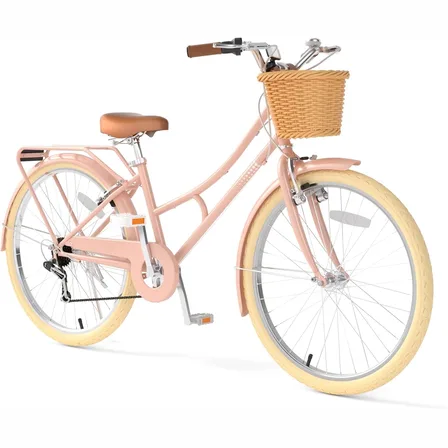
Pink XJD Beach Cruiser Bike, 24"/26", U-Brake
The XJD Pink Beach Cruiser Bike is a single-speed cruiser built for older kids a…$159.99
-
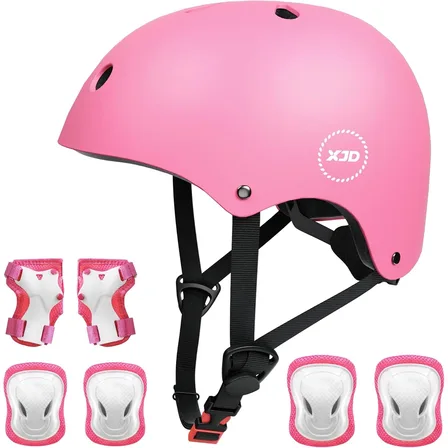
XJD Kids Helmet & Protective Gear Set for Girls, Pink
The XJD Kids Helmet & Protective Gear Set in Pink is a complete safety kit for g…$24.64