

When can you put a baby on a bike
A baby can go on a bike only as a passenger when they can sit steadily without support and meet every requirement for the specific child seat or trailer. Before riding, check the carrier manual, bicycle compatibility, local law and your child’s readiness with their pediatrician.
Passenger readiness comes before age
There is no single birthday that makes every baby ready. A child must have stable head and neck control, remain upright while wearing a properly fitted helmet, and stay securely positioned for the whole trip. Premature birth, low muscle tone or a health condition may change the decision, so ask the child’s pediatrician when there is any uncertainty.
Next, compare the child’s measurements with the carrier manufacturer’s minimum and maximum limits. Check height, weight and any stated developmental requirement. Follow the exact manual for mounting, harness adjustment, compatible bicycles and load limits; if instructions are missing or unclear, use a qualified bicycle mechanic.
Check the complete passenger setup
A suitable child carrier and a suitable bicycle must work as one system. Do not assume that a seat or trailer fits because it can be loosely attached. Confirm the exact bicycle and carrier combination in the manufacturer’s compatibility information.
- Position: The child should remain upright and supported rather than slump or tip sideways.
- Restraint: Use the carrier harness and retention features exactly as its manual directs.
- Helmet: Use a properly fitting bicycle helmet that sits level, with straps adjusted according to its manufacturer’s instructions.
- Bicycle control: The adult rider must be able to mount, stop, balance and handle the bicycle with the passenger system loaded.
- Route: Begin in a quiet, controlled area and avoid conditions beyond the adult rider’s current ability.
If any one of these checks fails, the answer to “When can you put a baby on a bike?” is not yet.
When the question means riding their own bike
A baby is not ready for the training-wheel bicycles in the supplied catalog. Those options begin at the XBikes 12 Inch starting point of ages 3–4 and heights 34–40 in (86–102 cm), followed by larger sizes. Age is only an initial reference: measure the child and perform an individual fit check.
For a first pedal bike, measure standing height and inseam, then have the child try the bicycle. Check that they have appropriate stand-over clearance, can reach the handlebars without stretching, can operate the brakes, and can start, stop and steer with control. Do not choose an oversized bicycle merely to allow room for growth.
Compare the supplied training-wheel sizes
The Purple XJD Girls' Bike with Doll Seat & Basket is a Training Wheel Bike offered with 12 Inch, 14 Inch and 16 Inch SKU labels. These catalog options help answer the title by showing the independent-rider sizes that follow the baby-passenger stage; they are not baby carriers and should not be used as substitutes for one.
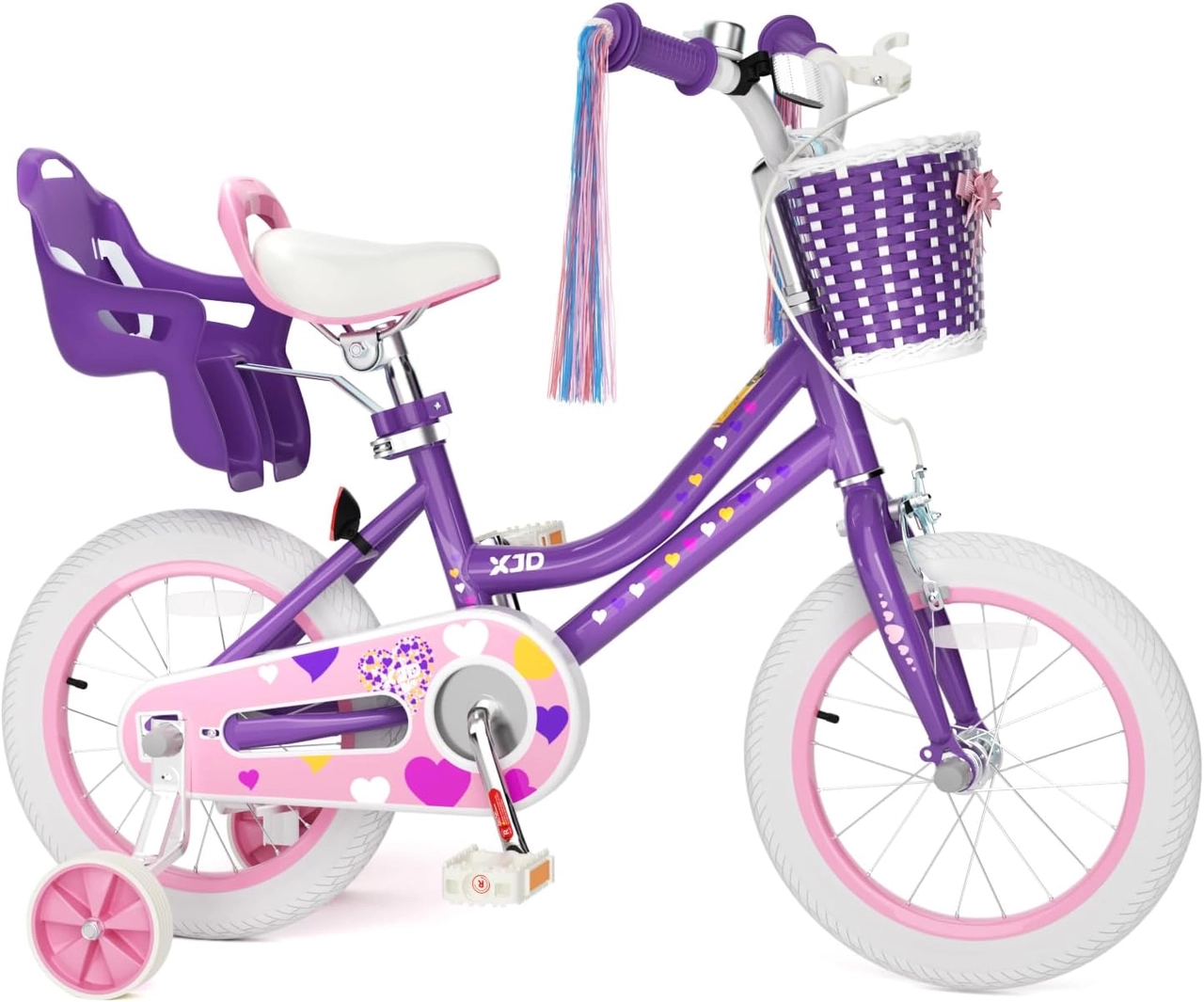
| Available size | XBikes starting point | Fit decision |
|---|---|---|
| 12 Inch | Ages 3–4; 34–40 in / 86–102 cm | Try it and check stand-over, reach, brakes and control. |
| 14 Inch | Ages 3–6; 37–45 in / 94–114 cm | Compare measured height and inseam rather than age alone. |
| 16 Inch | Ages 4–7; 40–48 in / 102–122 cm | Use only if the child controls it confidently during a fit check. |
The ranges overlap because children of the same age differ in proportions and confidence. A taller listed size is not automatically the right choice, and the product title itself supplies no additional fit evidence.
What to do before the first outing
- Decide whether the child will be a passenger or an independent rider.
- For a passenger, confirm unsupported sitting, steady head control, carrier limits, bicycle compatibility and local requirements.
- Fit the helmet level and adjust its straps using the helmet manufacturer’s directions.
- Have the adult practice handling the equipped bicycle in a controlled area before adding the child.
- For an independent rider, record height and inseam, compare the relevant XBikes starting points, and arrange an in-person fit check.
Postpone the ride if the child slumps, cannot tolerate the helmet, falls outside a carrier limit, or if the adult cannot confidently control the loaded bicycle. For uncertain installation, maintenance, compatibility or load-limit questions, consult the exact product manual or a qualified bicycle mechanic.
Make the decision
Put a baby on a bike only after passenger readiness and every carrier, helmet, bicycle and legal check agree. If you are instead shopping for the child’s own bike, wait until their measurements and control support a proper fit; then compare the 12, 14 and 16 Inch options in person rather than buying ahead for growth.
Bikes for your next adventure
-
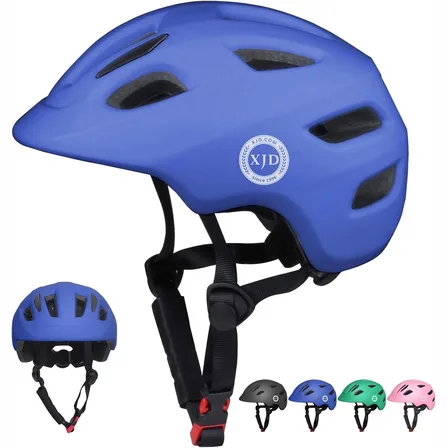
Blue XJD Kids' Bike Helmet, Adjustable Fit – Sizes XS & S
The Blue XJD Kids' Bike Helmet is a lightweight, adjustable helmet for toddlers …$20.39
-

Kids Bike Helmet by XJD for Boys & Girls – Black, Blue, Green, Pink, Purple
The XJD Kids Bike Helmet covers a wide 2-to-8-year age range thanks to two head-…$59.99
-

Kids Bike Helmet by XJD for Girls – Pink
The XJD Kids Bike Helmet in Pink is a lightweight multi-sport helmet for girls r…$59.99
$99