

When do children ride a bike
Children can start riding a bike when they fit an appropriate size and can steer, stop, balance and follow simple directions with confidence. Age is only a starting point: measure the child, test the actual bicycle and do not buy a larger bike for them to grow into.
Look for readiness, not a birthday
A child is ready to ride when they are interested in trying and can stay attentive long enough to practise. They should be able to hold the handlebar, steer deliberately and understand when to stop. Hesitation, poor control or an awkward riding position means it is better to pause, adjust the fit or try another size.
The XBikes starting points place 12-inch bikes at ages 3–4 and 14-inch bikes at ages 3–6, but those ranges do not decide readiness. Two children of the same age can differ in height, proportions, coordination and confidence. Use age only to identify sizes worth trying.
Measure before comparing bikes
Measure the child’s standing height without shoes. Also measure inseam from the floor to the crotch while the child stands naturally. Record both measurements rather than relying on clothing size or an estimate.
Compare standing height with this XBikes wheel-size table, then confirm the fit on the actual bicycle. The overlapping ranges are intentional: a child near a boundary may fit either size differently because frame dimensions and body proportions vary.
| Wheel size | Age starting point | Rider height |
|---|---|---|
| 12 Inch | 3–4 | 34–40 in / 86–102 cm |
| 14 Inch | 3–6 | 37–45 in / 94–114 cm |
| 16 Inch | 4–7 | 40–48 in / 102–122 cm |
| 18 Inch | 5–9 | 43–52 in / 109–132 cm |
| 20 Inch | 7–12 | 48–60 in / 122–152 cm |
| 24 Inch | 10–14 | 54–64 in / 137–163 cm |
| 26 Inch | Youth and adults | Over 60 in / 153 cm |
Check the bicycle with the child on it
Have the child try the exact bicycle. Following American Academy of Pediatrics guidance, check that there is suitable stand-over clearance and that the rider can control the bike rather than stretching or wobbling. Do not choose an oversized bicycle merely to allow room for growth.
- Stand-over: The child should be able to straddle the bicycle without the frame preventing a stable stance.
- Reach: Hands should meet the handlebar without an exaggerated forward stretch or locked, uncomfortable posture.
- Brake control: The child must be able to reach and operate the fitted braking controls reliably. Confirm this on the individual bike.
- Starting and stopping: Ask the child to demonstrate controlled starts, steering and stops in a traffic-free practice area.
- Confidence: Choose the size the child can manage now, even if an age chart suggests a larger option.
If either foot placement, reach or braking control looks uncertain, compare another size or ask a qualified bicycle mechanic to assess the fit. Follow the exact product manual for assembly, adjustments, maintenance, load limits, compatibility and torque.
Where the supplied bikes fit the decision
The Black XJD Kids' BMX Bicycle with Training Wheels is catalogued as a Kids' BMX Bike in 12 Inch, 14 Inch and 16 Inch options. The Pink Girls' 12/14/16" Bike by XJD – Basket & Doll Seat is catalogued as a Training Wheel Bike in the same three wheel sizes. These options help families compare the sizes that overlap the XBikes starting ranges from ages 3 through 7, subject to measured height and an individual fit check.
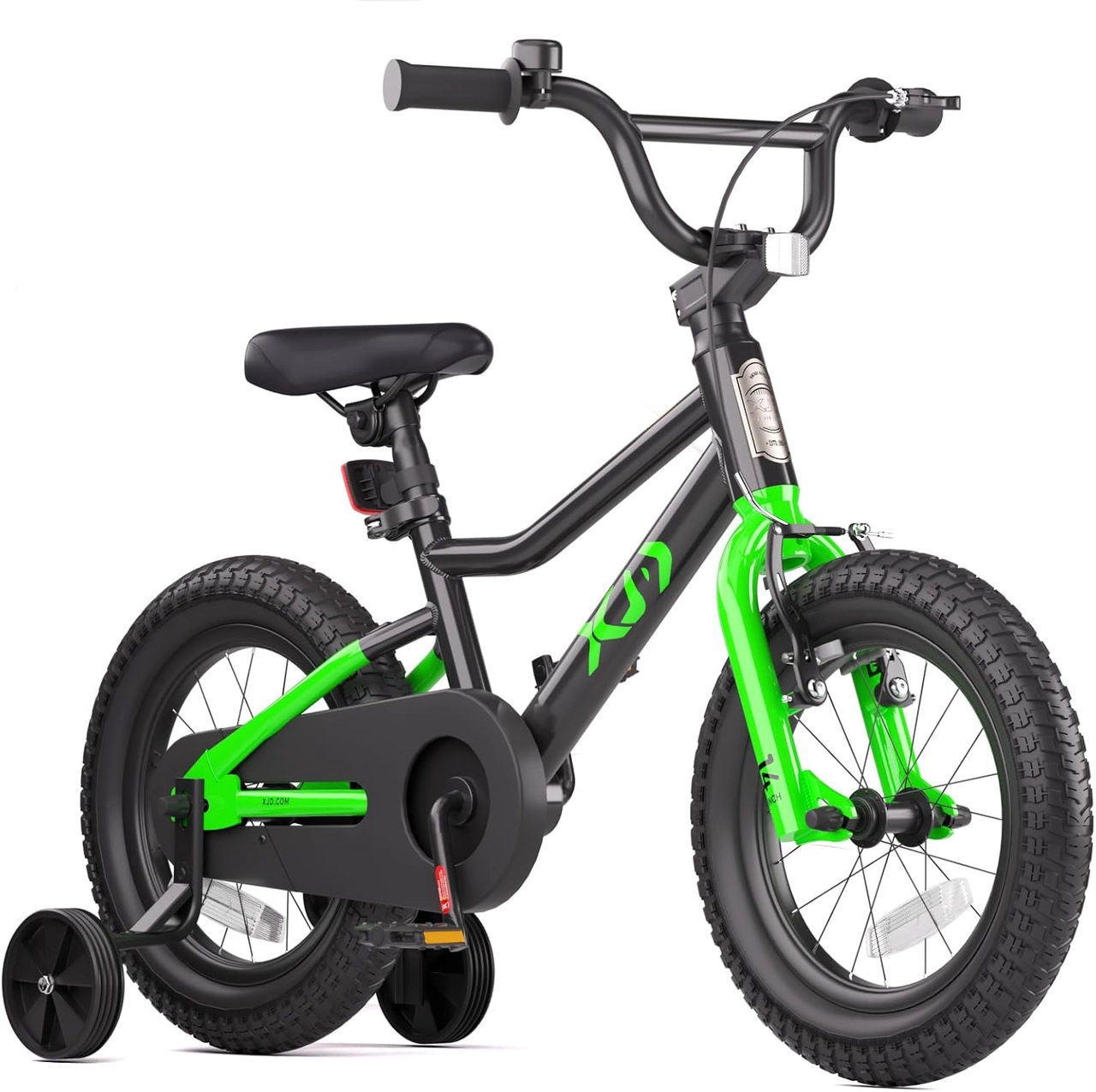 Black XJD Kids' BMX Bicycle with Training Wheels
Available in 12 Inch, 14 Inch and 16 Inch, this Kids' BMX Bike is relevant for comparing early wheel-size options after measuring the rider and checking individual control.
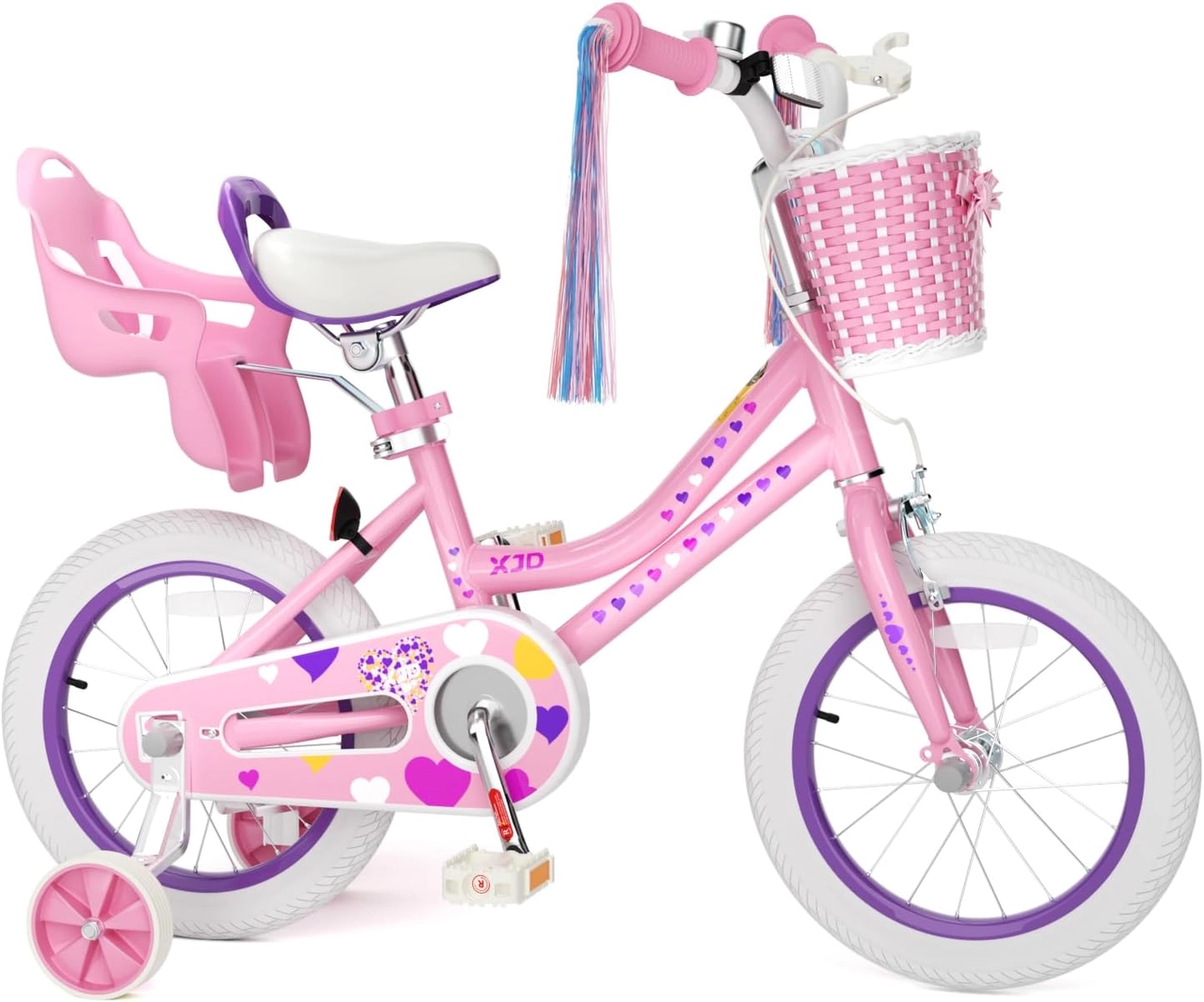 Pink Girls' 12/14/16" Bike by XJD – Basket & Doll Seat
This Training Wheel Bike is offered in 12 Inch, 14 Inch and 16 Inch, making it relevant to early size comparisons while still requiring height, inseam, reach and brake-control checks.
The catalog information does not establish frame dimensions, brake type, weight or suitability for a particular child. Nor does the presence of training wheels replace checks for reach, braking control and confidence. If the child’s measured range indicates 18, 20, 24 or 26 Inch, these two products are smaller comparison points only; they are not substitutes for the indicated wheel size.
Prepare for the first rides
Use a flat, open area away from traffic and obstacles. Keep early sessions short enough for the child to remain attentive, and practise starting, steering and stopping before adding distance or more complex surroundings. An adult should supervise and match the riding environment to the child’s present control.
A bicycle helmet must fit properly, sit level and have its straps used according to the helmet manufacturer’s instructions, consistent with U.S. Consumer Product Safety Commission guidance. Recheck the fit rather than assuming a helmet is correct because its label mentions the child’s age.
Decide what to do next
- Measure standing height and inseam.
- Use the table to shortlist a wheel size, giving height priority over age.
- Have the child straddle and try the exact bicycle.
- Compare stand-over, reach, brake operation and controlled stopping.
- Choose only a bike the child can control confidently today.
If those checks succeed, the child is ready to begin supervised practice. If they cannot comfortably stand over, reach, steer or stop the shortlisted bike, do not move up for growth; test a more suitable fit or wait and reassess.
Bikes for your next adventure
-

Blue XJD Girls Bike with Training Wheels – 12/14/16 Inch
If you're shopping for a first pedal bike for a daughter roughly 3 to 8 years ol…$149
$169 -
XJD Girls BMX Bike 12/14/16 Inch with Training Wheels – Pink Blue
The XJD Girls BMX Bike in Pink/Blue is built as a first pedal bike for kids roug…$99.99
$119.99 -

26-Inch XJD Beach Cruiser Bike for Girls – Purple, V-Brake
This XJD 26-inch purple beach cruiser is sized for big kids and teens — suggeste…$218.49
$229.99