

When do children start riding a bike
Most children start riding a bike between ages 3 and 6, but readiness and fit matter more than age. Measure height and inseam, then check control.
When is a child ready to start?
A child can begin learning when they are interested, can follow simple directions and can stay engaged long enough to practise. They should also be able to hold the handlebars, steer deliberately and stop when asked. Hesitation is not failure; it may simply mean the child needs more time or a better-fitting bicycle.
Age gives you a starting point, not a buying decision. Children of the same age can differ substantially in height, reach, coordination and confidence. Never move to a larger bicycle solely because the child will grow into it.
Measure before comparing bicycles
Measure the child without shoes against a wall for standing height. For inseam, have the child stand upright with feet slightly apart and measure from the floor to the crotch. Record both measurements in inches or centimetres.
Next, compare measured height with these XBikes wheel-size starting points. Overlapping ranges are intentional: when two sizes appear possible, an individual fit check decides.
| Wheel size | Starting age | Rider height |
|---|---|---|
| 12 Inch | 3–4 | 34–40 in / 86–102 cm |
| 14 Inch | 3–6 | 37–45 in / 94–114 cm |
| 16 Inch | 4–7 | 40–48 in / 102–122 cm |
| 18 Inch | 5–9 | 43–52 in / 109–132 cm |
| 20 Inch | 7–12 | 48–60 in / 122–152 cm |
| 24 Inch | 10–14 | 54–64 in / 137–163 cm |
| 26 Inch | Youth and adults | Over 60 in / 153 cm |
Use the age column only to begin the search. Prioritize measured height, inseam, reach, brake control and current confidence. Inseam helps you evaluate the actual bicycle, because wheel size alone does not reveal its full geometry or stand-over clearance.
Do this fit check in person
Have the child try the bicycle rather than relying on its label. The American Academy of Pediatrics advises against buying an oversized bike for future growth and recommends checking stand-over, control and brake reach.
- Check stand-over: With the child straddling the bicycle, confirm that they can stand securely and are not pressed against the frame.
- Check the riding position: Seat the child and confirm that reaching the handlebars does not force an awkward stretch or compromise steering.
- Check stopping control: Make sure the child can comfortably reach and operate the bicycle's stopping controls without losing their grip or balance.
- Watch a short trial: Look for deliberate steering, controlled starts and stops, and enough confidence to respond to instructions.
If any check fails, do not treat a matching age or height band as proof of fit. Compare another size or bicycle. Follow the exact product manual for assembly, adjustment, maintenance, load limits, compatibility and torque; use a qualified bicycle mechanic when needed.
How the supplied XBikes options compare
These catalog options help answer when children start because they provide several wheel sizes to compare, from common first-bike starting points through sizes intended for taller, older riders.
 Pink Girls' 12/14/16" Bike by XJD – Basket & Doll Seat
A Training Wheel Bike offered in 12 Inch, 14 Inch and 16 Inch labels, covering several XBikes starting ranges for younger riders; measurement and an individual fit check must determine the appropriate option.
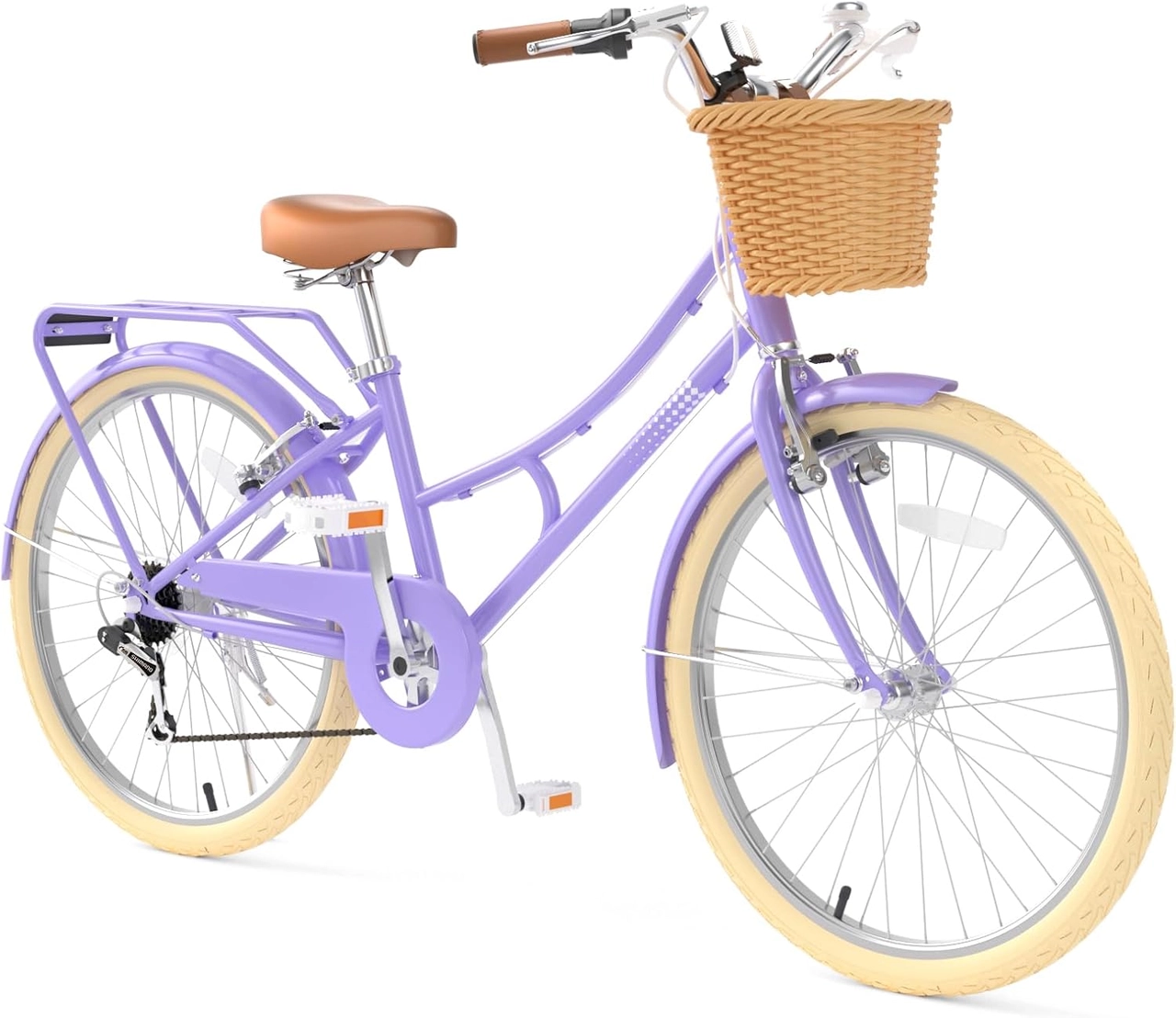 24-Inch Purple XJD Beach Cruiser Bike with U-Brake
This 24-inch Beach Cruiser Bike is relevant mainly as a comparison for taller or older children within the 54–64 inch XBikes starting range, subject to an individual fit check.
 Blue XJD Freestyle BMX Bike, 20-Inch – No Pegs
This 20-inch Kids' BMX Bike provides a later-size comparison for riders in the 48–60 inch XBikes starting range and should not substitute for a smaller size a child needs.
The Pink Girls' 12/14/16" Bike by XJD – Basket & Doll Seat is categorized as a Training Wheel Bike and is offered in 12 Inch, 14 Inch and 16 Inch labels. Those sizes span XBikes starting ranges from ages 3–4 and 34–40 inches for 12 Inch through ages 4–7 and 40–48 inches for 16 Inch. Select among them by measurement and an individual fit check, not by age alone.
The Blue XJD Freestyle BMX Bike, 20-Inch – No Pegs is categorized as a Kids' BMX Bike. Its 20-inch size is a starting point for ages 7–12 and heights of 48–60 inches, so it is generally a later-size comparison rather than a typical first-bike option for a smaller preschool rider.
The 24-Inch Purple XJD Beach Cruiser Bike with U-Brake is categorized as a Beach Cruiser Bike. The 24-inch starting range is ages 10–14 and 54–64 inches in height. It is relevant when the prospective learner is a taller or older child, but it should not replace a smaller required size.
Prepare for the first ride
Choose a quiet, open area away from traffic and obstacles. Keep initial sessions short enough that fatigue does not erode control. A calm child who can practise starting, steering and stopping is better positioned to learn than one being pushed to continue.
A bicycle helmet is essential for every ride. The U.S. Consumer Product Safety Commission says it must fit properly, sit level and have its straps used according to the helmet manufacturer's instructions. Recheck the fit rather than assuming an existing helmet still fits.
Make the decision
Start now only if the child is willing and can control a correctly fitted bicycle. Measure height and inseam today, shortlist the corresponding wheel-size band, and have the child pass the stand-over, reach, brake-control and confidence checks before choosing.
Bikes for your next adventure
-

Blue XJD Girls Bike with Training Wheels – 12/14/16 Inch
If you're shopping for a first pedal bike for a daughter roughly 3 to 8 years ol…$149
$169 -

XJD Girls BMX Bike 12/14/16 Inch with Training Wheels – Pink Blue
The XJD Girls BMX Bike in Pink/Blue is built as a first pedal bike for kids roug…$99.99
$119.99 -

26-Inch XJD Beach Cruiser Bike for Girls – Purple, V-Brake
This XJD 26-inch purple beach cruiser is sized for big kids and teens — suggeste…$218.49
$229.99