

When do kids learn to ride a bike
Most children learn to ride a bike between ages 3 and 8, but there is no required age. Readiness, fit, confidence and practice matter more than the calendar.
What age is typical?
Some children begin balancing and pedaling around age 3 or 4; others are not ready until several years later. Either can be normal. A child is more likely to learn when they want to try, can follow simple directions, and can steer, stop and keep the bicycle upright without becoming overwhelmed.
Age can suggest where to start looking, but it cannot confirm bicycle fit. Measure the child and have them try the actual bike. Do not buy an oversized bicycle for them to grow into: excessive size can make starting, stopping and controlling the bike harder.
Measure before choosing a wheel size
Measure the child’s height without shoes and their inseam from the floor to the crotch. Then compare those measurements with the bicycle’s stand-over clearance, saddle adjustment and reach. On the actual bike, the child should be able to stand over it, reach the handlebars comfortably, turn them without strain and operate the brakes with control.
Use these XBikes ranges only as starting points:
| Wheel size | Starting age | Rider height |
|---|---|---|
| 12 Inch | 3–4 | 34–40 in / 86–102 cm |
| 14 Inch | 3–6 | 37–45 in / 94–114 cm |
| 16 Inch | 4–7 | 40–48 in / 102–122 cm |
| 18 Inch | 5–9 | 43–52 in / 109–132 cm |
| 20 Inch | 7–12 | 48–60 in / 122–152 cm |
| 24 Inch | 10–14 | 54–64 in / 137–163 cm |
| 26 Inch | Youth and adults | Over 60 in / 153 cm |
Where ranges overlap, compare the child’s inseam, reach, brake control and confidence on each candidate rather than automatically choosing the larger wheel.
How to tell whether your child is ready
Before expecting independent riding, look for a few practical signs:
- The child is interested rather than being pushed to participate.
- They can walk or coast the bike while looking ahead.
- They can steer around a gentle turn and respond to a request to stop.
- They can reach and operate the bicycle’s controls without stretching or losing their grip.
- They tolerate brief mistakes and are willing to try again.
If these skills are not present, pause and return to short, low-pressure balance and control practice. Waiting is usually more productive than moving to a larger bike or extending a frustrating session.
Training wheels and the supplied bikes
Training wheels can provide support while a child practices pedaling and steering, but they do not determine the right learning age or correct an unsuitable fit. The supplied catalog options are relevant when a measured child fits a 12-, 14- or 16-inch starting range and the family specifically wants a training-wheel bike for early practice.
The Girls 12/14/16 Inch Kids Bike by XJD with Training Wheels – Peach is categorized as a training-wheel bike and has supplied 12 Inch, 14 Inch and 16 Inch SKU labels. The XJD Light Purple Girls Bike with Basket, Training Wheels, 12/14/16/20 Inch is also categorized as a training-wheel bike; its supplied available SKU labels are 12 Inch, 14 Inch and 16 Inch. These choices help compare three early-learning wheel sizes, but the title wording alone does not prove fit.
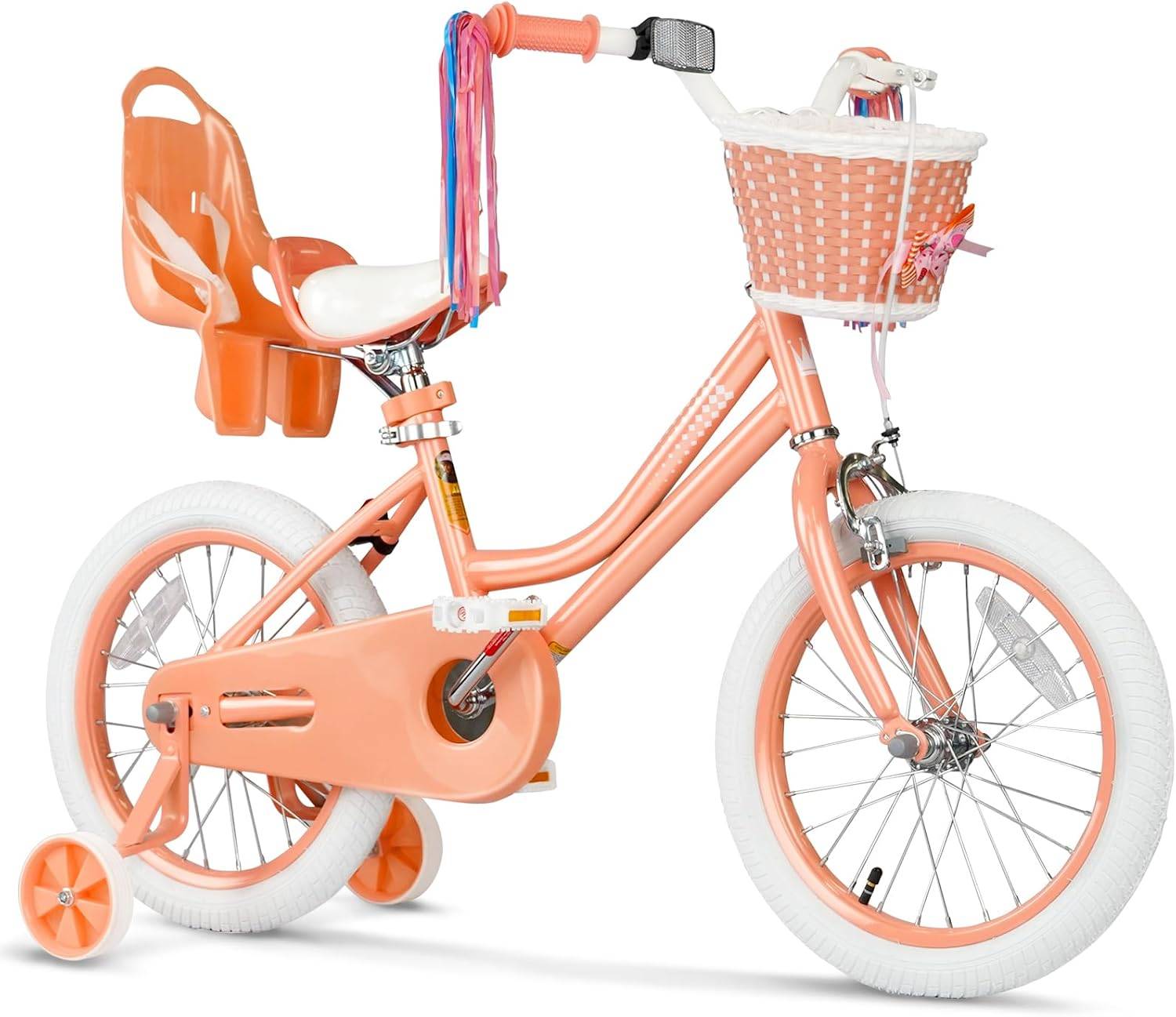 Girls 12/14/16 Inch Kids Bike by XJD with Training Wheels – Peach
A training-wheel bike with supplied 12 Inch, 14 Inch and 16 Inch SKU labels, relevant for children whose measurements, reach, control and confidence support one of those sizes.
 XJD Light Purple Girls Bike with Basket, Training Wheels, 12/14/16/20 Inch
A training-wheel bike with a basket and supplied available labels of 12 Inch, 14 Inch and 16 Inch; compare those sizes through an individual fit and control check.
Neither product should be selected from age or color alone. If the child’s measurements and control point toward 18, 20, 24 or 26 inches, these supplied 12-, 14- and 16-inch options are comparison points, not equal substitutes. Confirm the exact selectable size before ordering.
A simple way to teach the first rides
- Choose a flat, open area away from traffic, slopes and obstacles.
- Begin with getting on, standing over the bike, looking ahead and stopping on request.
- Let the child practice balance and steering before combining those skills with sustained pedaling.
- Keep sessions brief and finish after a small success rather than after exhaustion.
- Offer calm guidance without holding the child at a speed they cannot control independently.
Use a properly fitting bicycle helmet every time. It should sit level and be adjusted with its straps according to the helmet manufacturer’s instructions. Recheck the fit rather than assuming last season’s adjustment still works.
What to do next
Measure height and inseam today, identify the starting wheel-size range, and arrange an actual fit check. Have the child demonstrate comfortable stand-over, reach, steering, stopping and brake operation. Choose a supplied training-wheel model only if its available 12-, 14- or 16-inch size passes those checks and training wheels suit the child’s current confidence.
For assembly, adjustments, maintenance, compatibility, load limits or torque, follow the exact product manual or use a qualified bicycle mechanic. The right time to learn is when the child is willing and can control a correctly fitted bike—not when they reach a particular birthday.
Bikes for your next adventure
-

Blue XJD Girls Bike with Training Wheels – 12/14/16 Inch
If you're shopping for a first pedal bike for a daughter roughly 3 to 8 years ol…$149
$169 -

Black XJD Kids Bike for Boys – 12, 14 & 16 Inch Sizes
For a son between roughly 3 and 8 years old, the XJD Kids Bike in Black covers t…$169
$199 -

XJD Kids Bike for Girls – Pink, 12/14/16/20 Inch with Training Wheels
The XJD Kids Bike for Girls in Pink is a training-wheel bike built to carry your…$139
$159