

When do kids learn to ride bike
Most kids learn to ride a bike between ages 3 and 7, but readiness matters more than a birthday. Measure height, check fit and watch how confidently your child balances, steers and brakes.
What determines when a child is ready?
A child is ready to learn when they can follow simple directions, look ahead while moving, steer deliberately and keep trying after a wobble. They should also be able to hold the bicycle upright and reach its controls without stretching.
Some children begin balancing at three or four; others learn several years later. Both can be normal. Coordination, interest, confidence and access to a correctly fitted bicycle influence timing. Pressure usually makes practice harder, so use the age ranges below as starting points rather than deadlines.
Measure before choosing a wheel size
Measure the child’s height without shoes, standing straight against a wall. Also measure inseam from the floor to the crotch. Compare those measurements with the bicycle’s stand-over clearance, saddle adjustment and the manufacturer’s fit information. The child should try the actual bicycle whenever possible.
| Wheel size | Starting age | Rider height |
|---|---|---|
| 12 Inch | 3–4 | 34–40 in / 86–102 cm |
| 14 Inch | 3–6 | 37–45 in / 94–114 cm |
| 16 Inch | 4–7 | 40–48 in / 102–122 cm |
| 18 Inch | 5–9 | 43–52 in / 109–132 cm |
| 20 Inch | 7–12 | 48–60 in / 122–152 cm |
| 24 Inch | 10–14 | 54–64 in / 137–163 cm |
| 26 Inch | Youth and adults | Over 60 in / 153 cm |
Where ranges overlap, choose by actual fit and control—not by age alone. Never buy an oversized bicycle merely to allow room for growth. A bike that is difficult to stand over, steer or stop can undermine learning and confidence.
Use a hands-on fit check
Have the child stand over the bicycle, sit on it and hold the handlebar. Confirm that they can mount and dismount without struggling, maintain a comfortable reach and turn the handlebar without losing posture. Their hands must reach and operate the brakes reliably.
- Stand-over: The child can straddle the frame with stable footing and appropriate clearance.
- Reach: The handlebar is accessible without locking the elbows or leaning excessively.
- Brake control: The child can reach and apply the controls while keeping a secure grip.
- Confidence: The rider can start, steer, slow and stop without the bicycle feeling unmanageable.
If any check fails, compare another size or geometry. For assembly, adjustments, compatibility and torque requirements, follow the exact product manual or consult a qualified bicycle mechanic.
How to help a child learn
Choose a flat, open area away from traffic and obstacles. Begin with short sessions while the child is rested. Let them become comfortable mounting, looking ahead, steering and stopping before adding speed.
- Practice walking the bicycle and using the brakes.
- Work on gliding and balance at a manageable pace.
- Add pedaling once the child can steer and stop predictably.
- Repeat starts, controlled stops and gentle turns.
Offer calm instructions and stop before frustration takes over. Progress may arrive in small steps rather than one breakthrough. A properly fitting bicycle helps the child concentrate on balance and control instead of wrestling with size.
Where the supplied bikes fit the decision
The supplied catalog options begin at 24 inches, so they are relevant to taller or older learners rather than most children first learning between three and seven. They help families compare 24- and 26-inch possibilities after measurements place the rider in those ranges; they are not substitutes for smaller learning-bike sizes.
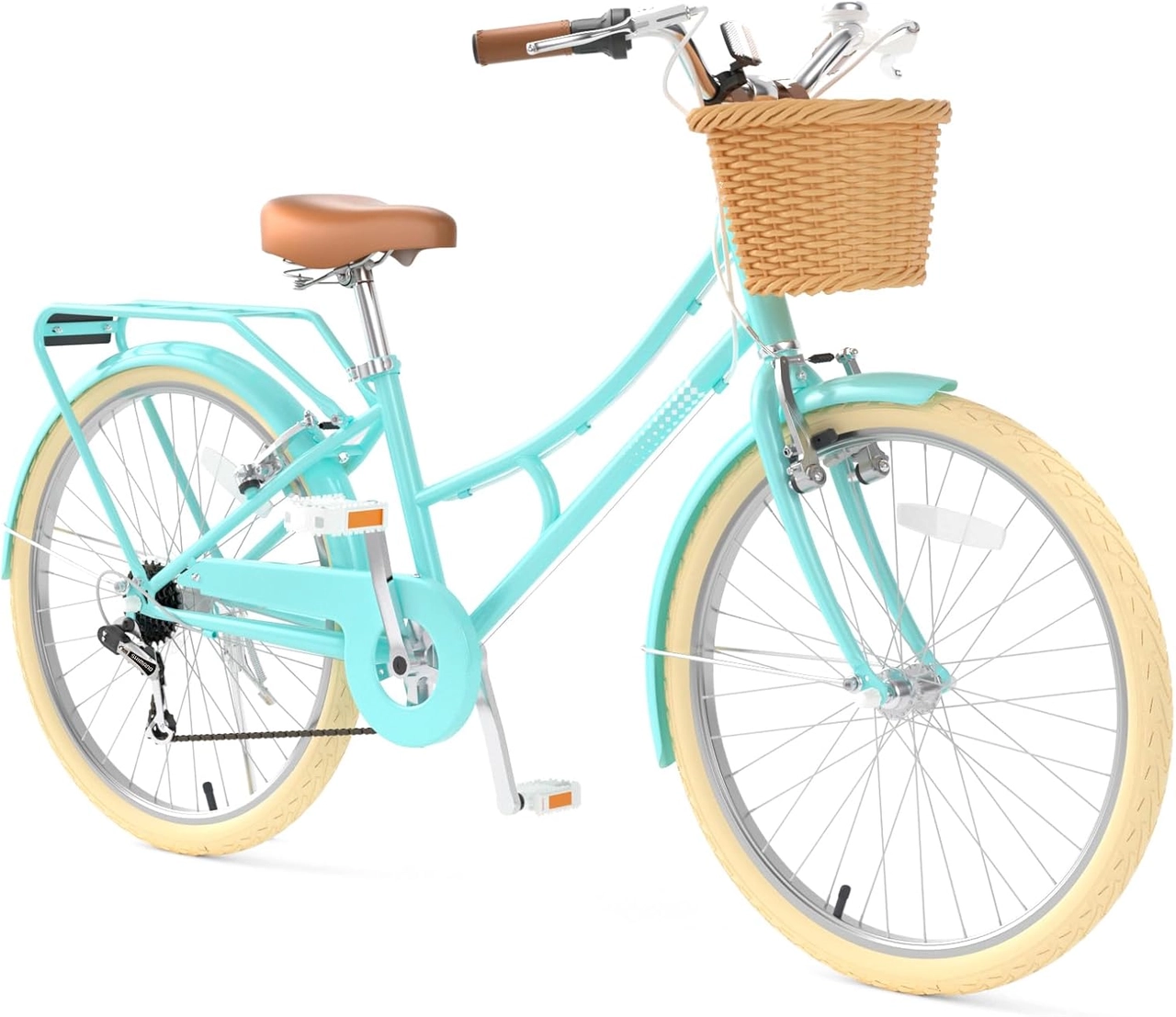 XJD 24-Inch Green Beach Cruiser Bike with U-Brake
A 24- or 26-inch Beach Cruiser Bike comparison for taller or older learners, with Green and Pink SKU labels and a U-Brake identified in the catalog title. Individual fit remains essential.
 Pink XJD Beach Cruiser Bike, 24"/26", U-Brake
Offers 24 Inch and 26 Inch SKU labels for families comparing larger Beach Cruiser Bike sizes. Its catalog title identifies a U-Brake; rider measurements, reach, control and confidence must still determine fit.
The XJD 24-Inch Green Beach Cruiser Bike with U-Brake has Green / 24 Inch, Pink / 24 Inch and Pink / 26 Inch SKU labels. The Pink XJD Beach Cruiser Bike, 24"/26", U-Brake has 24 Inch and 26 Inch SKU labels. Both are Beach Cruiser Bikes and identify a U-Brake in their catalog titles.
Use 24 inches as a starting comparison for riders ages 10–14 who measure 54–64 inches (137–163 cm). Consider 26 inches only for youth or adults over 60 inches (153 cm), followed by the same individual stand-over, reach, brake-control and confidence checks. The overlapping height figures do not make the sizes equivalent.
Make the learning decision today
Measure your child’s height and inseam, compare the applicable wheel-size starting points, and arrange an actual fit check. If the child can comfortably stand over the bike, reach and operate its brakes, steer, and follow directions, begin short practice sessions. If fit or confidence is missing, choose a more suitable size or wait and try again—there is no need to learn by a particular birthday.
Bikes for your next adventure
-

Blue XJD Girls Bike with Training Wheels – 12/14/16 Inch
If you're shopping for a first pedal bike for a daughter roughly 3 to 8 years ol…$149
$169 -

Black XJD Kids Bike for Boys – 12, 14 & 16 Inch Sizes
For a son between roughly 3 and 8 years old, the XJD Kids Bike in Black covers t…$169
$199 -

XJD Kids Bike for Girls – Pink, 12/14/16/20 Inch with Training Wheels
The XJD Kids Bike for Girls in Pink is a training-wheel bike built to carry your…$139
$159