

When should a toddler start riding a bike
A toddler should start riding when they can fit the bicycle correctly, balance their body, follow simple directions and operate its controls. For an XBikes 12-inch bicycle, the starting point is age 3–4 and a height of 34–40 in (86–102 cm), but measurement and a hands-on fit check matter more than age.
Check readiness before choosing a wheel size
A birthday alone cannot show whether a child is ready. Watch whether your toddler can walk and run steadily, climb on and off with help, remain attentive to a short instruction and show interest without being pressured. They should be willing to stop when asked and practise in a controlled area.
Confidence matters too. A hesitant child may benefit from more time and short, low-pressure attempts. An eager child still needs a bicycle that permits comfortable control; enthusiasm does not make an oversized frame suitable.
Measure height and inseam
Measure the child without shoes while they stand straight against a wall. Record total height from the floor to the top of the head. Then measure inseam from the floor to the crotch using a firm, level book to represent the saddle area.
Use height to identify a starting wheel size, then use inseam, reach and control checks to confirm it. For toddlers near the beginning of the XBikes range, the relevant comparison is:
| Wheel size | Starting age | Rider height |
|---|---|---|
| 12 Inch | 3–4 | 34–40 in / 86–102 cm |
| 14 Inch | 3–6 | 37–45 in / 94–114 cm |
| 16 Inch | 4–7 | 40–48 in / 102–122 cm |
The ranges overlap because children of the same age have different proportions and abilities. Do not move up merely because a child is close to the next age band.
Perform the fit check on the actual bicycle
Have the child try the bicycle rather than relying on its label. Check that they can straddle it with appropriate clearance, reach the handlebars without stretching or locking their arms, and turn the bars while remaining composed. They must also be able to reach and operate the fitted braking controls reliably.
Compare more than wheel diameter. Saddle position and frame shape affect how the bicycle feels, so two bicycles with the same stated wheel size may not fit identically. Never buy an oversized bicycle simply to leave room for growth. If stand-over clearance, reach or brake operation is doubtful, choose another fit or ask a qualified bicycle mechanic for help.
When the supplied XBikes options are relevant
The two catalog options help when the measured child is ready to compare a training-wheel bicycle in 12, 14, 16 or 20 Inch sizing. They are relevant only after the child’s measurements point toward one of those sizes and the individual fit checks succeed.
 XJD Girls' Bike with Training Wheels, 12/14/16/20 Inch – Purple
A purple training-wheel bicycle offered in 12, 14, 16 and 20 Inch labels. Its 12 Inch option is the most relevant starting comparison for a measured toddler, subject to an individual fit and control check.
 XJD Kids Bike for Girls – Pink, 12/14/16/20 Inch with Training Wheels
A pink training-wheel bicycle available in 12, 14, 16 and 20 Inch labels. Compare its size label with the child’s measured height, then confirm stand-over, reach, braking control and confidence on the actual bicycle.
XJD Girls' Bike with Training Wheels, 12/14/16/20 Inch – Purple is categorized as a training-wheel bike and is offered under 12, 14, 16 and 20 Inch SKU labels. XJD Kids Bike for Girls – Pink, 12/14/16/20 Inch with Training Wheels is likewise a training-wheel bike with the same four available size labels.
For a typical toddler comparison, begin by assessing the 12 Inch label against the 34–40 in (86–102 cm) starting range. Consider the 14 Inch label only when measured height and the hands-on fit support it; 14 Inch is not equivalent to 12 Inch. The 16 and 20 Inch labels generally correspond to later XBikes starting ranges, so they should not be selected for future growth. The catalog facts do not establish differences in frame geometry, brakes, weight, materials or included components beyond the titles, categories, colors and size labels.
Prepare the first riding sessions
Choose a level area away from traffic, vehicles, slopes and other hazards. Keep early sessions short and stay close enough to assist. Teach starting, steering and stopping in small steps, repeating each until the child remains calm and in control.
A bicycle helmet must fit properly, sit level and have its straps adjusted according to the helmet manufacturer’s instructions. Adult supervision and a helmet do not correct a poorly fitting bicycle.
For assembly, adjustment, maintenance, load limits, compatibility and torque requirements, follow the exact bicycle manual. If the instructions are missing or any control cannot be adjusted confidently, use a qualified bicycle mechanic before riding.
Make the start-or-wait decision
Start now only if your toddler falls within a relevant height starting point and can comfortably straddle, reach, steer and brake the actual bicycle while following directions. If any of those checks fail—or the child is frightened—wait, measure again later and repeat the fit test instead of sizing up.
Bikes for your next adventure
-
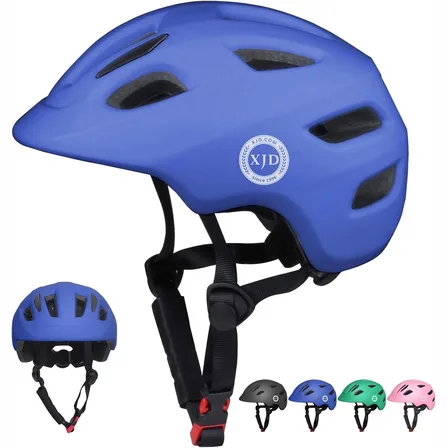
Blue XJD Kids' Bike Helmet, Adjustable Fit – Sizes XS & S
The Blue XJD Kids' Bike Helmet is a lightweight, adjustable helmet for toddlers …$20.39
-
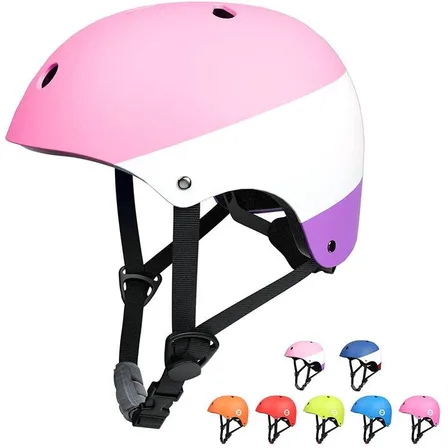
XJD Kids Bike Helmet for Boys & Girls, B White / Pink White
The XJD Kids Bike Helmet covers a wide age range — suggested for ages 2 through …$59.99
-
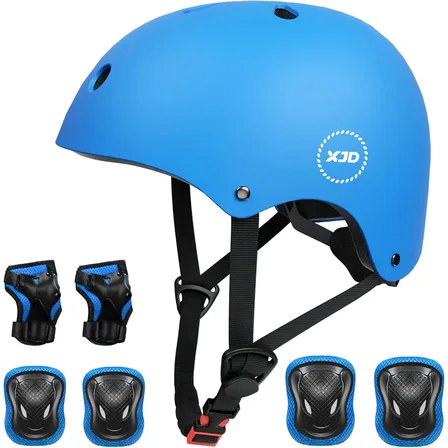
Blue XJD Helmet & Protective Gear Set for Kids, Sizes S/M
The Blue XJD Helmet & Protective Gear Set is made for kids roughly 3 to 8 years …$23.79