

When should kids be able to ride a bike
Kids should be able to ride a bike when they can balance, steer, stop on command and control a correctly fitted bicycle—not at one fixed age.
Readiness matters more than a birthday
A child is ready to learn when they want to try, can follow simple safety directions and can keep enough attention on the path ahead. They should be able to hold the handlebar, turn without losing control and use the bicycle’s stopping controls comfortably.
Confidence also matters. Hesitation is normal, but a child who is frightened, refuses to participate or cannot reliably stop should not be pushed. Continue with low-pressure balance and control practice, then reassess. Age ranges can identify a possible wheel size; they cannot prove that a particular child is ready.
Measure before choosing a bike
Measure the child’s height without shoes. Then measure inseam from the floor to the crotch while the child stands upright with feet slightly apart. Compare height with the XBikes starting points below, but complete an in-person fit check before deciding.
| Wheel size | Age starting point | Rider height |
|---|---|---|
| 12 Inch | Ages 3–4 | 34–40 in / 86–102 cm |
| 14 Inch | Ages 3–6 | 37–45 in / 94–114 cm |
| 16 Inch | Ages 4–7 | 40–48 in / 102–122 cm |
| 18 Inch | Ages 5–9 | 43–52 in / 109–132 cm |
| 20 Inch | Ages 7–12 | 48–60 in / 122–152 cm |
| 24 Inch | Ages 10–14 | 54–64 in / 137–163 cm |
| 26 Inch | Youth and adults over 60 in | Over 60 in / 153 cm |
Where ranges overlap, do not choose by age or wheel diameter alone. Put the child on each plausible size and compare stand-over clearance, reach, brake access, control and confidence. Never buy an oversized bicycle solely to leave room for growth.
What to check during the test ride
Have the child try the actual bicycle in a flat, traffic-free area with close adult supervision. A useful fit-and-readiness check asks whether the child can:
- stand over the bicycle without being trapped or forced onto tiptoes;
- reach the handlebar without stretching or locking their arms;
- reach and operate the available braking controls comfortably;
- start, steer a gentle line and look ahead;
- stop promptly when asked and put a foot down with control.
If reach or braking control is poor, compare another size or model. If the fit is sound but balance is the difficulty, practice balance, starting and stopping separately. Training wheels may support early pedalling practice, but their presence does not establish readiness or correct fit.
How the supplied bikes fit this decision
The supplied catalog options help families compare 12, 14 and 16 Inch wheel-size labels, the three smallest XBikes starting points, and both are categorized as Kids’ BMX Bikes with training wheels. They are relevant only after the child’s measurements indicate one of those sizes and an individual fit check confirms control.
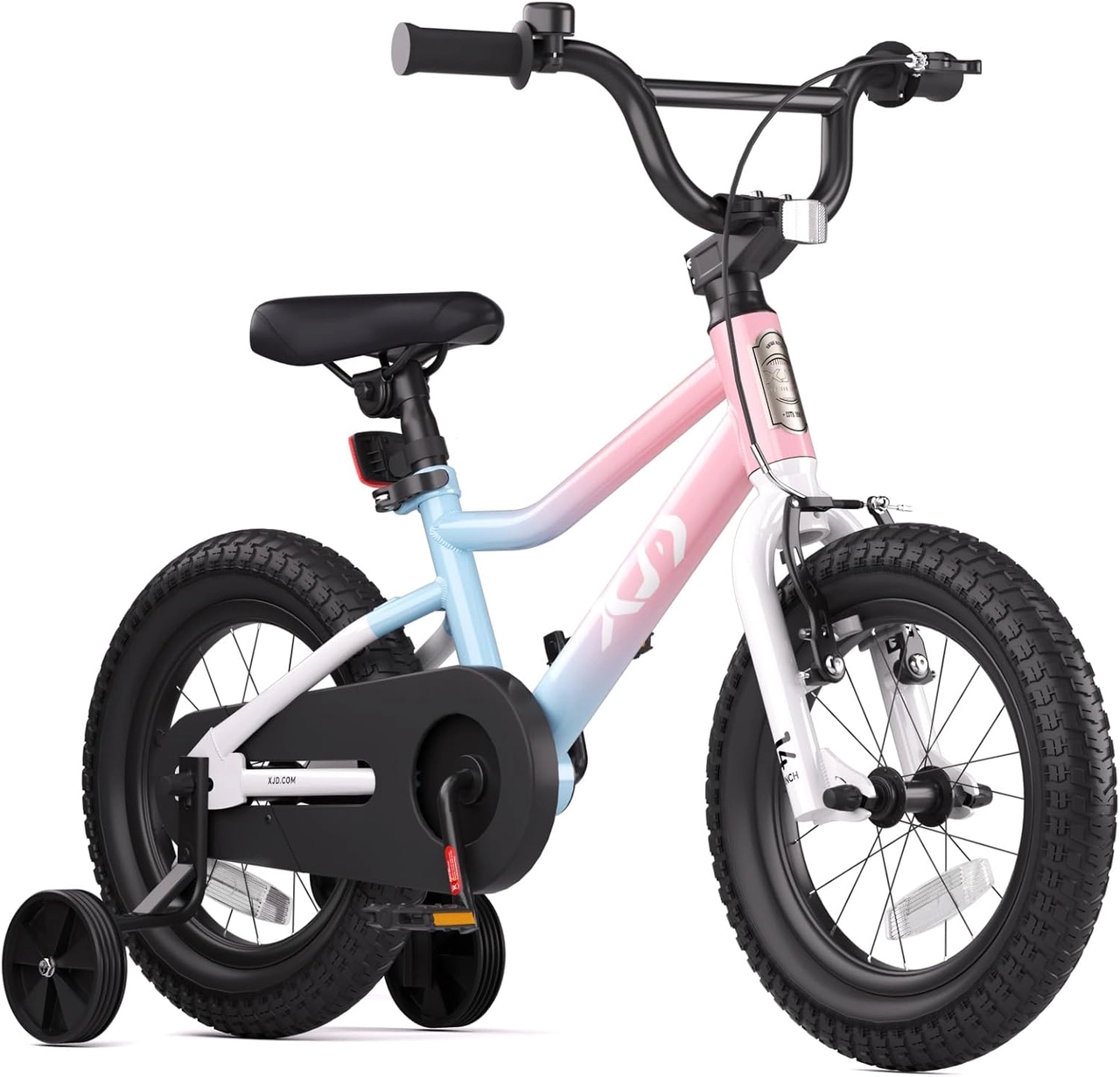 XJD Girls BMX Bike 12/14/16 Inch with Training Wheels – Pink Blue
A Kids’ BMX Bike with training wheels and 12 Inch, 14 Inch and 16 Inch SKU labels, relevant when the rider’s measurements and individual fit check point to one of those sizes.
 XJD Boys & Girls BMX Bike with Training Wheels, 12/14/16" – Blue
This Kids’ BMX Bike with training wheels offers 12 Inch, 14 Inch and 16 Inch SKU labels, making it relevant for comparing those starting sizes after measuring the child and checking control.
The XJD Girls BMX Bike 12/14/16 Inch with Training Wheels – Pink Blue is offered with 12 Inch, 14 Inch and 16 Inch SKU labels. The XJD Boys & Girls BMX Bike with Training Wheels, 12/14/16" – Blue offers the same three size labels. Based on the supplied facts, the meaningful comparison is title, color wording and available size label; no further equipment or performance difference is established.
These products may be relevant for measured riders within the 12, 14 or 16 Inch starting ranges. They are not suitable substitutes when the child’s measurements and fit check point to 18, 20, 24 or 26 Inch wheels. In that situation, treat them only as smaller-size comparison points and look for the indicated wheel size instead.
Prepare for the first rides
Choose a level area away from traffic, obstacles and steep slopes. Keep sessions short enough that fatigue does not undermine control. An adult should remain close while the child is still learning to start, steer or stop consistently.
Use a bicycle helmet that fits properly, sits level and has straps adjusted according to the helmet manufacturer’s instructions. Recheck the fit rather than assuming a helmet remains correct as the child grows.
For assembly, maintenance, adjustments, load limits, compatibility and torque requirements, follow the exact bicycle manual. If the instructions are missing or the bicycle cannot be adjusted confidently, use a qualified bicycle mechanic before riding.
Make the decision now
Measure height and inseam, identify the plausible wheel-size range, and have the child try that size. Proceed when they can stand over, reach, steer, brake and stop confidently; wait and practise if any of those controls are unreliable. That observable result—not the next birthday—determines when your child should ride.
Bikes for your next adventure
-
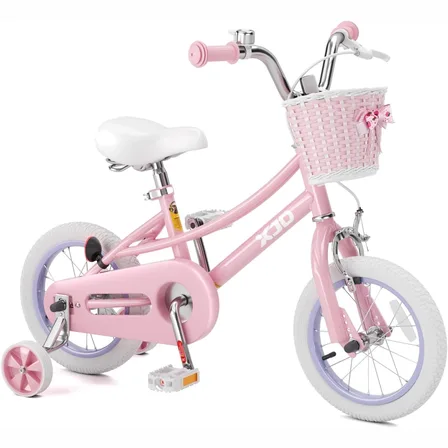
Pink 12/14/16/20" XJD Girls Bike with Training Wheels & Basket
The Pink XJD Girls Bike with Training Wheels & Basket is a first-bike pick f…$65.99
$75.99 -

XJD Girls Bike for Kids Ages 3-8, 12/14/16 Inch with Training Wheels – Purple
The XJD Girls Bike in Purple is a training-wheel bicycle for kids ages 3 to 8, f…$149
$169 -
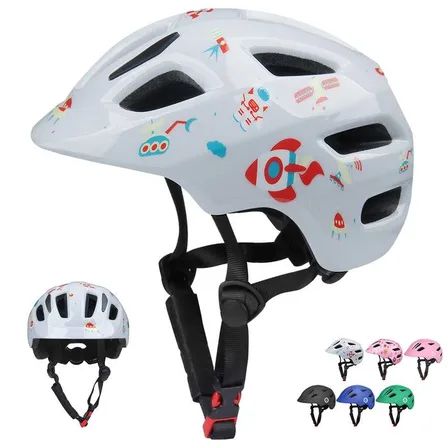
White Astronaut Bike Helmet for Kids by XJD – Toddler to Youth Sizes
4 reviews
The XJD White Astronaut kids' bike helmet is made for toddlers through younger e…$59.99