

When to buy a bicycle for a child
Buy a bicycle when your child fits it now—not when they might grow into it. Measure height and inseam, then confirm stand-over clearance, reach, braking control and confidence on the actual bicycle.
When is the right time to buy?
The right time is when the child is interested in riding and can comfortably control a correctly fitted bicycle. A birthday or age milestone can prompt the purchase, but age alone should not decide it. Children of the same age can differ considerably in height, proportions, coordination and confidence.
Buy now if the child can mount and dismount without struggling, stand over the bicycle comfortably, reach the handlebar without stretching, and operate the brakes reliably. Wait, or try a different size, if the child cannot maintain control, appears tense, must overreach, or cannot use the brakes with confidence.
Do not choose an oversized bicycle to allow room for growth. A bicycle that may fit later can be difficult to control today.
Measure before comparing wheel sizes
- Measure standing height: Have the child stand without shoes against a wall, looking straight ahead. Measure from the floor to the top of the head.
- Measure inseam: With feet slightly apart, measure from the floor to the crotch. Use this measurement when assessing stand-over room rather than assuming height tells the whole story.
- Note current ability: Record whether the child is a first-time rider, currently uses training wheels, or already starts, stops and turns independently.
- Try the bicycle: Check posture, handlebar reach, brake reach, mounting, dismounting and low-speed control on the specific model.
Use wheel size only as a starting point
| Wheel size | Starting age | Rider height |
|---|---|---|
| 12 Inch | 3–4 | 34–40 in / 86–102 cm |
| 14 Inch | 3–6 | 37–45 in / 94–114 cm |
| 16 Inch | 4–7 | 40–48 in / 102–122 cm |
| 18 Inch | 5–9 | 43–52 in / 109–132 cm |
| 20 Inch | 7–12 | 48–60 in / 122–152 cm |
| 24 Inch | 10–14 | 54–64 in / 137–163 cm |
| 26 Inch | Youth and adults | Over 60 in / 153 cm |
Overlapping ranges are normal. Start with the child’s measured height, then compare adjacent sizes where ranges overlap. The correct choice is the bicycle on which the child has suitable stand-over room, a natural reach, reliable brake control and confidence. Never move up solely because the child falls near the upper end of an age range.
Compare the supplied XBikes options
The supplied catalog choices help families compare 12 Inch, 14 Inch and 16 Inch bicycles for riders whose measurements fall within those starting ranges. The Flower Pink XJD Girls Bike with Doll Seat & Basket and Purple XJD Girls' Bike with Doll Seat & Basket are categorized as Training Wheel Bikes. The Black XJD Kids' BMX Bicycle with Training Wheels is categorized as a Kids' BMX Bike. Each is offered in 12 Inch, 14 Inch and 16 Inch labels, so the useful comparison begins with fit and category—not color or styling.
 Flower Pink XJD Girls Bike with Doll Seat & Basket
A Training Wheel Bike offered in 12 Inch, 14 Inch and 16 Inch labels; compare the child’s measured fit before considering its doll seat, basket or pink styling.
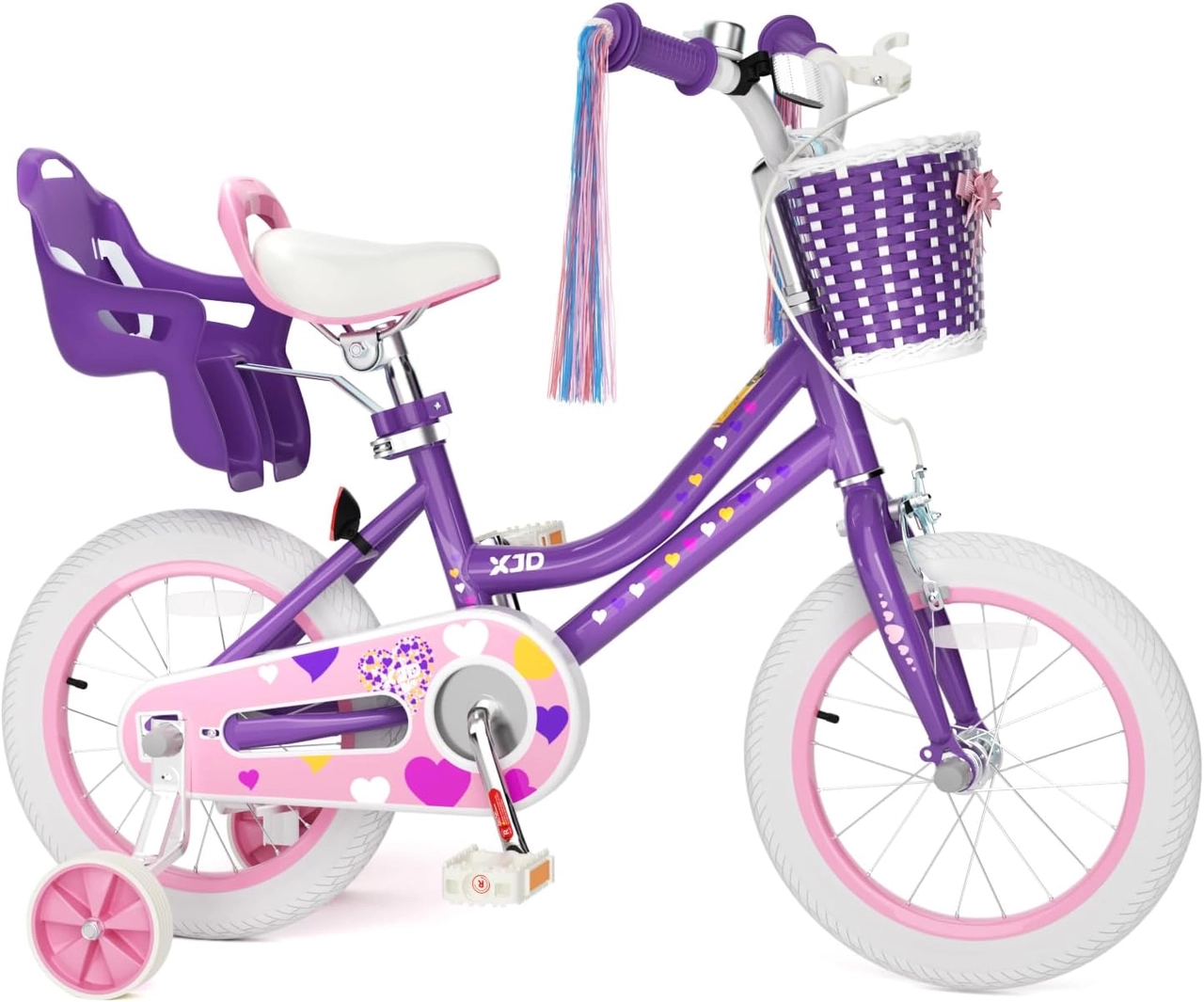 Purple XJD Girls' Bike with Doll Seat & Basket
A Training Wheel Bike available in 12 Inch, 14 Inch and 16 Inch labels. It is relevant when one of those sizes matches the child’s measurements and individual fit check.
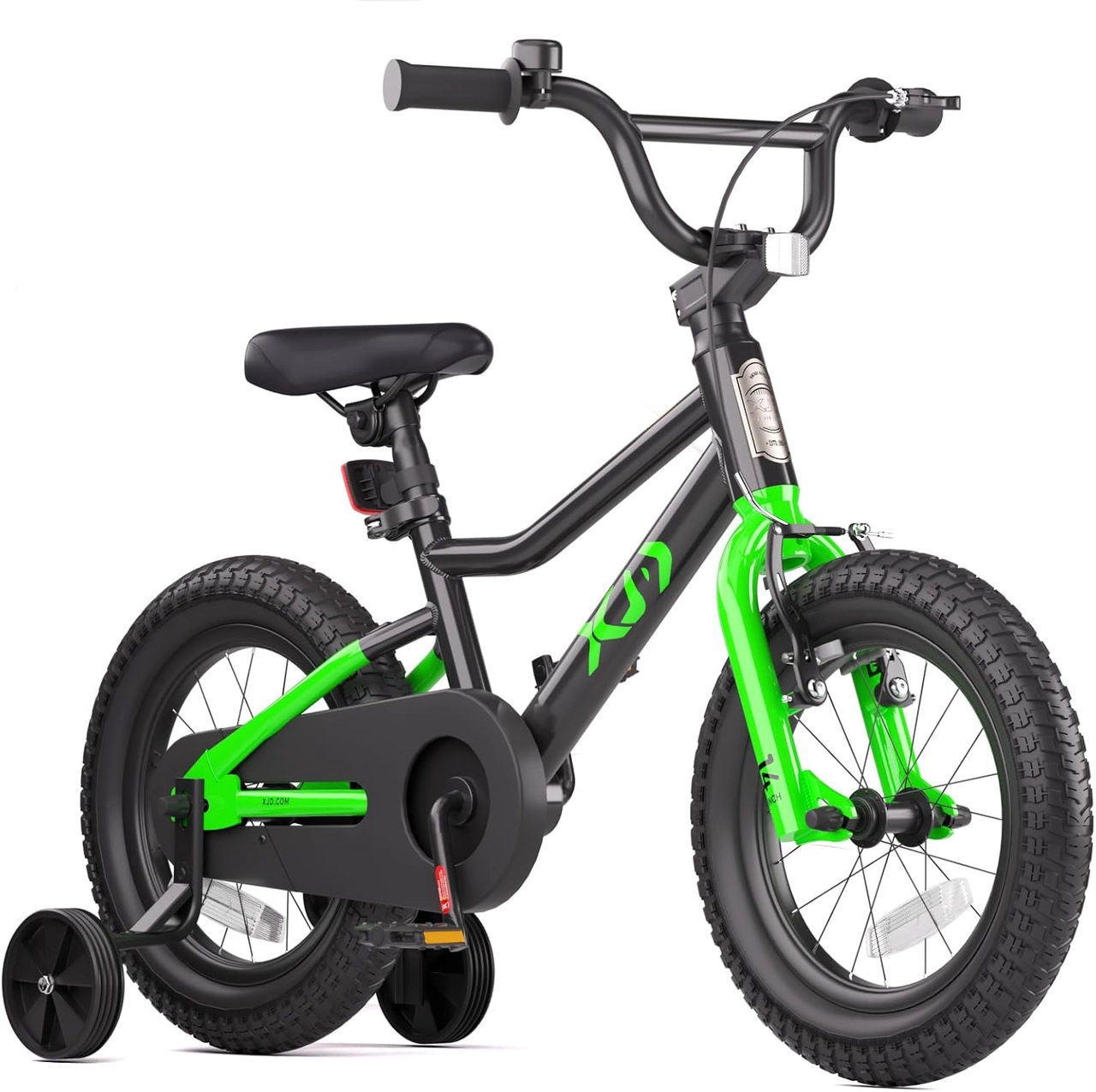 Black XJD Kids' BMX Bicycle with Training Wheels
A Kids' BMX Bike with training wheels, offered in 12 Inch, 14 Inch and 16 Inch labels. Use height, inseam, reach, brake control and confidence to choose among them.
These products are relevant only if the child’s measurements and individual fit check support one of those three sizes. For a child needing an 18 Inch, 20 Inch, 24 Inch or 26 Inch bicycle, they are nearest-size comparison points at most, not substitutes; another wheel size is not equivalent. Availability of a size label also does not prove that every child in the corresponding age band will fit.
What to check during the try-on
- Stand-over: The child should be able to stand over the bicycle comfortably rather than being forced onto tiptoes or against the frame.
- Reach: Hands should meet the handlebar without an exaggerated forward stretch or locked posture.
- Brake control: The child must be able to reach and operate the bicycle’s brakes reliably. Do not infer a brake type from the wheel size or product category.
- Movement: Ask the child to demonstrate mounting, starting, steering, stopping and dismounting in a controlled area.
- Confidence: Hesitation caused by excessive size is a reason to compare a smaller option, even if age guidance suggests otherwise.
If assembly, adjustments, compatibility, load limits, maintenance procedures or torque values are uncertain, follow the exact product manual or consult a qualified bicycle mechanic.
Make the final decision
Before riding, add a properly fitting bicycle helmet. It should sit level and its straps should be used according to the helmet manufacturer’s instructions. Recheck helmet fit rather than treating the printed size as sufficient.
Buy the bicycle once the child’s current measurements narrow the size, an in-person fit check confirms stand-over and reach, and the child demonstrates dependable braking and control. If any of those checks fail, do not buy for future growth: compare another size or wait until the child can control the bicycle that fits.
Bikes for your next adventure
-

Kids Bike Helmet by XJD for Boys & Girls – Black, Blue, Green, Pink, Purple
The XJD Kids Bike Helmet covers a wide 2-to-8-year age range thanks to two head-…$59.99
-
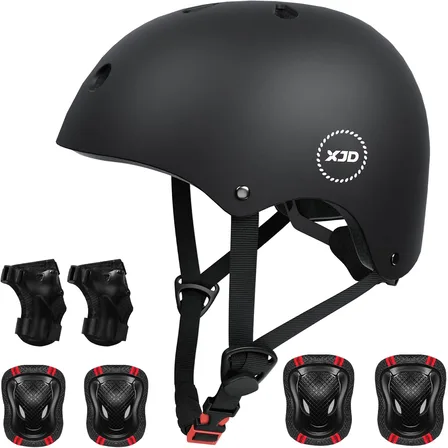
XJD Kids Helmet & Pad Set – Black, S/M/L
This XJD Kids Helmet & Pad Set in Black is designed for kids aged 3 to 8, pairin…$23.79
$27.99 -
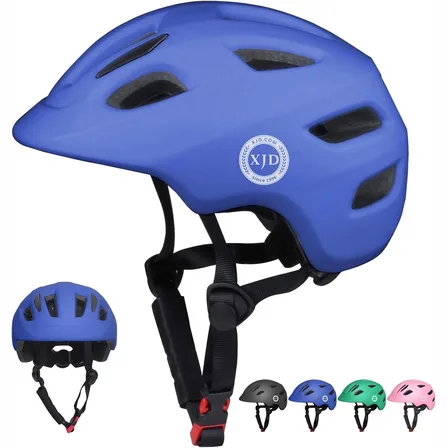
Blue XJD Kids' Bike Helmet, Adjustable Fit – Sizes XS & S
The Blue XJD Kids' Bike Helmet is a lightweight, adjustable helmet for toddlers …$20.39