

When to buy a bike for a child
Buy a bike when your child is interested in riding and can control a correctly fitted model—not simply when they reach a certain birthday.
Measure before you shop
Measure your child’s current standing height and inseam while they wear the shoes they are likely to ride in. Height gives you a wheel-size starting point; inseam helps you judge stand-over clearance when the child tries the actual bicycle.
Record the measurements rather than relying on clothing size, a previous bike, or an age estimate. Children of the same age can need different sizes, and proportions such as arm length can change how comfortably two riders of equal height reach the controls.
| Wheel size | XBikes age starting point | Rider height starting point |
|---|---|---|
| 12 Inch | Ages 3–4 | 34–40 in / 86–102 cm |
| 14 Inch | Ages 3–6 | 37–45 in / 94–114 cm |
| 16 Inch | Ages 4–7 | 40–48 in / 102–122 cm |
| 18 Inch | Ages 5–9 | 43–52 in / 109–132 cm |
| 20 Inch | Ages 7–12 | 48–60 in / 122–152 cm |
| 24 Inch | Ages 10–14 | 54–64 in / 137–163 cm |
| 26 Inch | Youth and adults | Over 60 in / 153 cm |
These ranges overlap deliberately. Use measured height to narrow the choices, then let fit, reach, brake control, and current confidence decide. Age alone should never make the final selection.
Buy now only if the bike fits now
Have your child try the bicycle before deciding. The American Academy of Pediatrics recommends checking fit and control rather than buying an oversized bicycle for future growth.
During the tryout, confirm that your child can stand over the bicycle without being crowded by the frame. Seated in a normal riding position, they should be able to reach the handlebar without straining or becoming unstable. They must also be able to reach and operate the brakes with control. Compare adjacent sizes when your child falls within overlapping height ranges.
Do not move up merely because the larger option will last longer. If your child cannot manage its height, reach, or controls today, wait or choose a smaller correctly fitting model. A growth purchase is poorly timed when it reduces present control.
Check whether your child is ready
Physical fit is necessary, but interest and confidence determine whether this is the right moment. A child who wants to practise, follows simple riding directions, and can stay attentive to their surroundings is in a better position to use a bike than one who feels pressured or frightened.
Use a calm, low-distraction area for the fit check. Ask the child to hold the bicycle, mount and dismount, settle into a riding position, steer, and demonstrate brake control. If the bicycle fits on paper but these actions overwhelm the rider, postponing the purchase or comparing a more manageable size is reasonable.
How the supplied catalog option helps
The Purple XJD Girls' Bike with Doll Seat & Basket is cataloged under Training Wheel Bikes and is offered in 12 Inch, 14 Inch, and 16 Inch labels. Those three options make it useful for comparing nearby starting sizes when the child’s measured height falls within the corresponding XBikes ranges. Its title and accessories do not establish fit; the child still needs to try the chosen size.

This product is relevant when a 12-, 14-, or 16-inch starting point matches the rider’s measurements and the individual fit check confirms control. It is not a substitute when measurements indicate an 18-, 20-, 24-, or 26-inch starting point. In that situation, use it only to understand the available smaller-size comparison, not as an equivalent alternative.
Complete the decision safely
Before purchase, compare the child’s measured height with the table, assess inseam and stand-over space on the actual frame, and check comfortable reach and brake operation. If any one of those checks fails, compare another size or wait; do not assume practice will correct a fundamentally poor fit.
Choose a bicycle helmet at the same time. The U.S. Consumer Product Safety Commission advises that the helmet must fit properly, sit level, and have its straps used according to the helmet manufacturer’s instructions. Recheck its fit on the child rather than selecting by an age label.
For assembly, adjustments, maintenance, compatibility, load limits, and torque requirements, follow the exact bicycle manual. If the instructions are missing, unclear, or beyond your experience, use a qualified bicycle mechanic rather than guessing.
The final buying test
Buy when the child is willing to ride and the actual bicycle fits their body and present ability: suitable stand-over space, comfortable reach, usable brakes, and confident control. Wait or change size if the decision depends on growing into the bike. Measurements narrow the search, but a successful tryout decides when to buy.
Bikes for your next adventure
-

Kids Bike Helmet by XJD for Boys & Girls – Black, Blue, Green, Pink, Purple
The XJD Kids Bike Helmet covers a wide 2-to-8-year age range thanks to two head-…$59.99
-
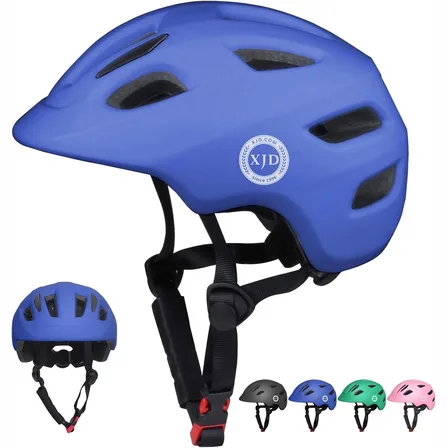
Blue XJD Kids' Bike Helmet, Adjustable Fit – Sizes XS & S
The Blue XJD Kids' Bike Helmet is a lightweight, adjustable helmet for toddlers …$20.39
-
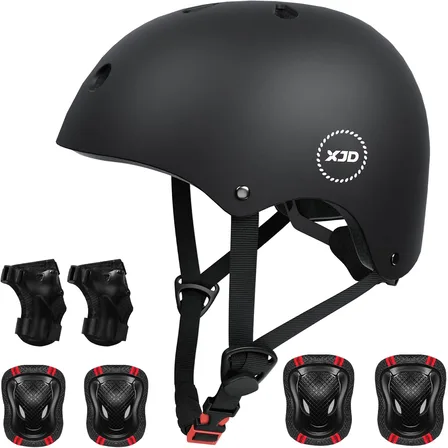
XJD Kids Helmet & Pad Set – Black, S/M/L
This XJD Kids Helmet & Pad Set in Black is designed for kids aged 3 to 8, pairin…$23.79
$27.99