

When to buy a child a bike
Buy a child a bike when they are interested in riding and can comfortably control a correctly fitted model—not simply when they reach a certain age.
Use readiness and fit to decide when
A child is ready to try a bike when they can follow simple directions, pay attention to their surroundings and practise without being pressured. Confidence matters: hesitation is a reason to slow down, not a reason to buy a larger bike that they may “grow into.”
Age is only a starting point. Measure the child’s current height, then check inseam, reach, brake control and confidence on the actual bicycle. Children of the same age can need different sizes.
Measure before comparing bikes
Measure height without shoes, with the child standing straight against a wall. For inseam, have them stand with feet slightly apart and measure from the floor to the crotch. Record both measurements in inches or centimetres.
Next, arrange an individual fit check. The child should try the bicycle rather than relying on a label or buying online by age alone. Check that they can:
- stand over the bicycle with appropriate clearance;
- get on and off without struggling;
- reach the handlebar without stretching or feeling cramped;
- steer while keeping stable control;
- reach and operate the brakes confidently, where applicable;
- start, stop and put a foot down in a controlled way.
If any of these checks fail, do not assume the child will quickly adapt. Compare another size or model.
Choose a wheel-size starting point
Use the XBikes ranges below to narrow the search, then confirm the individual fit. Where ranges overlap, measured fit and control decide—not the older age or larger wheel.
| Wheel size | Starting age | Rider height |
|---|---|---|
| 12 Inch | 3–4 | 34–40 in / 86–102 cm |
| 14 Inch | 3–6 | 37–45 in / 94–114 cm |
| 16 Inch | 4–7 | 40–48 in / 102–122 cm |
| 18 Inch | 5–9 | 43–52 in / 109–132 cm |
| 20 Inch | 7–12 | 48–60 in / 122–152 cm |
| 24 Inch | 10–14 | 54–64 in / 137–163 cm |
| 26 Inch | Youth and adults | Over 60 in / 153 cm |
These figures are screening ranges, not guarantees. If height suggests one size but the child cannot manage stand-over clearance, reach or braking, keep comparing until those essentials work together.
Do not buy extra size for growth
An oversized bicycle can make mounting, stopping, steering and brake operation harder. Following the American Academy of Pediatrics guidance, have the child try the bike and choose for present control rather than hoped-for future growth.
Recheck fit during growth spurts and whenever the child begins to look cramped, struggles with reach or loses comfortable control. A bike that fitted last season may not fit now; equally, age alone does not prove that an upgrade is due.
Where the supplied XBikes options fit
The Black XJD Kids' BMX Bicycle with Training Wheels is listed in Kids' BMX Bikes with 12 Inch, 14 Inch and 16 Inch options. The Pink Girls' 12/14/16" Bike by XJD – Basket & Doll Seat is listed in Training Wheel Bikes with the same three size labels. These particular catalog options help families compare the three smallest wheel-size starting points while still requiring the child to try the chosen configuration.
 Black XJD Kids' BMX Bicycle with Training Wheels
Relevant for children comparing 12 Inch, 14 Inch and 16 Inch options, provided measured height and an individual fit check confirm comfortable stand-over, reach, braking and control.
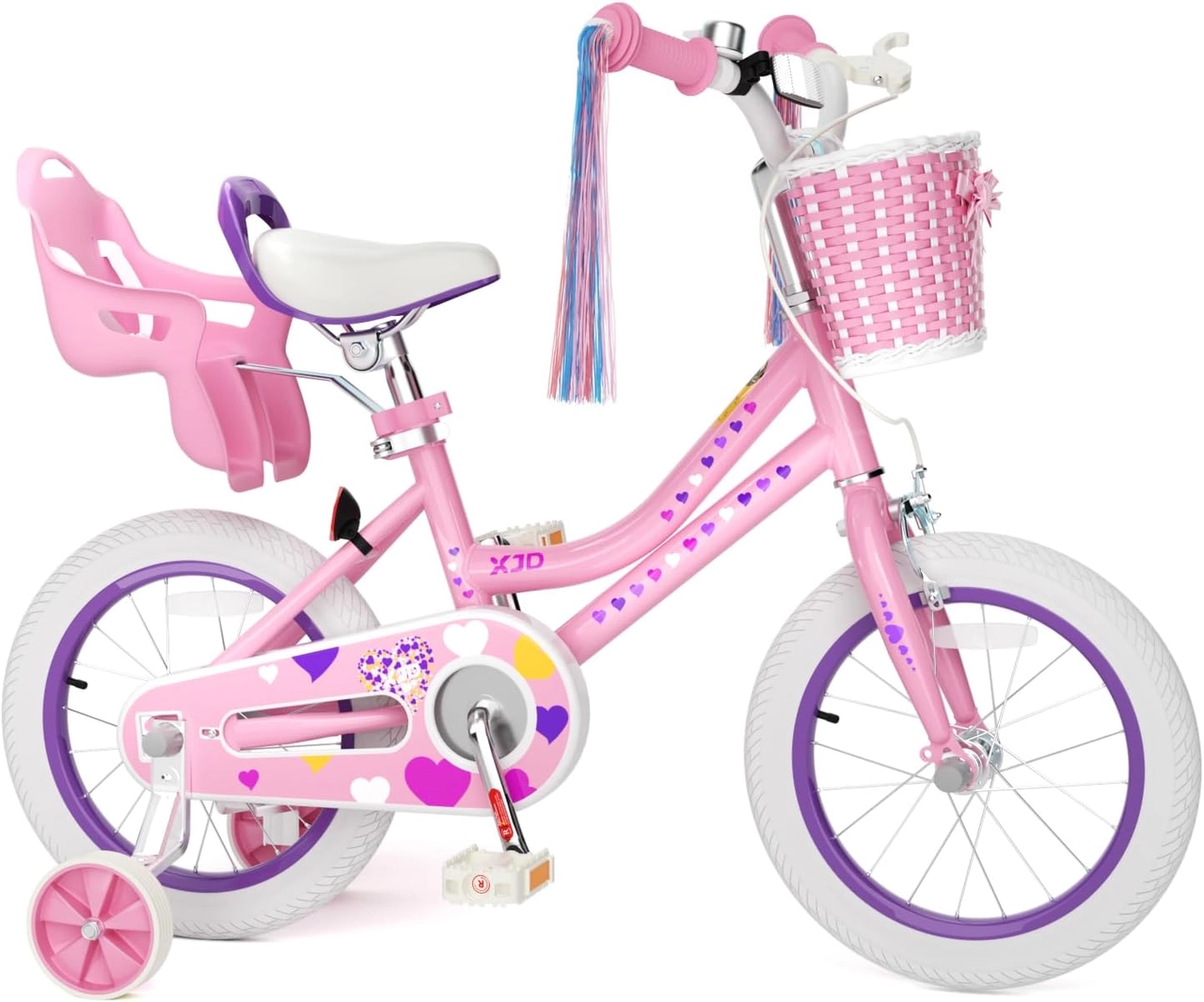 Pink Girls' 12/14/16" Bike by XJD – Basket & Doll Seat
A Training Wheel Bikes listing available in 12 Inch, 14 Inch and 16 Inch labels; use the child’s measured height and hands-on fit rather than the title alone.
They are relevant when the child’s measured height falls within the 12, 14 or 16 Inch starting ranges and an individual check confirms comfortable control. Their catalog categories may also help distinguish the type of listing a family wants to inspect, but neither category establishes fit.
They are not suitable substitutes when measurements and a fit check point to 18 Inch, 20 Inch, 24 Inch or 26 Inch. No supplied product offers those exact wheel sizes, so the two products should be treated only as smaller nearest-size comparison points—not as equivalent alternatives. Also, descriptive wording in a product title is a catalog label, not evidence that the bike fits a particular child.
Complete the safety check before purchase
Have the child wear a bicycle helmet that fits properly, sits level and has straps adjusted according to the helmet manufacturer’s instructions, consistent with U.S. Consumer Product Safety Commission guidance. The helmet check accompanies the bike fit check; it does not correct a poorly fitting bicycle.
Before riding, follow the exact bicycle manual for assembly, maintenance, adjustments, load limits, compatibility and torque. If the instructions are missing, unclear or beyond your experience, use a qualified bicycle mechanic rather than guessing.
Decision: buy now only if the child wants to ride, their measured height narrows the choice, and the actual bike passes stand-over, reach, brake-control and confidence checks. Otherwise, wait or compare a different size.
Bikes for your next adventure
-

Kids Bike Helmet by XJD for Boys & Girls – Black, Blue, Green, Pink, Purple
The XJD Kids Bike Helmet covers a wide 2-to-8-year age range thanks to two head-…$59.99
-
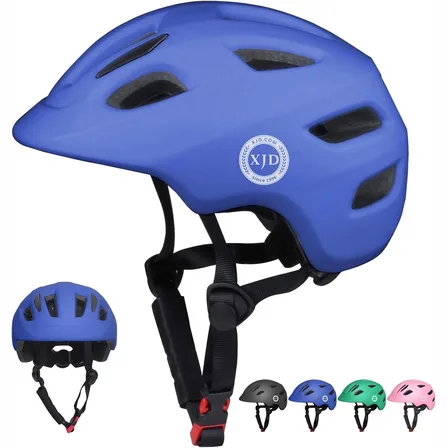
Blue XJD Kids' Bike Helmet, Adjustable Fit – Sizes XS & S
The Blue XJD Kids' Bike Helmet is a lightweight, adjustable helmet for toddlers …$20.39
-
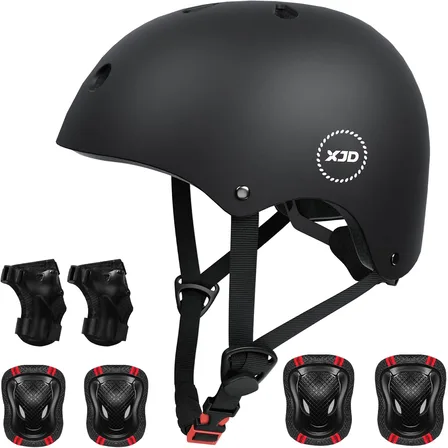
XJD Kids Helmet & Pad Set – Black, S/M/L
This XJD Kids Helmet & Pad Set in Black is designed for kids aged 3 to 8, pairin…$23.79
$27.99