

When to teach kid to ride bike
Teach a child to ride when they can follow simple directions, want to practise, and can comfortably control a correctly fitted bike. Age is only a starting point: measure height, check fit and controls, then judge confidence.
Readiness matters more than a birthday
A child is ready to begin when they are willing to try, can stay attentive for a short practice session, and understand instructions such as stop, look ahead and squeeze the brakes. Hesitation does not mean failure. Pause if the child is frightened, cannot control the bike, or becomes too tired to listen.
The XBikes age ranges below help narrow the wheel-size search, but they do not set a teaching deadline. Children develop balance, coordination and confidence at different times.
Measure before choosing a bike
Measure the child’s standing height without shoes. Also measure inseam from the floor to the crotch, using a book held level to simulate the bike’s contact point. Compare those measurements with the candidate bike’s actual stand-over clearance and adjustment range.
Have the child try the bicycle whenever possible. They should be able to stand over it, reach the handlebar without an uncomfortable stretch, steer while looking ahead, and operate the brakes reliably. The American Academy of Pediatrics advises against buying an oversized bicycle merely for future growth; control now is more important than extra growing room.
| Wheel size | Starting age | Rider height |
|---|---|---|
| 12 Inch | 3–4 | 34–40 in / 86–102 cm |
| 14 Inch | 3–6 | 37–45 in / 94–114 cm |
| 16 Inch | 4–7 | 40–48 in / 102–122 cm |
| 18 Inch | 5–9 | 43–52 in / 109–132 cm |
| 20 Inch | 7–12 | 48–60 in / 122–152 cm |
| 24 Inch | 10–14 | 54–64 in / 137–163 cm |
| 26 Inch | Youth and adults | Over 60 in / 153 cm |
Where ranges overlap, compare both candidate sizes in person. Choose according to measured height, inseam, reach, brake control and present confidence—not age alone or the larger wheel.
How to start teaching
- Choose a quiet, level practice area. Keep the first sessions short and free from traffic or obstacles.
- Check basic control first. Ask the child to hold the bike, walk it, turn it and stop it before attempting to ride.
- Practise balance and braking separately. The child should look ahead and stop on request before adding speed.
- Add pedalling when balance is steady. Support the child rather than pulling the handlebar, then reduce help as control improves.
- Finish while confidence remains. Repeated calm sessions are more useful than forcing one long lesson.
A properly fitting bicycle helmet is essential for every session. Following U.S. Consumer Product Safety Commission guidance, make sure it fits properly, sits level and has straps adjusted according to the helmet manufacturer’s instructions.
Where the supplied bikes fit the decision
The catalog options provide useful size comparisons at both early-learning and later-rider stages. The training-wheel models cover 12-, 14- and 16-inch choices, with one extending to 20 inches; the cruiser covers 24 and 26 inches. That makes them relevant only when the child’s measurements and control match those sizes.
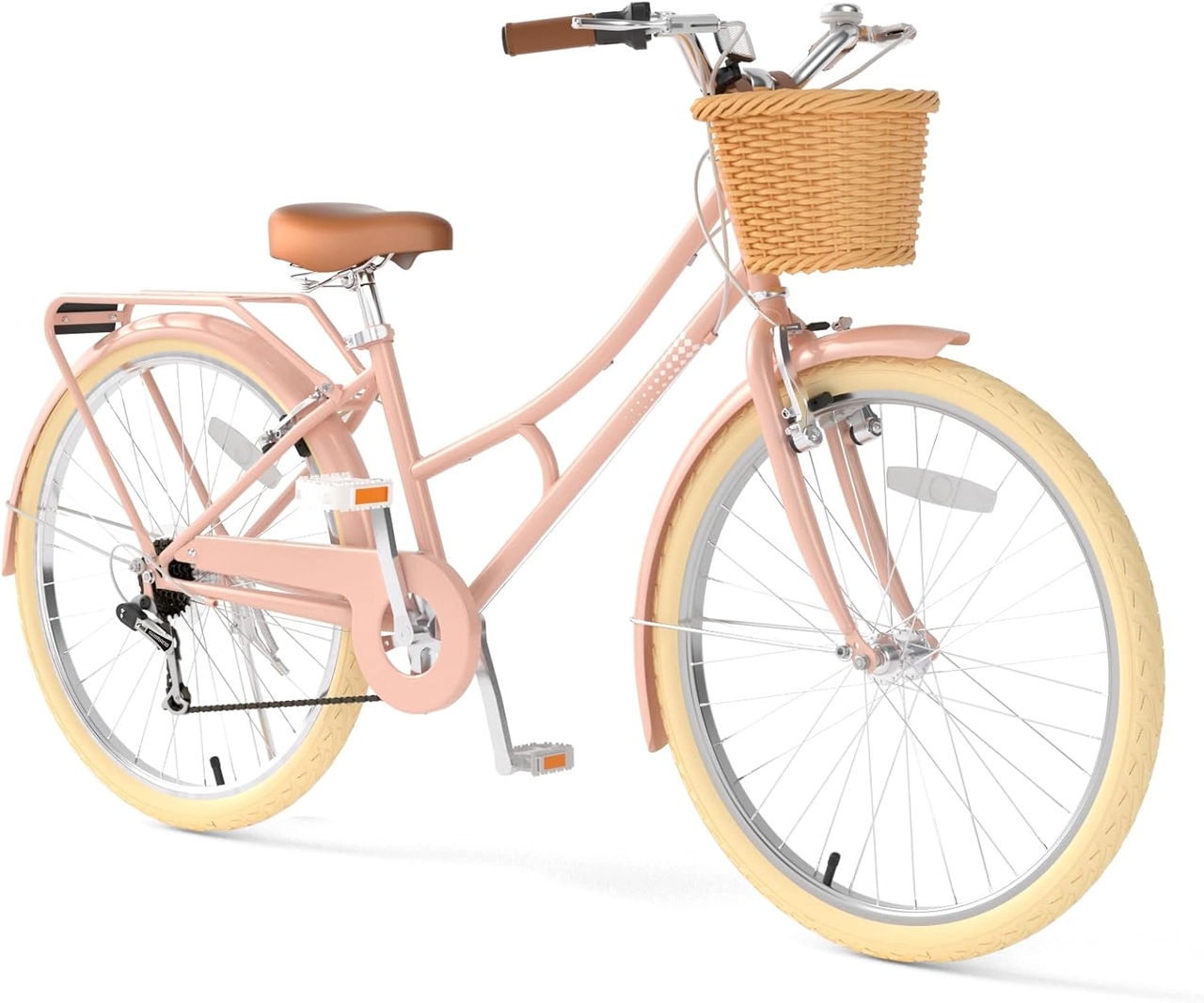 Pink XJD Beach Cruiser Bike, 24"/26", U-Brake
A 24- or 26-inch beach cruiser comparison for appropriately measured later riders; it is not a substitute for the smaller wheel sizes commonly considered for first lessons.
 Light Pink XJD Girls' Bicycle with Basket & Training Wheels
Offers 12-, 14-, 16- and 20-inch labels with training wheels, making it relevant for comparing several early and intermediate size starting points after an individual fit check.
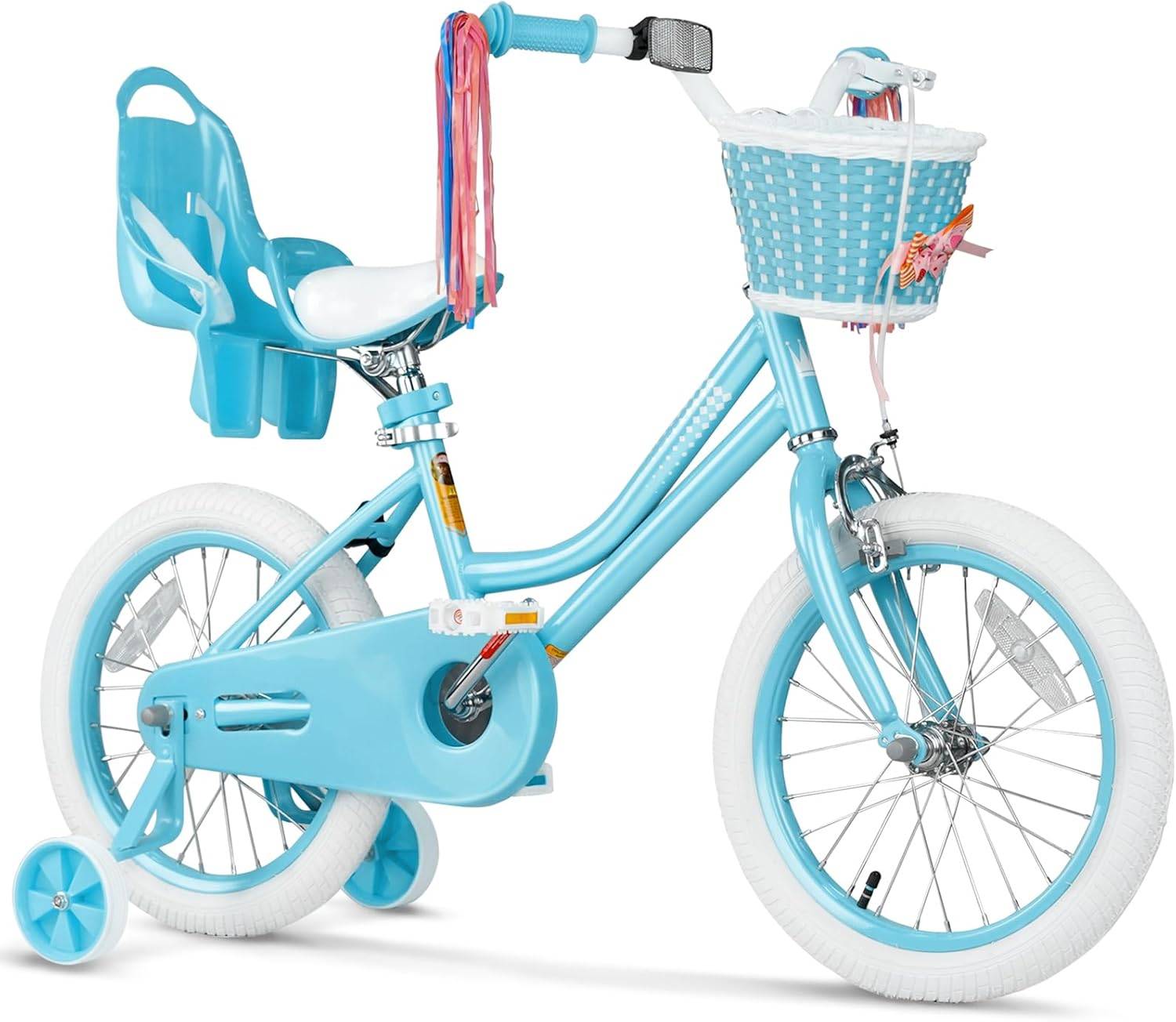 Blue XJD Girls Bike with Training Wheels – 12/14/16 Inch
Offers 12-, 14- and 16-inch labels with training wheels, so parents can compare smaller-wheel starting points while prioritizing measured height, reach, brake control and confidence.
Smaller-wheel comparisons
Light Pink XJD Girls' Bicycle with Basket & Training Wheels is offered in 12 Inch, 14 Inch, 16 Inch and 20 Inch labels. Blue XJD Girls Bike with Training Wheels – 12/14/16 Inch is offered in 12 Inch, 14 Inch and 16 Inch labels. Their training wheels may make them catalog comparison points for a parent considering supported practice, but wheel labels and training wheels do not prove individual fit or readiness.
Do not select between overlapping sizes from the title alone. Have the child compare stand-over position, reach, brake access and ease of steering. If training wheels are used or adjusted, follow the exact product manual or ask a qualified bicycle mechanic; no setup measurements are supplied here.
Later-rider comparison
Pink XJD Beach Cruiser Bike, 24"/26", U-Brake is offered in 24 Inch and 26 Inch labels. Under the XBikes starting points, 24 Inch corresponds to ages 10–14 and heights of 54–64 in / 137–163 cm, while 26 Inch begins over 60 in / 153 cm for youth and adults. It is therefore relevant to appropriately sized later riders, not as a substitute for a smaller learning bike.
Make the decision today
Measure height and inseam, shortlist only matching wheel-size ranges, and have the child test stand-over, reach, steering and braking. Start teaching now if the bike fits, the child can follow directions and they want to practise; otherwise correct the fit or wait and try again without pressure.
Bikes for your next adventure
-

Kids Bike Helmet by XJD for Boys & Girls – Black, Blue, Green, Pink, Purple
The XJD Kids Bike Helmet covers a wide 2-to-8-year age range thanks to two head-…$59.99
-

Kids Bike Helmet by XJD for Girls – Pink
The XJD Kids Bike Helmet in Pink is a lightweight multi-sport helmet for girls r…$59.99
$99 -

XJD Kids Bike for Girls – Pink, 12/14/16/20 Inch with Training Wheels
The XJD Kids Bike for Girls in Pink is a training-wheel bike built to carry your…$139
$159