

When to teach a kid to ride a bike
Teach a child to ride when they can balance, follow simple directions, and control a correctly fitted bike—not at a fixed age.
Readiness matters more than a birthday
Many children become interested in riding during the preschool or early school years, but age is only a starting point. Begin when your child wants to try, can listen and respond while moving, and can practice without becoming overwhelmed. Waiting is sensible if they resist, cannot stay focused long enough for a short session, or are still uncomfortable balancing and steering.
A ready child should be able to start and stop with help, look ahead, steer around a simple obstacle, and understand a command such as stop. Confidence should build gradually. Pressure, comparisons with siblings, and an oversized bicycle can make learning harder.
Measure the child before choosing a bike
Measure height without shoes, then measure inseam from the floor to the crotch while the child stands naturally. Use height to identify a starting wheel size, but check the actual bicycle because frame dimensions vary. The child should be able to stand over the bike, reach the handlebar without stretching, turn it comfortably, and operate the brakes with control.
| Wheel size | Age starting point | Rider height starting point |
|---|---|---|
| 12 Inch | 3–4 | 34–40 in / 86–102 cm |
| 14 Inch | 3–6 | 37–45 in / 94–114 cm |
| 16 Inch | 4–7 | 40–48 in / 102–122 cm |
| 18 Inch | 5–9 | 43–52 in / 109–132 cm |
| 20 Inch | 7–12 | 48–60 in / 122–152 cm |
| 24 Inch | 10–14 | 54–64 in / 137–163 cm |
| 26 Inch | Youth and adults | Over 60 in / 153 cm |
Overlapping ranges are intentional: two children of the same age may need different bicycles. Prioritize measured height, inseam, reach, brake control, and current confidence. Do not move up a size merely to leave room for growth.
Use a simple fit-and-readiness check
- Compare height: find the relevant starting range in the table.
- Check stand-over: have the child try the actual bicycle and confirm they can stand over it securely.
- Check reach: look for relaxed arms and easy steering rather than a forward stretch.
- Check braking: confirm the child can reach and operate the brake controls while maintaining their grip and direction.
- Check confidence: ask the child to balance, steer, start, and stop in a quiet practice area.
If any check fails, adjust the setup only as directed by the exact product manual, try a more suitable bicycle, or ask a qualified bicycle mechanic for help. Do not accept poor control in exchange for longer future use.
How to teach the first rides
Choose a flat, open area away from traffic, parked cars, slopes, and other obstacles. Keep sessions short. Let the child first become comfortable sitting, holding the handlebar, and moving slowly. Practice looking ahead and stopping before adding longer runs.
Support the child gently at the torso rather than pulling the handlebar, which can interfere with steering. Release support in small steps as balance improves. Introduce starting, controlled stopping, turns, and scanning one at a time. End a session while the child is still calm; another brief attempt later is more useful than pushing through fear or fatigue.
A bicycle helmet must fit properly, sit level, and use its straps according to the helmet manufacturer’s instructions. A helmet that shifts, tilts back, or is worn with loose straps needs refitting before riding.
When the supplied cruiser options are relevant
The supplied catalog options help parents compare larger 24-inch and 26-inch bicycles once a rider reaches those size starting points. They are not substitutes for the smaller sizes commonly considered for a child’s first lessons, and neither product proves readiness without an individual fit and control check.
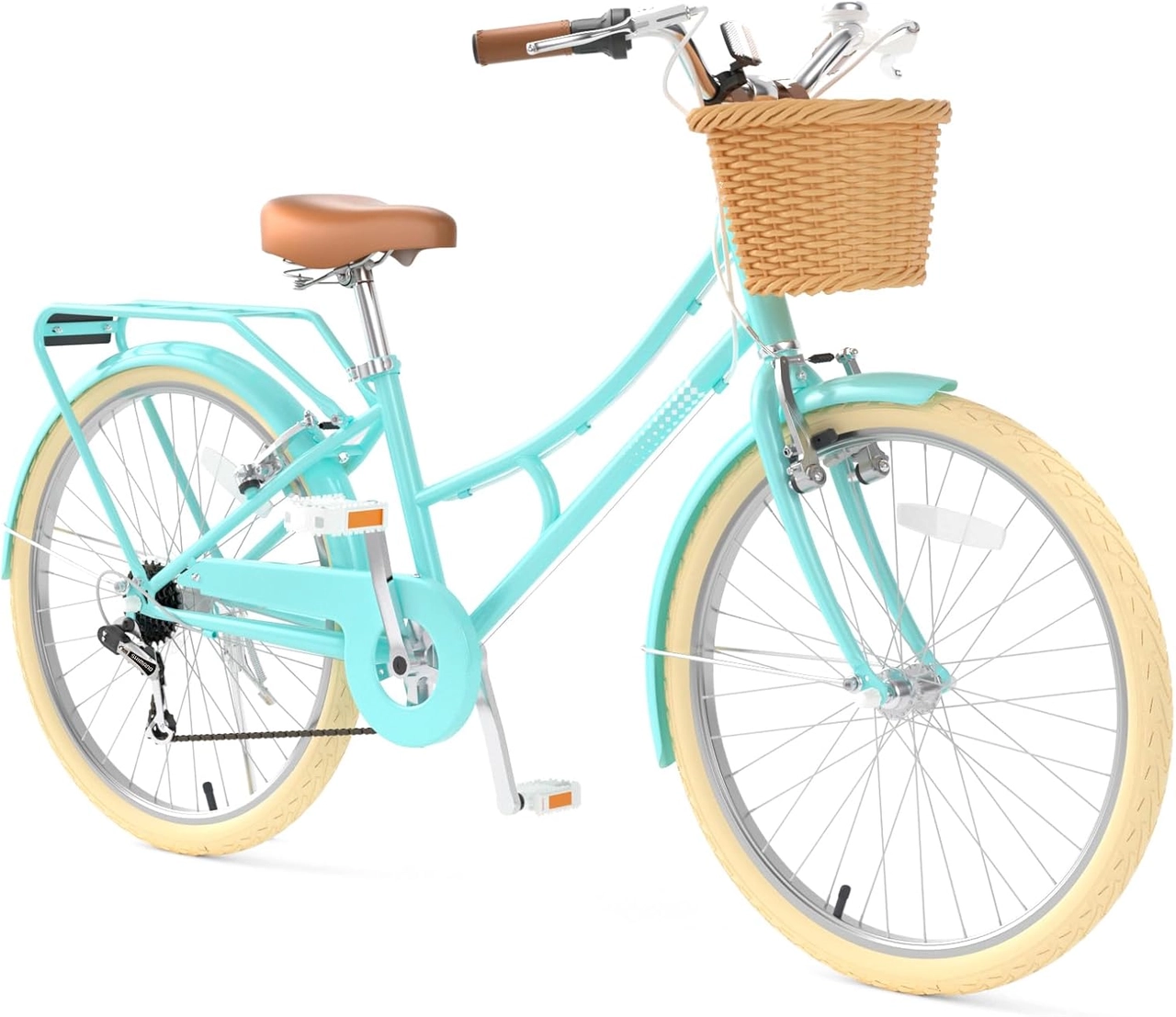 XJD 24-Inch Green Beach Cruiser Bike with U-Brake
A larger-size comparison option with Green / 24 Inch, Pink / 24 Inch, and Pink / 26 Inch labels. Consider it only when measured height and an individual fit check support 24- or 26-inch sizing.
 Pink XJD Beach Cruiser Bike, 24"/26", U-Brake
Offers 24 Inch and 26 Inch labels for riders reaching those XBikes height starting points. Confirm stand-over, reach, U-brake control, and confidence on the actual bicycle before deciding.
The XJD 24-Inch Green Beach Cruiser Bike with U-Brake is offered in Green / 24 Inch, Pink / 24 Inch, and Pink / 26 Inch labels. Its 24-inch versions are comparison points for riders measuring 54–64 inches / 137–163 cm, while the 26-inch version begins as a comparison point above 60 inches / 153 cm.
The Pink XJD Beach Cruiser Bike, 24"/26", U-Brake is offered with 24 Inch and 26 Inch labels. Compare the relevant size using the same measured-height ranges, then confirm stand-over, reach, U-brake control, and confidence on the actual bicycle.
These cruisers are relevant only if the rider’s measurements and hands-on fit support one of their available sizes. Follow the exact product manual or consult a qualified bicycle mechanic for assembly, maintenance, torque, compatibility, or load-limit questions not established by the catalog facts.
Make the decision today
Measure height and inseam, identify a starting wheel size, and arrange an actual fit check. Teach now if the child is willing and can balance, steer, follow directions, reach the controls, and stop predictably; otherwise, choose a better-fitting option or pause and retry when those abilities improve.
Bikes for your next adventure
-

Kids Bike Helmet by XJD for Boys & Girls – Black, Blue, Green, Pink, Purple
The XJD Kids Bike Helmet covers a wide 2-to-8-year age range thanks to two head-…$59.99
-

Kids Bike Helmet by XJD for Girls – Pink
The XJD Kids Bike Helmet in Pink is a lightweight multi-sport helmet for girls r…$59.99
$99 -

XJD Kids Bike for Girls – Pink, 12/14/16/20 Inch with Training Wheels
The XJD Kids Bike for Girls in Pink is a training-wheel bike built to carry your…$139
$159