

When should a kid learn to ride a bike
Most children should learn to ride when they are interested, able to follow simple directions, and physically ready to control a correctly fitted bike. Age is only a starting point; measure height and inseam, then check balance, reach and brake control.
Look for readiness before choosing an age
Many children become interested between the preschool and early school years, but there is no single correct birthday. A child is ready to practise when they willingly get on the bike, can walk or glide it without panic, understand instructions such as “stop” and “look ahead,” and can stay engaged for a short session.
Waiting is appropriate if the child strongly resists, cannot reliably stop, or cannot support and steer the bike. Pressure rarely improves learning. Return to walking, scooting or balance practice and try again later.
Measure the rider and check the actual bike
Measure the child’s height without shoes. Also measure inseam from the floor to the crotch while the child stands straight. Inseam is useful for comparing the rider with the bicycle’s stand-over clearance and lowest practical saddle position, but the final decision must be made on the actual bike.
Have the child try it. They should be able to stand over the frame, start without struggling, steer without stretching, and reach and operate the brakes with control. Do not buy an oversized bicycle for future growth; extra size can make starting, stopping and recovering balance harder.
Use wheel size only as a starting point
| Wheel size | Starting age | Rider height |
|---|---|---|
| 12 Inch | 3–4 | 34–40 in / 86–102 cm |
| 14 Inch | 3–6 | 37–45 in / 94–114 cm |
| 16 Inch | 4–7 | 40–48 in / 102–122 cm |
| 18 Inch | 5–9 | 43–52 in / 109–132 cm |
| 20 Inch | 7–12 | 48–60 in / 122–152 cm |
| 24 Inch | 10–14 | 54–64 in / 137–163 cm |
| 26 Inch | Youth and adults | Over 60 in / 153 cm |
Where ranges overlap, prioritize measured height, inseam, reach, brake operation and current confidence—not the age column. Wheel diameter does not establish complete fit because frame shapes and control positions can differ.
Teach the core skill in manageable steps
- Choose a flat, open area away from traffic, obstacles and steep slopes.
- Let the child become comfortable walking the bicycle and using its brakes.
- Practise short glides so the child learns balance while looking ahead.
- Add pedalling only after balancing and stopping feel predictable.
- Keep sessions brief and finish before fatigue causes frustration or poor control.
Stay close enough to assist, but avoid steering the bike for the child. Progress is more useful than a deadline: one learner may combine these steps quickly, while another needs separate sessions.
Make helmet fit part of the lesson
Use a bicycle helmet that fits the individual child. It should sit level and be secured with its straps according to the helmet manufacturer’s instructions. Recheck the fit whenever clothing, hairstyle or helmet adjustments change.
Before each practice, confirm that the bicycle is assembled and operating as its exact manual specifies. For adjustments, maintenance, compatibility, load limits or torque information not stated in that manual, use a qualified bicycle mechanic rather than guessing.
When the supplied cruiser options are relevant
The 26-Inch XJD Beach Cruiser Bike for Girls – Purple, V-Brake is relevant only when comparing a learner who is already large enough for the catalog’s available 20-, 24- or 26-inch SKU labels. Those options help families compare later wheel-size starting points, but none replaces an individual fit check. The 26-inch Purple listing identifies a V-brake; brake reach and operation still need to be checked by the rider.

Use the available Mint Green or Pink 20- and 24-inch labels as comparison points for riders whose measured height falls into those starting ranges. The Mint Green, Pink and Purple 26-inch labels are comparison points for riders over 60 inches / 153 cm. They are not appropriate merely because a child has begun learning, and they are not substitutes for 12-, 14-, 16- or 18-inch bikes when those smaller starting points match the rider.
Decide what to do next
If your child is willing, follows stopping instructions and can control a correctly fitted bicycle, begin with short balance-and-braking sessions now. If stand-over, reach or braking is uncertain, try another size or seek a qualified mechanic’s fit help. If confidence is the only missing piece, pause and retry without turning age into a deadline.
Bikes for your next adventure
-

XJD Kids Bike for Girls – Pink, 12/14/16/20 Inch with Training Wheels
The XJD Kids Bike for Girls in Pink is a training-wheel bike built to carry your…$139
$159 -

Blue XJD Girls Bike with Training Wheels – 12/14/16 Inch
If you're shopping for a first pedal bike for a daughter roughly 3 to 8 years ol…$149
$169 -
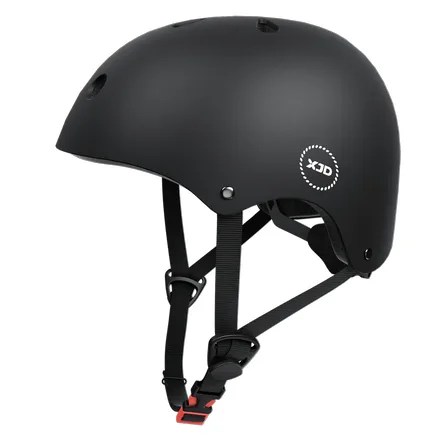
7-in-1 Kids Helmet & Protective Gear Set from XJD – Black or Blue
If you're outfitting one kid (or a couple of siblings) for biking, scootering, o…$59.99