

Where do you buy kids bike seats
Buy a kids bike seat from a reputable bicycle shop or established retailer that can verify fit, compatibility, load limits and installation requirements before you order.
First, identify which kind of seat you need
“Kids bike seat” can mean a child passenger seat fitted to an adult bicycle, a replacement saddle for a child’s bicycle, or an entire kids bike. These are not interchangeable purchases.
For a passenger seat, tell the seller the adult bicycle’s exact make, model, frame size and any rack already fitted. Also provide the child’s current measurements. Ask the seller to check the seat manufacturer’s compatibility information rather than relying on a product photo or a general claim that it fits most bikes.
For a replacement saddle, start with the child bicycle’s make, model and size. Confirm the mounting system and dimensions against its manual or have a qualified bicycle mechanic inspect it. If you actually mean a complete kids bike, measure the rider before comparing wheel sizes.
What to measure before buying
- For any child: Measure current height accurately. For a complete bicycle, also measure inseam and observe reach, brake control and confidence during a fit check.
- For a passenger seat: Check the child’s current measurements against the seat manufacturer’s stated limits. Do not guess at load limits or assume that age alone establishes suitability.
- For the carrying bicycle: Record its exact model and inspect the proposed mounting area. Compatibility, approved mounting points, rack requirements and fastener torque must come from the bicycle and seat manuals.
- For a replacement saddle: Record the existing saddle and seat-post connection. Similar-looking fittings may not be equivalent.
Bring these details to a local bicycle shop if the manuals are missing, the mounting instructions are unclear, or the bicycle has accessories that could interfere with installation.
How to compare sellers and products
A useful seller should provide the exact product manual, state the applicable fit and load limits, explain which bicycles or mounting systems are compatible, and offer a clear route for fit questions. Avoid choosing solely by color, age wording, photographs or the promise of room to grow.
Before paying, confirm what is included, what additional mounting hardware is required and whether professional installation is recommended. Follow the exact manual for assembly, maintenance, compatibility and torque. When two instructions appear to conflict, pause and consult the manufacturer or a qualified bicycle mechanic.
If you meant a complete kids bike
The following XBikes figures are starting points, not substitutes for having the child try the bicycle. Prioritize measured height, inseam, reach, brake control and present confidence over age alone.
| Wheel size | Starting age | Rider height |
|---|---|---|
| 12 Inch | 3–4 | 34–40 in / 86–102 cm |
| 14 Inch | 3–6 | 37–45 in / 94–114 cm |
| 16 Inch | 4–7 | 40–48 in / 102–122 cm |
| 18 Inch | 5–9 | 43–52 in / 109–132 cm |
| 20 Inch | 7–12 | 48–60 in / 122–152 cm |
| 24 Inch | 10–14 | 54–64 in / 137–163 cm |
| 26 Inch | Youth and adults | Over 60 in / 153 cm |
Have the child try the bike. Check stand-over clearance, comfortable steering control and the ability to reach and operate the brakes. Do not buy an oversized bicycle merely for future growth.
How the supplied XBikes options relate
The supplied catalog products are complete training-wheel bicycles, not child passenger seats or replacement saddles. They therefore do not substitute for the seat requested in the title. They are relevant only if “bike seat” was shorthand for buying a complete kids bike, and they help compare available wheel-size labels.
 XJD Kids Bike for Girls – Pink, 12/14/16/20 Inch with Training Wheels
A complete training-wheel bicycle offered in 12 Inch, 14 Inch, 16 Inch and 20 Inch labels; relevant only if the shopper meant a kids bike, not a passenger seat or replacement saddle.
 XJD Pink Girls' Bike – Kids 12/14/16 Inch Training Wheel Bicycle
A complete training-wheel bicycle offered in 12 Inch, 14 Inch and 16 Inch labels; useful for wheel-size comparison only, not as a substitute for a child passenger seat.
XJD Kids Bike for Girls – Pink, 12/14/16/20 Inch with Training Wheels is listed in 12 Inch, 14 Inch, 16 Inch and 20 Inch labels. XJD Pink Girls' Bike – Kids 12/14/16 Inch Training Wheel Bicycle is listed in 12 Inch, 14 Inch and 16 Inch labels. The first adds a 20 Inch option; otherwise, their supplied size labels overlap.
Those labels identify catalog variants, not proof of individual fit. Neither listing supplies passenger-seat compatibility, load limits, mounting details or replacement-saddle specifications, so use neither as evidence when selecting a child-carrying seat.
Complete the purchase safely
- Decide whether you need a passenger seat, replacement saddle or complete bicycle.
- Measure the child and record the bicycle’s exact identifying details.
- Compare those facts with the exact product manual and compatibility requirements.
- Arrange a fit check or mechanic review whenever compatibility or installation remains uncertain.
Also choose a bicycle helmet that fits properly, sits level and has straps adjusted according to its manufacturer’s instructions. Your next step is specific: take your measurements and bicycle details to a reputable seller, and buy only the kind of kids bike seat whose manual confirms the intended fit and use.
Bikes for your next adventure
-
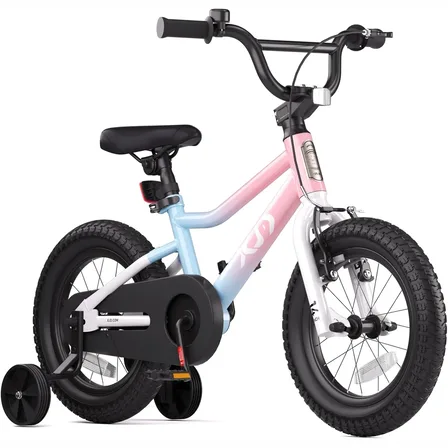
XJD Girls BMX Bike 12/14/16 Inch with Training Wheels – Pink Blue
The XJD Girls BMX Bike in Pink/Blue is built as a first pedal bike for kids roug…$99.99
$119.99 -

Kids Bike Helmet by XJD for Boys & Girls – Black, Blue, Green, Pink, Purple
The XJD Kids Bike Helmet covers a wide 2-to-8-year age range thanks to two head-…$59.99
-

Blue XJD Kids Bike Helmet for Boys & Girls
The Blue XJD Kids Bike Helmet is a lightweight, adjustable multi-sport helmet fo…$59.99
$99