

Where find kids bicycle seats
Find kids’ bicycle seats at a reputable bicycle shop, a family-cycling retailer, or a seat maker’s authorized seller. Before buying, identify whether you need a child-carrying seat or a replacement saddle, then verify the exact bicycle, mounting points, rider fit, and product-manual limits.
Choose the right kind of seat first
“Kids bicycle seat” can mean two different products. A child-carrying seat attaches to an adult bicycle and carries a passenger. A kids’ saddle is the part a child sits on while riding their own bicycle. They are not interchangeable, so use those precise terms when searching online or asking a shop.
For a child-carrying seat, start with a bicycle shop that can inspect the adult bicycle in person. Bring the bicycle, its model details, and any rack or accessory already installed. For a replacement saddle, bring the child’s bicycle or record its exact make, model, and current seat-post clamp arrangement. A qualified bicycle mechanic can identify compatibility when the documentation is unclear.
What to measure and record
Before comparing products, collect the information that determines whether a seat and bicycle can work together:
- For a carrying seat: record the adult bicycle’s exact model, frame layout, wheel size, existing rack details, and available mounting area. Check the seat manual for permitted bicycles, mounting requirements, passenger limits, and required clearances.
- For a replacement saddle: record the bicycle model, the existing saddle’s attachment style, the child’s measured height and inseam, and the current saddle position.
- For either purchase: note anything that could obstruct installation or movement, including cables, accessories, suspension components, or unusual frame shapes.
Do not guess at load limits, compatibility, mounting hardware, or tightening torque. Those details must come from the exact seat and bicycle manuals. If either manual is unavailable or the instructions conflict, use a qualified bicycle mechanic rather than improvising.
Compare fit, not just labels
If the child will ride their own bicycle, age is only a starting point. Measure height and inseam, then have the child try the bicycle. Check that the rider can stand over it appropriately, reach the controls without stretching, steer comfortably, and operate the brakes with control. Current confidence matters too. The American Academy of Pediatrics advises trying the bicycle and avoiding an oversized model bought merely for growth.
| Wheel size | Starting age | Rider height |
|---|---|---|
| 12 Inch | 3–4 | 34–40 in / 86–102 cm |
| 14 Inch | 3–6 | 37–45 in / 94–114 cm |
| 16 Inch | 4–7 | 40–48 in / 102–122 cm |
| 18 Inch | 5–9 | 43–52 in / 109–132 cm |
| 20 Inch | 7–12 | 48–60 in / 122–152 cm |
| 24 Inch | 10–14 | 54–64 in / 137–163 cm |
| 26 Inch | Youth and adults | Over 60 in / 153 cm |
These XBikes figures are wheel-size starting points, not proof of fit and not specifications for child-carrying seats. Rider height, inseam, reach, brake control, and confidence take priority over age alone.
How the supplied XBikes option is relevant
The supplied catalog item is a complete training-wheel bicycle, not a separate child-carrying seat or replacement saddle. It is therefore relevant only if “seat” was being used to mean finding a bicycle for a child. Its three wheel sizes provide useful comparison points after the rider has been measured; they do not establish compatibility with any add-on seat.
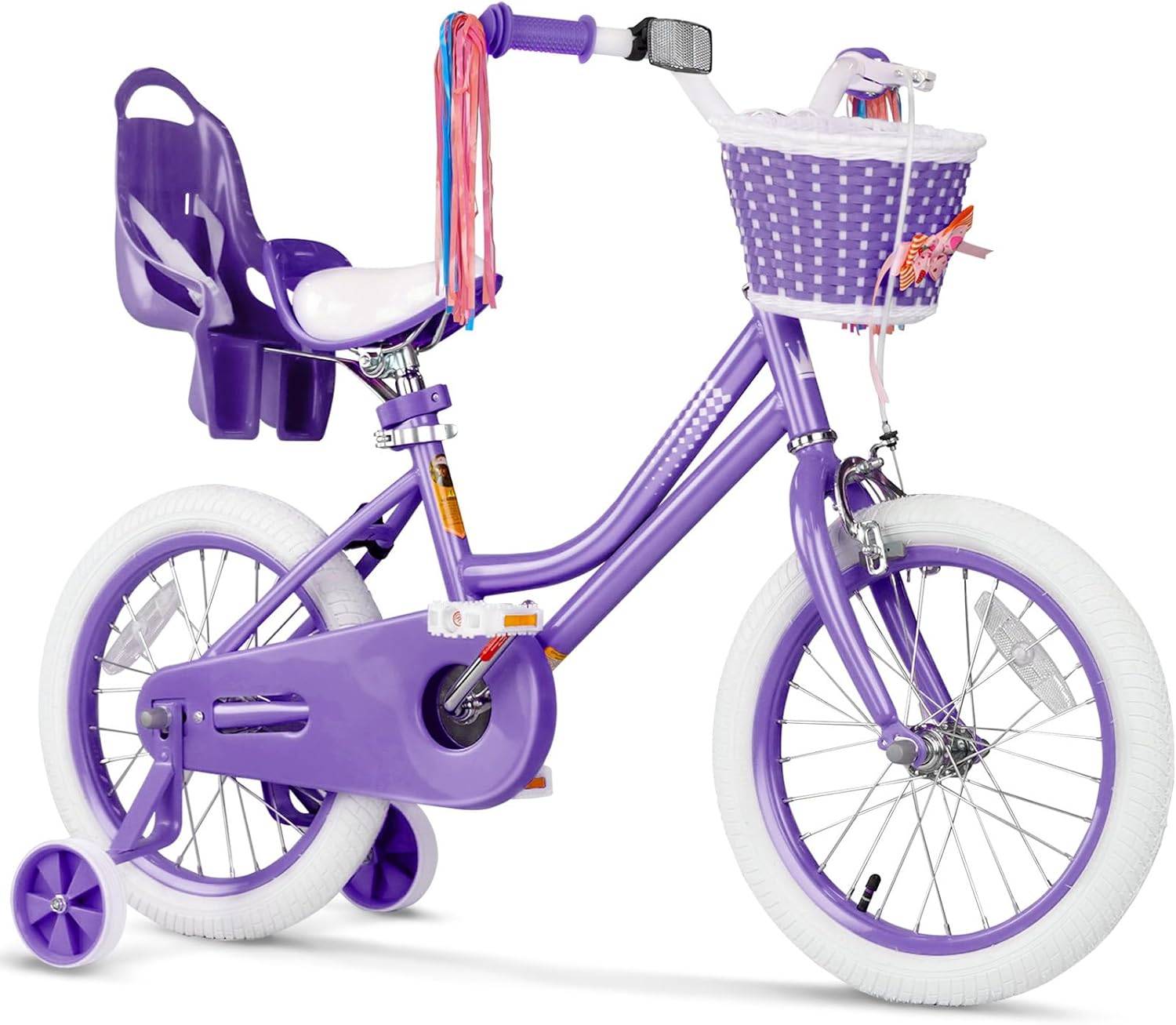
XJD Girls Bike for Kids Ages 3-8, 12/14/16 Inch with Training Wheels – Purple is listed in the Training Wheel Bikes category with 12 Inch, 14 Inch, and 16 Inch SKU labels. The “Ages 3-8” wording is part of its catalog title, not individual fit evidence. Compare the measured rider with the XBikes starting ranges above, then require an in-person control and reach check.
These catalog options help answer the title by showing when a complete child’s bicycle may be the intended purchase and which listed wheel sizes can be compared. They are not substitutes for a carrying seat, and no seat compatibility should be inferred from them.
Check installation and riding readiness
For a carrying seat, confirm every required mount, clearance, passenger restriction, and bicycle restriction in both manufacturers’ manuals before purchase. Have a bicycle shop assess the setup if any requirement is uncertain. After installation, follow the exact inspection and maintenance instructions rather than applying a generic procedure.
For a child riding independently, recheck stand-over space, seated reach, steering control, and brake operation after any saddle adjustment. The child should not have to compensate for a bicycle that is too large. Use a properly fitting bicycle helmet that sits level, with straps adjusted according to the helmet manufacturer’s instructions, as advised by the U.S. Consumer Product Safety Commission.
Make the next decision
If you need to carry a child, take the adult bicycle’s details—or preferably the bicycle itself—to a reputable shop and select only a seat explicitly permitted by both manuals. If you need a saddle, match its attachment to the child’s exact bicycle. If you actually need a complete child’s bicycle, measure the rider now and compare the 12, 14, and 16 Inch catalog options without treating the title’s age label as proof of fit.
Bikes for your next adventure
-
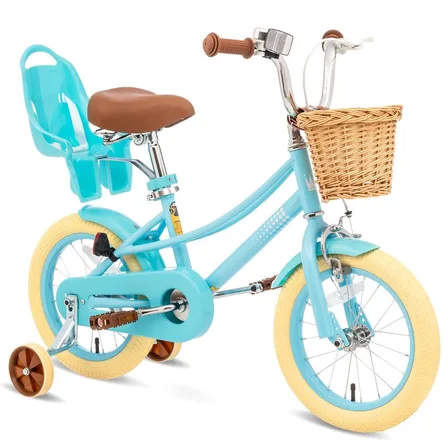
Girls' Training Wheel Bike by XJD, 12–20 Inch Wheels – Blue
This XJD girls' training wheel bike in Blue covers one of the widest fit ranges …$139
$159 -

XJD 24-Inch Green Beach Cruiser Bike with U-Brake
This XJD 24-inch beach cruiser in green is made for riders about 4'8" to 5'4" ta…$159.99
$199.99 -

Kids Bike Helmet by XJD for Boys & Girls – Black, Blue, Green, Pink, Purple
The XJD Kids Bike Helmet covers a wide 2-to-8-year age range thanks to two head-…$59.99