

Where to buy baby bike seat carrier
Buy a baby bike seat carrier from a reputable bicycle retailer or local bike shop that can confirm it fits your exact bicycle and child. The supplied XBikes products are children’s training-wheel bicycles, not passenger carriers.
Choose the seller by the help you need
A qualified local bicycle shop is the clearest choice when you do not know whether your frame, rack or other mounting area can accept a child seat. Take the bicycle with you so the shop can inspect the actual mounting points and identify any interference.
An online bicycle retailer can be suitable when you already have the bicycle’s exact make, model, frame size and relevant measurements. Before ordering, obtain the carrier manufacturer’s compatibility instructions, child limits, bicycle requirements and installation manual. A product name or photograph alone is not enough to establish fit.
A general marketplace may offer more listings, but it places more responsibility on you to verify the model, documentation, completeness and compatibility. If a seller cannot provide the exact manual or answer which bicycles the carrier supports, choose a source that can.
Measure before buying
First identify whether the candidate is a front-mounted seat, frame-mounted rear seat or rack-mounted rear seat. Those designs attach differently and are not interchangeable. Then record the information the exact carrier manual requests. This may include:
- Your bicycle’s manufacturer, model, frame size and wheel size.
- The shape and dimensions of the specified frame tube or mounting area.
- Available clearance around cables, brakes, wheels, saddle and steering components.
- The rear rack’s exact model and rated load if the seat mounts to a rack.
- Your child’s current measurements and weight, compared only with the carrier manufacturer’s stated limits.
Do not assume that every rack is approved for a child seat or that a clamp fits because it appears close. Where the documentation does not settle the question, have a qualified bicycle mechanic inspect the bicycle and carrier together.
Compare the details that determine compatibility
Compare candidates by mounting system, documented bicycle compatibility, child limits, required clearances, included hardware and the availability of model-specific instructions. Also consider whether the added seat could affect your reach, steering space, mounting and dismounting, or ability to control the bicycle. Confirm those points before purchase rather than adapting an incompatible product afterward.
For assembly, fastener torque, maintenance, replacement parts and load limits, follow the exact carrier and bicycle manuals. If either manual prohibits the combination, or if required compatibility information is missing, do not treat the carrier as suitable.
What the supplied XBikes options actually show
The three catalog options below help answer the title by showing what not to confuse with a baby bike seat carrier: each is a child’s training-wheel bicycle offered in 12 Inch, 14 Inch and 16 Inch labels. They are independent-riding comparison points, not passenger seats and not substitutes for a carrier.
 XJD Pink Girls' Bike – Kids 12/14/16 Inch Training Wheel Bicycle
A training-wheel bicycle offered in 12 Inch, 14 Inch and 16 Inch labels. It is relevant only as an independent-riding comparison point, not as a baby bike seat carrier.
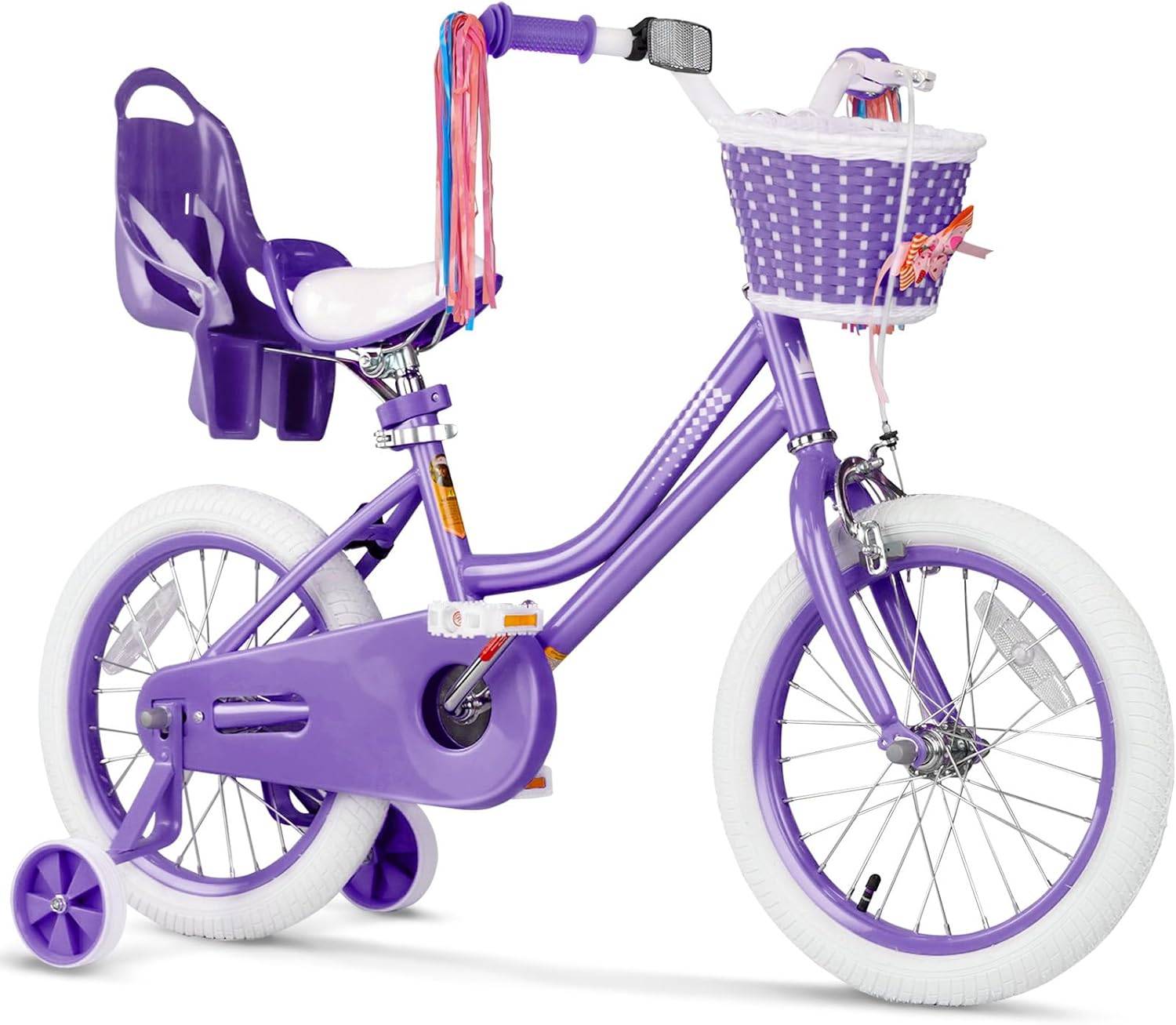 XJD Girls Bike for Kids Ages 3-8, 12/14/16 Inch with Training Wheels – Purple
This purple training-wheel bicycle has 12 Inch, 14 Inch and 16 Inch options. The age wording in its title is only a catalog label and does not make it a passenger carrier.
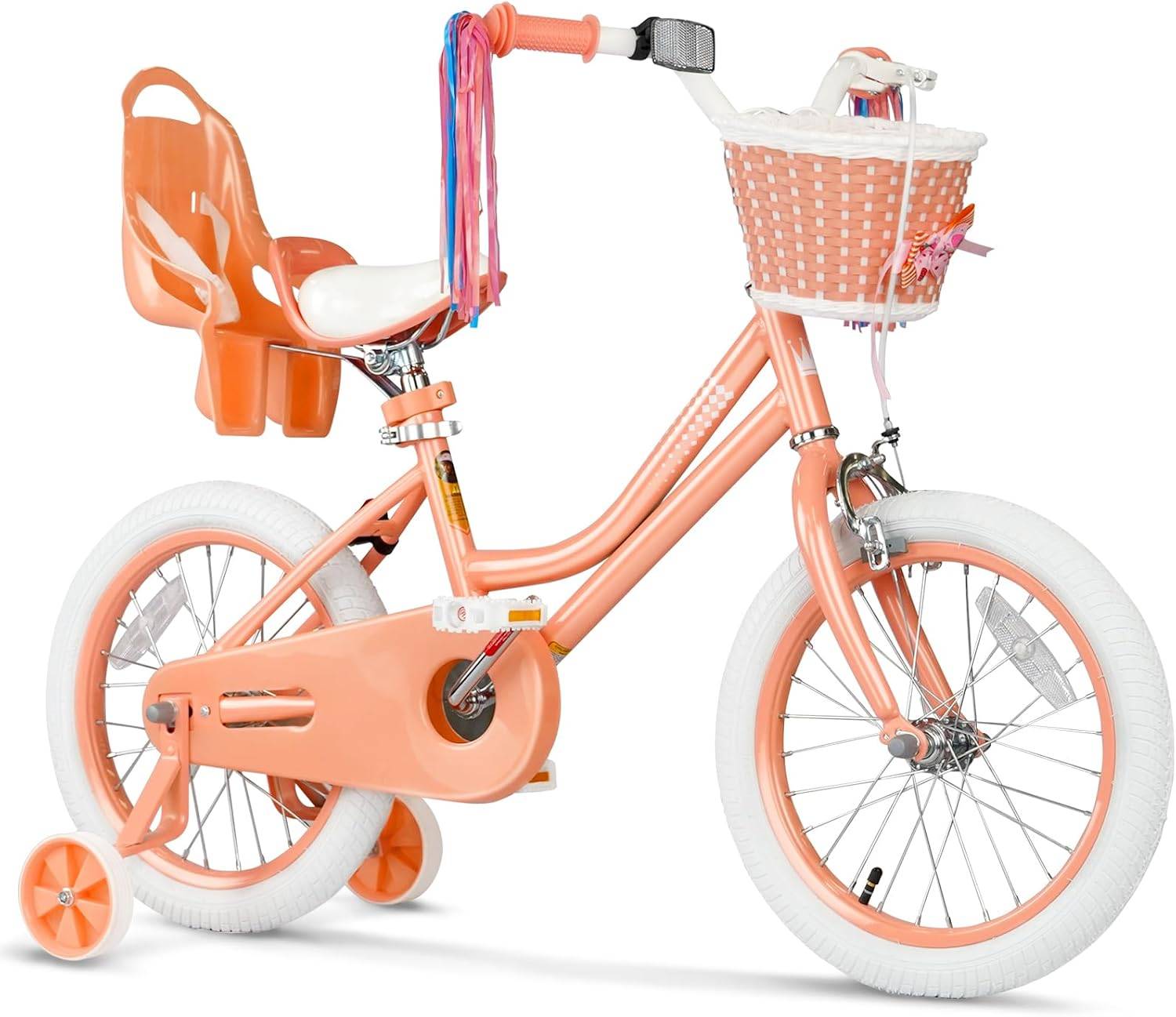 Girls 12/14/16 Inch Kids Bike by XJD with Training Wheels – Peach
A peach Training Wheel Bikes option supplied in 12 Inch, 14 Inch and 16 Inch sizes. Compare it only when considering independent riding; it is not a carrier substitute.
XJD Pink Girls' Bike – Kids 12/14/16 Inch Training Wheel Bicycle is listed under Training Wheel Bikes with 12 Inch, 14 Inch and 16 Inch options. XJD Girls Bike for Kids Ages 3-8, 12/14/16 Inch with Training Wheels – Purple has the same supplied size choices; the age wording in its title is a catalog label, not individual fit evidence. Girls 12/14/16 Inch Kids Bike by XJD with Training Wheels – Peach is likewise a Training Wheel Bikes option in those three sizes.
These products become relevant only if you are deciding whether a child is ready for a separate bicycle rather than being carried as a passenger. The supplied facts do not establish carrier compatibility, so none should be purchased as though it were a baby seat or carrier.
If you are comparing a separate child’s bicycle
Use measured rider height as the starting point, not title wording or age alone. XBikes lists 12 Inch for 34–40 in (86–102 cm), generally ages 3–4; 14 Inch for 37–45 in (94–114 cm), generally ages 3–6; and 16 Inch for 40–48 in (102–122 cm), generally ages 4–7.
Overlapping ranges do not make the sizes equivalent. Have the child try the bicycle and check stand-over clearance, inseam, reach, brake control and current confidence. Consistent with American Academy of Pediatrics guidance, do not buy an oversized bicycle merely for future growth. The individual fit check takes priority over age.
Make the purchase decision
Choose a baby bike seat carrier only after a seller or qualified mechanic confirms the exact carrier, mount and bicycle combination against both manuals. Ensure the child has a properly fitting bicycle helmet that sits level, with straps used according to the helmet manufacturer’s instructions, as advised by the U.S. Consumer Product Safety Commission.
If you cannot verify mounting compatibility, required clearance or applicable limits, pause the purchase and take the bicycle’s details—or the bicycle itself—to a qualified shop. If your real goal is independent riding, measure the child and compare the three XBikes training-wheel bicycles as bicycles, not as carrier alternatives.
Bikes for your next adventure
-

Kids Bike Helmet by XJD for Boys & Girls – Black, Blue, Green, Pink, Purple
The XJD Kids Bike Helmet covers a wide 2-to-8-year age range thanks to two head-…$59.99
-

Blue XJD Kids Bike Helmet for Boys & Girls
The Blue XJD Kids Bike Helmet is a lightweight, adjustable multi-sport helmet fo…$59.99
$99 -

XJD Girls BMX Bike 12/14/16 Inch with Training Wheels – Pink Blue
The XJD Girls BMX Bike in Pink/Blue is built as a first pedal bike for kids roug…$99.99
$119.99