

Where to buy child bike trailer
Buy a child bike trailer from a bicycle shop, the trailer maker’s authorized dealer, or a reputable retailer that provides the exact manual, compatibility details, replacement parts and returns.
Where to buy with confidence
A local bicycle shop is the strongest starting point when you want help checking the hitch, bicycle compatibility and assembly. Take the towing bicycle with you if possible. Ask whether the shop will inspect the complete bicycle-and-trailer connection before the first ride.
An authorized dealer or established online retailer can also be appropriate. Before ordering, confirm that the listing identifies the exact model and includes access to its manual. The seller should clearly answer questions about spare hitch parts, returns and support without relying on vague claims such as “fits most bikes.”
A used trailer may cost less, but it requires more scrutiny. Confirm the exact model, obtain its manual and inspect it in person. Missing identification, an unavailable manual, improvised connections, damaged restraints or unavailable replacement parts are good reasons to walk away.
Measure before you shop
Record the child’s seated height, shoulder position and legroom needs, then compare those measurements with the trailer maker’s interior-fit instructions. The child should fit without crowding the head area, restraints or enclosure. Do not guess from age alone.
Also identify the towing bicycle’s exact make, model, wheel size and axle or hub arrangement. Photograph both sides of the rear axle and any rack, fender or stand near it. These details help a seller or qualified bicycle mechanic determine whether the specified hitch and any approved adapter can be used.
Finally, consider the route to and from storage. Measure gates, doorways and storage openings, and check whether the trailer must fold or have wheels removed. Use the exact product manual for folded dimensions, passenger or cargo limits and all other model-specific measurements.
Compare the details that decide the purchase
- Compatibility: Obtain written model-specific guidance for the towing bicycle, hitch and any adapter. Do not improvise hardware.
- Child fit: Compare the child’s measurements with the manufacturer’s fit requirements and stated passenger limits.
- Restraint and enclosure: Inspect how the supplied restraints adjust and how the enclosure closes, following the manual rather than assuming similar-looking systems work alike.
- Parts and service: Check that the correct hitch components and normal replacement parts are obtainable for the exact model.
- Assembly: Ask what arrives assembled and what requires setup. For procedures or torque values, follow the exact manual or use a qualified bicycle mechanic.
- Returns: Prefer a seller that permits a compatibility or fit problem to be resolved before the trailer is used.
Questions to ask the seller
- Is this the exact current model, and may I review its manual before purchase?
- Does the manufacturer document compatibility with my bicycle’s rear axle or hub arrangement?
- Which hitch and approved adapter, if any, are required?
- What are the manufacturer’s child-fit, passenger and cargo limits?
- Are model-specific replacement hitch and restraint components available?
- Who can check assembly and attachment if the fit is uncertain?
If the seller cannot verify these points from the manufacturer’s documentation, pause the purchase. A visual resemblance to another trailer does not establish compatibility.
How the supplied XBikes option relates
The supplied catalog item is not a child bike trailer. The XJD Girls' Bike with Training Wheels, 12/14/16/20 Inch – Purple is a training-wheel bicycle offered in 12 Inch, 14 Inch, 16 Inch and 20 Inch labels. It is relevant only if you are comparing trailer transport with a separate bicycle for a child to ride independently; it does not substitute for a trailer, and the supplied facts do not establish trailer-towing compatibility.
This catalog option helps answer the title by making that boundary clear and by offering independent-riding wheel-size comparison points, not trailer recommendations.

If independent riding is also under consideration, measure the rider rather than choosing by age or room to grow. XBikes starting points are 12 Inch at 34–40 in / 86–102 cm, 14 Inch at 37–45 in / 94–114 cm, 16 Inch at 40–48 in / 102–122 cm, and 20 Inch at 48–60 in / 122–152 cm. These ranges are only starting points.
Have the child try the bicycle. Prioritize measured height, inseam, stand-over clearance, reach, brake control and present confidence. The American Academy of Pediatrics advises against buying an oversized bicycle merely for growth. For either independent riding or travel in a trailer, use a properly fitting bicycle helmet that sits level, with straps adjusted according to its manufacturer’s instructions.
Make the final buying decision
Choose the seller that can document the exact trailer model, child fit, towing-bicycle compatibility, required hitch parts and access to the manual. If any connection or assembly detail remains uncertain, take the bicycle and trailer to a qualified bicycle mechanic before use. If what you actually need is a bicycle for independent riding, evaluate the supplied training-wheel bike separately with an in-person fit check.
Bikes for your next adventure
-

Blue XJD Kids Bike Helmet for Boys & Girls
The Blue XJD Kids Bike Helmet is a lightweight, adjustable multi-sport helmet fo…$59.99
$99 -
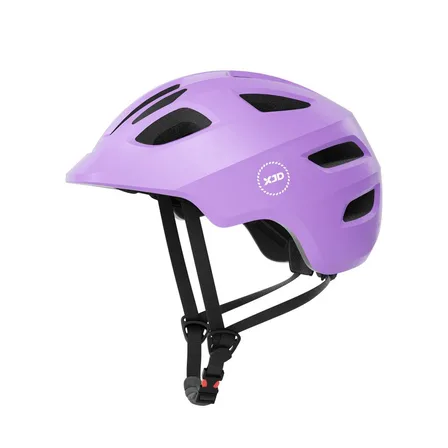
Girls' Bike Helmet from XJD – Purple
The XJD kids bike helmet in purple is a multi-sport helmet built for toddlers an…$59.99
$49 -

Kids Bike Helmet by XJD for Boys & Girls – Black, Blue, Green, Pink, Purple
The XJD Kids Bike Helmet covers a wide 2-to-8-year age range thanks to two head-…$59.99