

Which child bike trailer
Choose a child bike trailer only after checking the child’s seated fit, the trailer’s stated load limits, and exact hitch compatibility with the towing bicycle. If any of those checks fails, choose a different trailer.
Measure the child before comparing trailers
Start with the child who will actually ride in the trailer. Record current weight and seated height, measured from the seat surface to the top of the head. Then check the same measurement while the child wears a properly fitted bicycle helmet. The helmet must sit level, fit securely and use its straps according to the manufacturer’s instructions.
Compare those measurements with the trailer manufacturer’s limits and fit instructions. There should be adequate helmet clearance in the occupied seating position, and the harness should sit as the manual shows without pressing against the neck or slipping from the shoulders. For two children, assess each seating position and include both children plus carried items when checking the permitted load.
Do not estimate missing limits or assume that a child who can enter the cabin fits correctly. If the manual does not provide enough information to confirm fit, ask the manufacturer or retailer before buying.
Confirm that the trailer can attach to the bicycle
A trailer is useful only when its hitch is approved for the exact towing bicycle. Compare the trailer manual with the bicycle’s axle and frame arrangement, including any adapter the manufacturer requires. Do not improvise a hitch, substitute hardware or infer compatibility from appearance.
Check that the attachment does not interfere with the wheel, brakes or normal bicycle operation. Follow the exact product manuals for assembly, maintenance, compatibility and torque. When the instructions are unclear, have a qualified bicycle mechanic inspect the bicycle and proposed hitch system.
Compare the features that affect your journey
- Passenger arrangement: Choose the required number of seating positions and verify individual and combined limits in the manual.
- Harness and cabin fit: Confirm that each child can sit in the instructed position with suitable helmet clearance.
- Weather protection and ventilation: Compare how the cabin is intended to be used in the conditions you expect, following its manual.
- Storage: Count bags and other cargo when checking the manufacturer’s total permitted load.
- Route suitability: Consider surface quality, turns, gradients, traffic and the additional space needed by the complete bicycle-and-trailer combination.
- Storage at home: Measure doors and the intended storage area, then compare them with the trailer’s published dimensions.
Where the supplied XBikes products fit
The supplied catalog options help answer the title only by showing possible children’s bicycles in common wheel sizes. They are not child bike trailers, and the catalog facts do not establish that either bicycle can tow one. Treat them as separate riding-bike comparisons, never as substitutes for a trailer or proof of hitch compatibility.
 XJD Kids Bike for Girls – Pink, 12/14/16/20 Inch with Training Wheels
A training-wheel bicycle offered in 12, 14, 16 and 20 Inch sizes. It is relevant only as an independent-riding comparison; supplied facts do not identify it as a trailer or confirm trailer-hitch compatibility.
 XJD Pink Girls' Bike – Kids 12/14/16 Inch Training Wheel Bicycle
A training-wheel bicycle offered in 12, 14 and 16 Inch sizes. It may inform a separate bike-size comparison, but it is not a child trailer and supplied facts do not establish towing compatibility.
XJD Kids Bike for Girls – Pink, 12/14/16/20 Inch with Training Wheels is listed as a training-wheel bike with 12, 14, 16 and 20 Inch choices. XJD Pink Girls' Bike – Kids 12/14/16 Inch Training Wheel Bicycle is also listed as a training-wheel bike, with 12, 14 and 16 Inch choices. Those supplied facts support only a wheel-size comparison between the two products.
If you are deciding whether a child should ride independently instead of travelling in a trailer, use wheel size only as a starting point. XBikes associates 12 Inch with 34–40 in (86–102 cm), 14 Inch with 37–45 in (94–114 cm), 16 Inch with 40–48 in (102–122 cm), and 20 Inch with 48–60 in (122–152 cm). Have the child try the bicycle and check stand-over clearance, reach, brake control and current confidence. Never buy an oversized bicycle merely for growth, and treat wording in a product title as a catalog label rather than fit evidence.
Perform a final check before use
- Confirm every passenger fits within the trailer manufacturer’s stated measurements and load limits.
- Verify the hitch and any adapter against both exact product manuals.
- Assemble and inspect the system precisely as instructed; use a qualified bicycle mechanic when anything is uncertain.
- Check each helmet for a level, secure fit and correctly adjusted straps.
- Practise without passengers in a suitable low-risk area so the rider can understand the combination’s width, turning and stopping behaviour.
- Before every journey, complete all pre-ride checks required by the bicycle and trailer manuals.
Make the choice
Choose the trailer whose documented passenger fit, total load allowance and hitch instructions all match your measured child, expected cargo and exact bicycle. If even one point remains unverified, pause the purchase and obtain the trailer manual or a mechanic’s compatibility assessment; the two supplied XBikes bicycles do not resolve that trailer-specific question.
Bikes for your next adventure
-

Kids Bike Helmet by XJD for Girls – Pink
The XJD Kids Bike Helmet in Pink is a lightweight multi-sport helmet for girls r…$59.99
$99 -
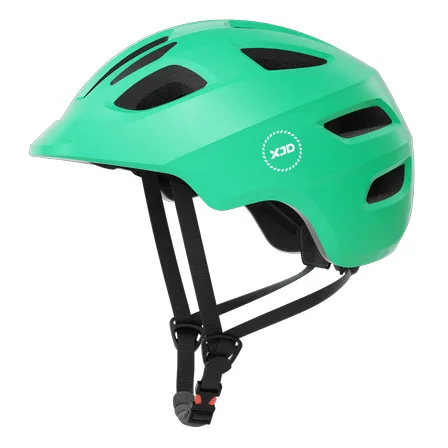
Green XJD Kids Bike Helmet for Boys & Girls
The Green XJD Kids Bike Helmet is a lightweight multi-sport helmet for toddlers …$59.99
$99 -

Blue XJD Kids Bike Helmet for Boys & Girls
The Blue XJD Kids Bike Helmet is a lightweight, adjustable multi-sport helmet fo…$59.99
$99