

Which bike for 7 year old
For most 7-year-olds, start by comparing 18 Inch and 20 Inch bikes, then choose by measured height, inseam, reach, brake control and confidence.
The short answer: 18 Inch or 20 Inch?
Under the XBikes starting points, an 18 Inch bike covers ages 5–9 and rider heights of 43–52 in / 109–132 cm. A 20 Inch bike covers ages 7–12 and heights of 48–60 in / 122–152 cm. The ranges overlap, so age alone cannot settle the choice.
A 7-year-old measuring below 48 in / 122 cm will usually begin the comparison with 18 Inch. At 48 in / 122 cm or taller, compare 18 Inch and 20 Inch in person. A child near a boundary may fit one size much better because body proportions, reach and confidence differ.
Measure before comparing bikes
Measure the child without shoes, standing straight against a wall. Record total height. Then measure inseam from the floor to the crotch while the child stands naturally. These figures narrow the search, but they do not replace trying the bicycle.
- Height: Use it to select the wheel sizes worth testing.
- Inseam and stand-over: Check that the child can straddle the bicycle with comfortable clearance rather than being pressed against the frame.
- Reach: With hands on the controls, the child should not have to stretch, lock the elbows or slide forward to steer.
- Brake control: The child must be able to reach and operate the fitted brakes confidently. Confirm the exact setup on the bicycle and in its manual.
- Confidence: Starting, stopping, turning and putting a foot down should feel controlled rather than intimidating.
Use this focused size comparison
| Wheel size | XBikes age starting point | XBikes rider-height starting point | Relevance at age 7 |
|---|---|---|---|
| 16 Inch | Ages 4–7 | 40–48 in / 102–122 cm | Consider only when the measured height and individual fit support it; many riders will be near its upper limit. |
| 18 Inch | Ages 5–9 | 43–52 in / 109–132 cm | A central starting point, especially below 48 in / 122 cm. |
| 20 Inch | Ages 7–12 | 48–60 in / 122–152 cm | Compare when the child is at least 48 in / 122 cm and can control it comfortably. |
Do not move up to 20 Inch merely to leave room for growth. An oversized bicycle can make mounting, steering, braking and stopping harder. The child should try the bike and demonstrate control now.
How the supplied bikes help with the decision
The three supplied catalog options are available only in 12 Inch, 14 Inch and 16 Inch sizes. They can help families compare a 16 Inch option for a smaller 7-year-old, but they do not provide the 18 Inch or 20 Inch sizes that many riders this age should compare.
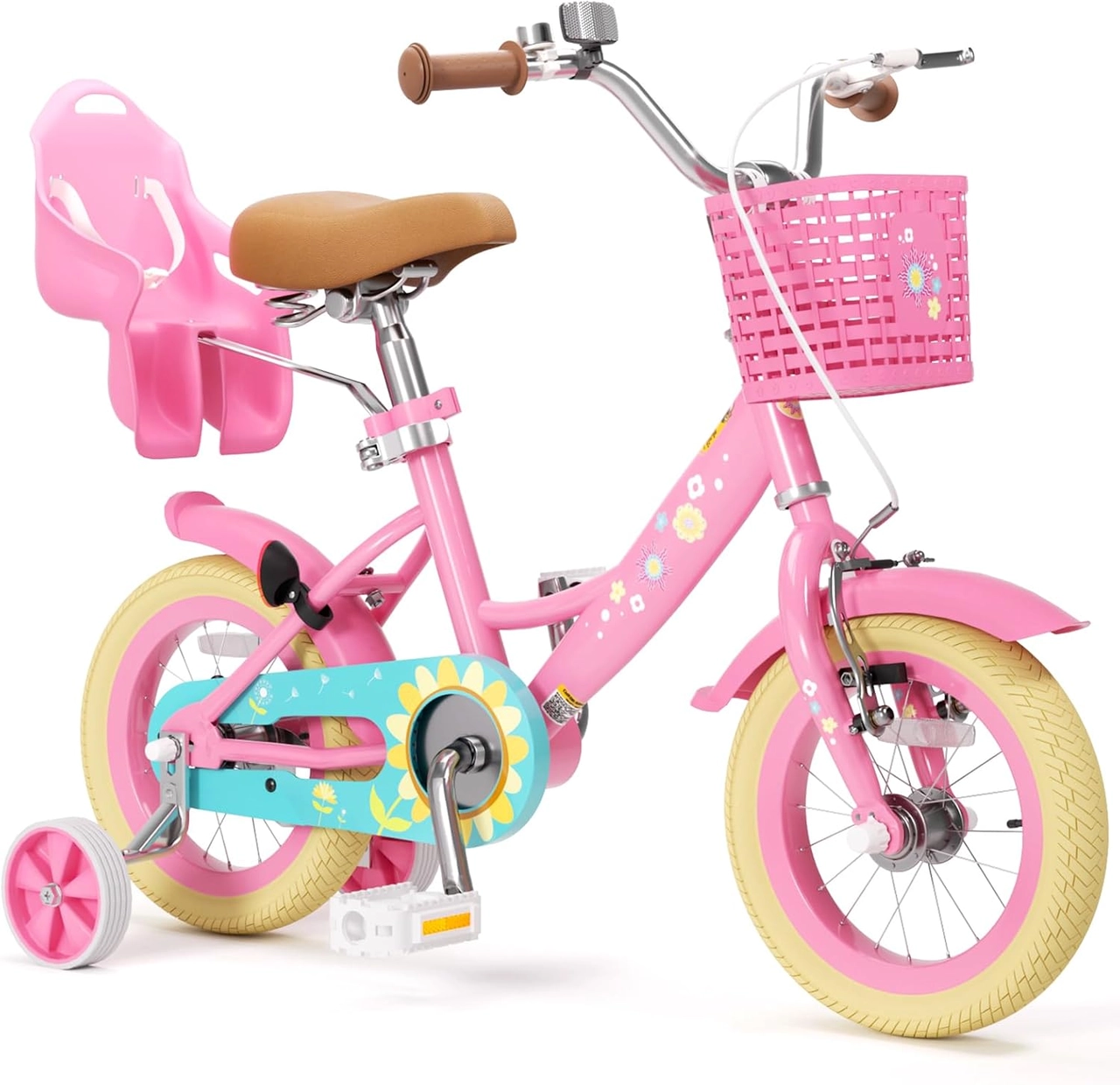 Flower Pink XJD Girls Bike with Doll Seat & Basket
A Training Wheel Bike offered in 12 Inch, 14 Inch and 16 Inch labels. Its 16 Inch option is relevant only when the 7-year-old's measured height and individual fit support that smaller range.
 Purple XJD Girls' Bike with Doll Seat & Basket
This Training Wheel Bike comes in 12 Inch, 14 Inch and 16 Inch labels. Compare its 16 Inch option only for a smaller 7-year-old who passes the height, stand-over, reach and control checks.
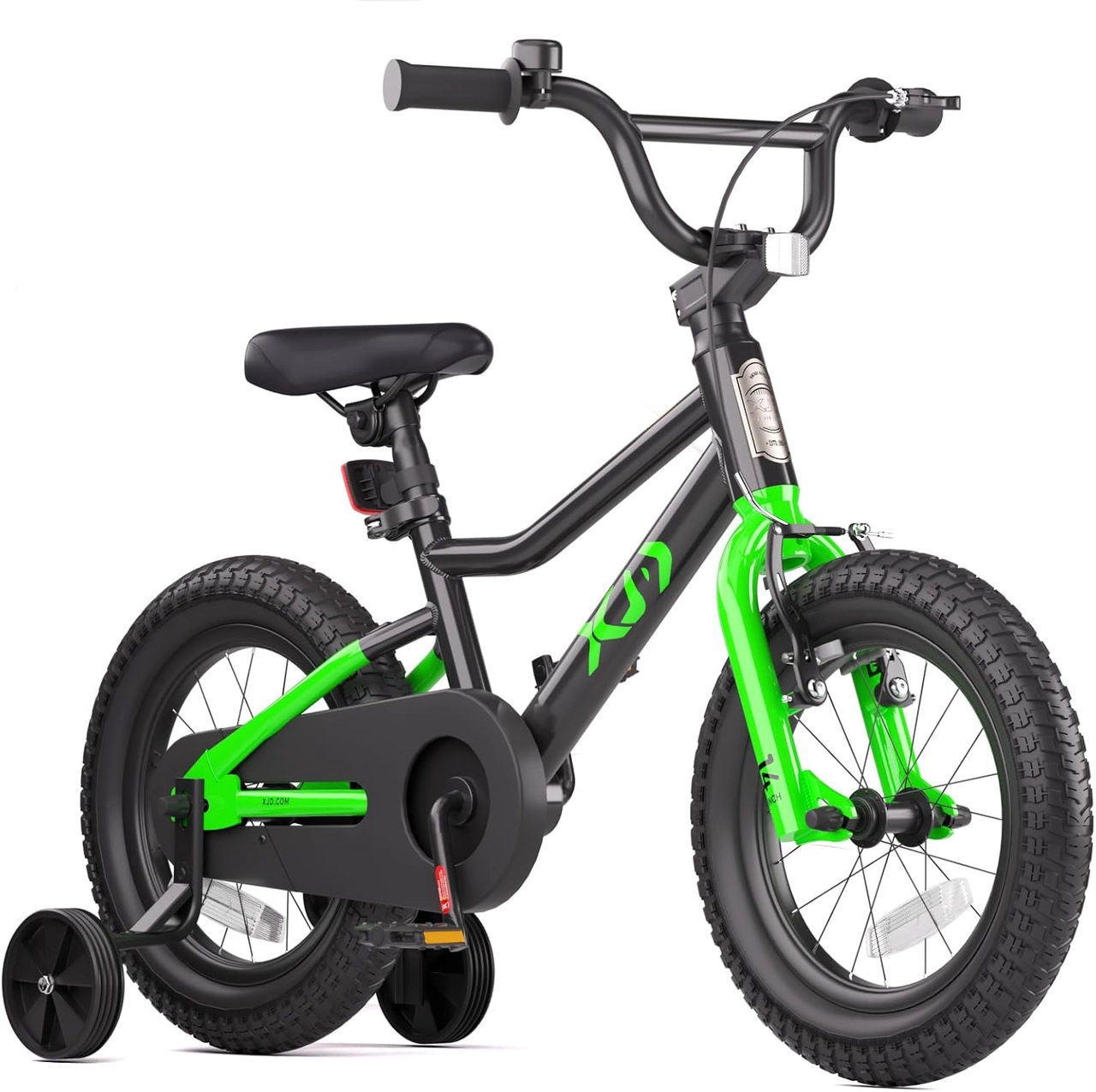 Black XJD Kids' BMX Bicycle with Training Wheels
A Kids' BMX Bike with training wheels, supplied in 12 Inch, 14 Inch and 16 Inch labels. The 16 Inch option can be assessed for smaller riders but does not replace an 18 Inch or 20 Inch comparison.
Flower Pink XJD Girls Bike with Doll Seat & Basket and Purple XJD Girls' Bike with Doll Seat & Basket are Training Wheel Bikes offered in 12 Inch, 14 Inch and 16 Inch labels. Black XJD Kids' BMX Bicycle with Training Wheels is a Kids' BMX Bike with the same supplied size labels.
For this question, their relevant comparison is the 16 Inch version, whose XBikes starting point is ages 4–7 and heights of 40–48 in / 102–122 cm. The 12 Inch and 14 Inch versions correspond to younger and shorter starting ranges and should not be treated as equivalent alternatives. If the child measures above the 16 Inch height range, these products are comparison points only—not substitutes for an 18 Inch or 20 Inch bike.
Run a practical fit check
- Place the child over the frame and check comfortable stand-over clearance.
- Set the bicycle up according to its exact manual, or ask a qualified bicycle mechanic to do so.
- Have the child sit naturally and confirm that steering does not require an awkward stretch.
- Check that each brake control can be reached and operated reliably with the hands in a normal riding position.
- In a traffic-free area with close adult supervision, observe a controlled start, straight ride, turn and stop.
If the child looks cramped on 18 Inch, compare 20 Inch. If 20 Inch causes stretching, hesitant starts or poor stopping control, return to the better-controlled fit. Do not infer training-wheel compatibility, removal procedures, load limits, torque settings or assembly details beyond the supplied catalog facts; follow the exact product manual or consult a qualified bicycle mechanic.
Make the final choice
Use a properly fitting bicycle helmet that sits level, fits securely and has straps adjusted according to the helmet manufacturer's instructions. Recheck bicycle fit as the child grows and before riding after adjustments.
For a 7-year-old, measure first: begin with 18 Inch below 48 in / 122 cm, compare 18 Inch with 20 Inch from that height upward, and consider the supplied 16 Inch products only when the child's measurements and hands-on control genuinely fit that smaller range.
Bikes for your next adventure
-
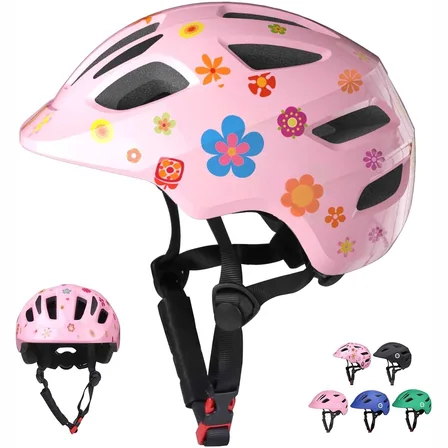
XJD Kids Bike Helmet for Girls, Pink Flowers, Adjustable (XS–S)
The XJD Kids Bike Helmet in Pink Flowers is an adjustable toddler-and-kids helme…$21.24
$24.99 -

Kids Bike Helmet by XJD for Boys & Girls – Black, Blue, Green, Pink, Purple
The XJD Kids Bike Helmet covers a wide 2-to-8-year age range thanks to two head-…$59.99
-

Light Purple XJD Toddler Bike Helmet, Adjustable, Size XS (46–51 cm)
This Light Purple XJD toddler bike helmet is made for the smallest riders — the …$20.39