

Who fits a 20 inch bike
A 20 inch bike usually fits a child 48–60 inches (122–152 cm) tall, often around ages 7–12, but measured fit and control matter more than age.
Start with height, then check inseam
Measure the child without shoes, standing straight against a wall. Compare that height with the XBikes starting range for a 20 inch bike: 48–60 inches (122–152 cm). This range identifies riders who should try the size; it does not confirm that every 20 inch frame will fit them.
Next, measure inseam from the floor to the crotch while the child stands with feet slightly apart. Compare that measurement with the stand-over clearance and saddle adjustment described by the exact bicycle manufacturer. Wheel diameter alone does not reveal frame height, saddle range or geometry, so use the product manual when checking those details.
Have the child perform a real fit check
The American Academy of Pediatrics advises having the child try the bicycle and avoiding an oversized bike bought for future growth. With the bicycle held steady by an adult, check whether the rider can:
- Stand over the frame comfortably rather than being pressed against it.
- Sit in a stable riding position and reach the handlebar without stretching or locking the elbows.
- Turn the handlebar while remaining balanced and in control.
- Reach and operate the bicycle's brakes confidently, if hand controls are fitted.
- Start, stop and place a foot down without panic or an awkward lean.
If the child meets the height range but cannot complete these checks, that particular 20 inch bicycle does not fit yet. Frame designs vary, so another model with the same wheel size may feel different and must be checked separately.
Compare the neighboring wheel sizes
| Wheel size | XBikes age starting point | Rider-height starting point |
|---|---|---|
| 18 Inch | Ages 5–9 | 43–52 in / 109–132 cm |
| 20 Inch | Ages 7–12 | 48–60 in / 122–152 cm |
| 24 Inch | Ages 10–14 | 54–64 in / 137–163 cm |
The overlap is intentional: age cannot settle the choice, and height only narrows it. A shorter rider near the bottom of the 20 inch range may need to compare an 18 inch bicycle. A taller rider near the top may also try a 24 inch bicycle. Choose according to stand-over space, reach, brake operation and present confidence—not the larger wheel or older age label.
When the supplied XBikes options are relevant
The two supplied catalog options are relevant because each is a training-wheel bicycle offered with a labeled 20 Inch SKU, as well as 12, 14 and 16 Inch choices. Girls' Training Wheel Bike by XJD, 12–20 Inch Wheels – Blue is listed in blue, while XJD Girls' Bike with Training Wheels, 12/14/16/20 Inch – Purple is listed in purple. Their supplied facts establish wheel-size options and catalog category only; they do not establish frame measurements, brake type, load limit or suitability for a particular rider.
 Girls' Training Wheel Bike by XJD, 12–20 Inch Wheels – Blue
This blue training-wheel bicycle includes a labeled 20 Inch SKU, plus 12, 14 and 16 Inch options. Its 20 Inch version is relevant only after the rider's measurements and control checks confirm an individual fit.
 XJD Girls' Bike with Training Wheels, 12/14/16/20 Inch – Purple
This purple training-wheel bicycle is available with a labeled 20 Inch SKU alongside 12, 14 and 16 Inch choices. Use the 20 Inch option as a candidate, not fit proof, and have the child try it.
Consider either product only if the child needs a training-wheel model and the exact 20 Inch SKU is being evaluated. Do not assume its smaller SKUs fit like the 20 Inch version, and do not use a color preference as fit evidence. Before purchase or riding, confirm the selected SKU label and complete the individual fit check. For assembly, adjustments, compatibility, maintenance, load limits and torque, follow the exact product manual or consult a qualified bicycle mechanic.
Confidence can change the answer
A child within the numerical range may still be uncomfortable on a 20 inch bicycle. Hesitation when starting, difficulty stopping, inability to use the controls or a stretched riding position are reasons to pause and compare a smaller size or another frame. Conversely, age below or above the starting range does not automatically rule out 20 inches when measured height and every control check support the fit.
Training wheels also do not correct an oversized frame or unreachable controls. They describe the supplied products' category, not proof that either bicycle fits the rider. Evaluate the child as they ride now rather than estimating what they may grow into later.
Complete the decision safely
Once the bicycle fits, add a properly fitting bicycle helmet. The U.S. Consumer Product Safety Commission says the helmet should sit level and its straps should be used according to the helmet manufacturer's instructions. A helmet cannot compensate for a bicycle that is too large or difficult to control.
Measure the child's height and inseam today, shortlist 20 inch bicycles only if the height is within 48–60 inches (122–152 cm), and arrange a supervised try-on. Choose the exact bicycle only when the child can stand over it, reach comfortably, operate its controls and start and stop with current confidence.
Bikes for your next adventure
-
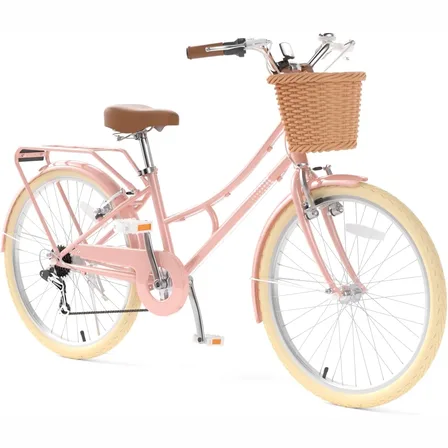
XJD Pink Beach Cruiser for Girls – Rear Rack & V-Brake
The XJD Pink Beach Cruiser for girls is the step-up bike for riders who've outgr…$179.99
$209.99 -
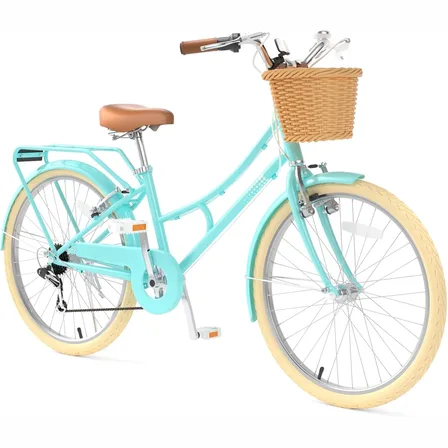
XJD 24-Inch Green Beach Cruiser Bike with U-Brake
This XJD 24-inch beach cruiser in green is made for riders about 4'8" to 5'4" ta…$159.99
$199.99 -

XJD Girls Bike for Kids Ages 3-8, 12/14/16 Inch with Training Wheels – Purple
The XJD Girls Bike in Purple is a training-wheel bicycle for kids ages 3 to 8, f…$149
$169