

Who can ride a 20 inch bike
A 20-inch bike generally suits a child who is 48–60 inches (122–152 cm) tall, often around ages 7–12, but only an individual fit check can confirm it.
Start with height, not age
Age is only a starting point because children of the same age can differ considerably in height, proportions, coordination and confidence. Measure the rider without shoes, standing straight against a wall, and record the height from the floor to the top of the head.
Compare that measurement with the XBikes starting range for a 20-inch bicycle: 48–60 inches (122–152 cm). A rider inside this range may be ready to try one. Being within the range does not guarantee a good fit, while being outside it is a reason to compare another wheel size rather than forcing the choice.
| Wheel size | Starting age | Rider height |
|---|---|---|
| 16 Inch | 4–7 | 40–48 in / 102–122 cm |
| 18 Inch | 5–9 | 43–52 in / 109–132 cm |
| 20 Inch | 7–12 | 48–60 in / 122–152 cm |
| 24 Inch | 10–14 | 54–64 in / 137–163 cm |
The overlapping ranges are intentional starting points, not proof that two sizes fit equally. A child near a boundary should try the relevant sizes and be assessed on the complete fit.
Measure inseam and check stand-over space
For inseam, have the child stand in socks with feet slightly apart. Place a firm, thin book between the legs so it meets the body like a bicycle saddle, then measure from the floor to the book’s top edge. Keep that number available when checking the bicycle’s stand-over height and the instructions for the exact model.
With the child straddling the bicycle, there should be usable clearance between the body and the top tube. The child should be able to get on and off without leaning the bicycle so far that control is lost. Because frame shapes vary, wheel diameter alone cannot establish this clearance.
Test reach, brakes and control
Have the rider sit in a normal riding position while an adult stabilizes the bicycle. A suitable fit lets the child hold the handlebar without an extreme stretch, turn it smoothly, and operate the brake controls confidently. The hands should reach the controls without slipping away from the grips or requiring an awkward position.
Next, observe a short trial in a level, traffic-free area with close adult supervision. Look for a controlled start, steady steering, purposeful braking and a calm stop. Current confidence matters: a hesitant rider who technically falls within the height range may benefit from comparing a smaller size. Do not buy an oversized bicycle merely to allow room for growth.
How the supplied 20-inch option helps
The Light Pink XJD Girls' Bicycle with Basket & Training Wheels is listed in the Training Wheel Bikes category and offers 12 Inch, 14 Inch, 16 Inch and 20 Inch SKU labels. Its 20 Inch option is directly relevant to this question, while its smaller listed sizes provide clear comparison points if the rider does not fit or control the 20-inch version.
These catalog options help a parent compare the requested wheel size with smaller alternatives without treating age or appearance as proof of fit.

Select the exact size only after checking the specific bicycle in person. The product title and category identify features and catalog placement; they do not establish the individual child’s height, inseam, reach, brake access or confidence. Follow the exact product manual for assembly, maintenance, compatibility and load limits, or ask a qualified bicycle mechanic when those details are uncertain.
Make the final 20-inch decision
A 20-inch bike is a reasonable candidate when the rider measures 48–60 inches (122–152 cm) tall and can pass the stand-over, reach, brake and control checks. Compare a smaller size when the child cannot mount comfortably, must stretch for the handlebar or brakes, or cannot start and stop with control. Compare a 24-inch bike only when the child’s measurements and trial fit support it; its starting range is ages 10–14 and 54–64 inches (137–163 cm).
Before riding, provide a bicycle helmet that fits properly, sits level and has its straps adjusted according to the helmet manufacturer’s instructions. The practical next step is simple: measure height and inseam, arrange a supervised fit trial, and choose the 20-inch bike only if the child controls that exact bicycle comfortably.
Bikes for your next adventure
-
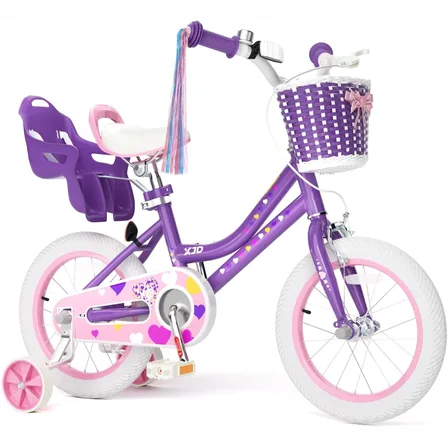
XJD Light Purple Girls Bike with Basket, Training Wheels, 12/14/16/20 Inch
The XJD Girls Bike with Basket in Light Purple is a single-speed training-wheel …$99.99
$119.99 -

Pink 12/14/16/20" XJD Girls Bike with Training Wheels & Basket
The Pink XJD Girls Bike with Training Wheels & Basket is a first-bike pick f…$65.99
$75.99 -
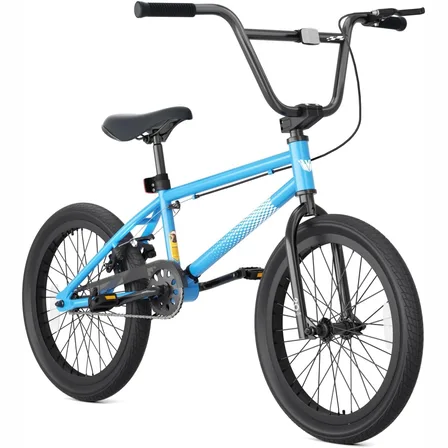
Blue XJD Freestyle BMX Bike, 20-Inch – No Pegs
The XJD 20-Inch Blue Freestyle BMX is an entry-level BMX bike for boys and girls…$189.99