

Who invented the bike for kids
No single person invented the bike specifically for kids. Children’s bicycles developed from the adult bicycle: Karl Drais introduced a steerable two-wheeled running machine in 1817, while pedals, chains, brakes and child-sized versions appeared through later work by many makers.
Why there is no single kids-bike inventor
Drais’s machine had two wheels in line and was propelled with the rider’s feet, much like the basic idea behind a modern balance bike. It was not designed as a children’s bicycle. Pedal-driven bicycles and the familiar chain-driven form emerged later, so today’s kids’ bike is the result of gradual adaptation rather than one separate invention.
Manufacturers eventually scaled bicycles for smaller riders and changed their proportions and controls. That distinction matters when shopping: “made for kids” is not one universal size or design. The useful question is whether a particular bicycle fits the individual child now.
Measure the child before comparing bikes
Measure the rider’s height without shoes. Then measure inseam from the floor to the crotch while the child stands naturally. These figures narrow the wheel-size range, but they cannot confirm fit by themselves.
Have the child try the bicycle. Check that the frame provides comfortable stand-over clearance, the rider can reach the handlebar without stretching, and the brake controls can be reached and operated confidently. The child should be able to start, stop, steer and put a foot down without struggling. Do not choose an oversized bicycle merely to leave room for growth.
XBikes wheel-size starting points
Use measured height before age, then confirm inseam, reach, brake control and confidence on the actual bicycle.
| Wheel size | Age starting point | Rider height |
|---|---|---|
| 12 Inch | 3–4 | 34–40 in / 86–102 cm |
| 14 Inch | 3–6 | 37–45 in / 94–114 cm |
| 16 Inch | 4–7 | 40–48 in / 102–122 cm |
| 18 Inch | 5–9 | 43–52 in / 109–132 cm |
| 20 Inch | 7–12 | 48–60 in / 122–152 cm |
| 24 Inch | 10–14 | 54–64 in / 137–163 cm |
| 26 Inch | Youth and adults | Over 60 in / 153 cm |
Overlapping ranges are intentional starting points, not proof that two sizes fit equally. Frame shape and control position can change how a bicycle feels even when wheel sizes match.
How the supplied cruiser options relate
The supplied products help answer the practical follow-up to the history: they show how modern child or youth sizing must be compared by exact wheel option rather than by the general phrase “kids bike.” Both are beach cruiser bicycles with U-brakes, and their listed sizes place them at the larger end of the XBikes fit starting points.
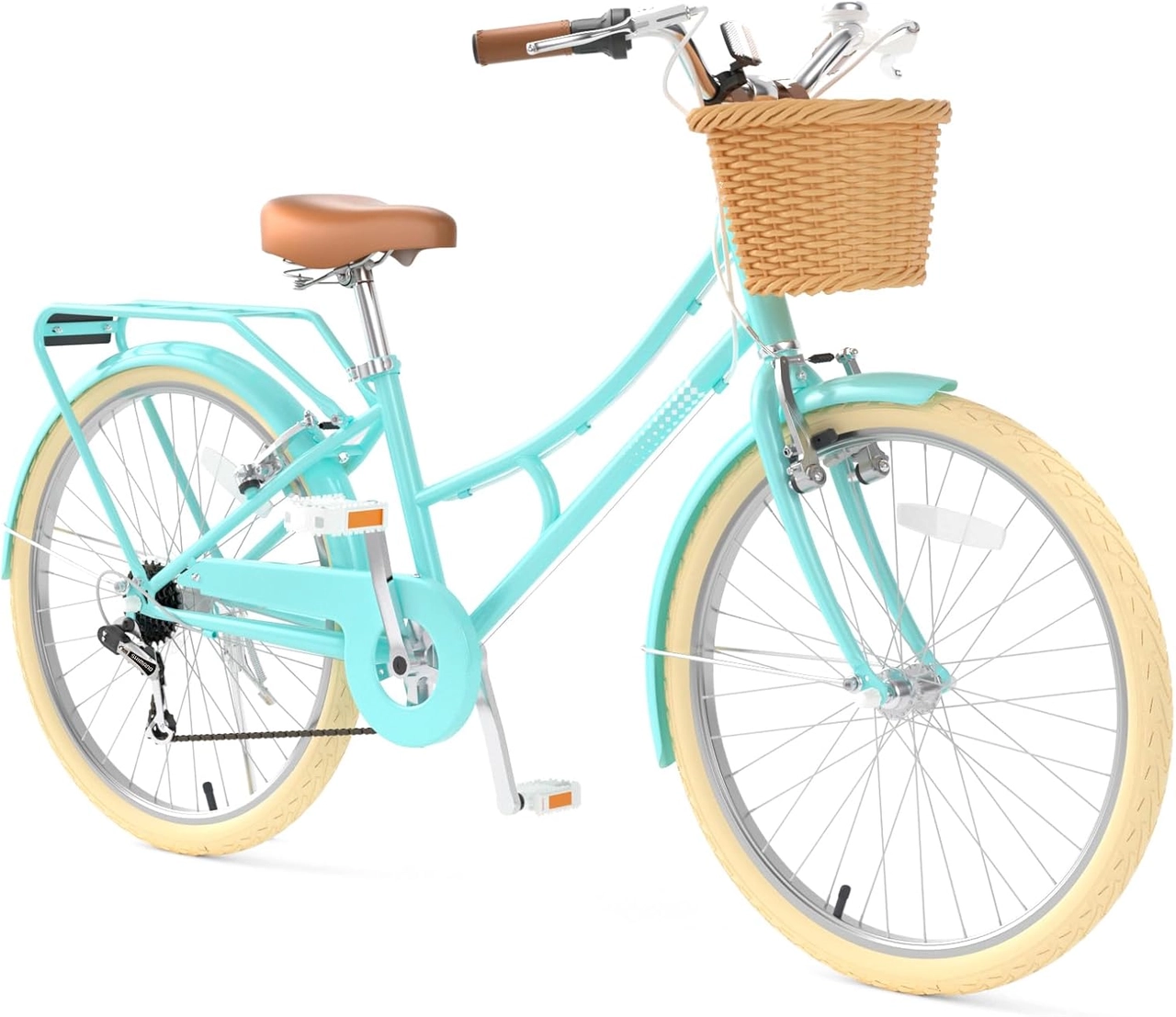 XJD 24-Inch Green Beach Cruiser Bike with U-Brake
A larger-rider comparison with 24-inch and 26-inch SKU labels. Use measured height to select a starting point, then verify stand-over, reach, U-brake control and confidence on the exact bike.
 Pink XJD Beach Cruiser Bike, 24"/26", U-Brake
This beach cruiser provides 24-inch and 26-inch comparison options with a U-brake. It is relevant only when the rider’s measured height points to those sizes and an individual fit check succeeds.
XJD 24-Inch Green Beach Cruiser Bike with U-Brake is offered in Green / 24 Inch, Pink / 24 Inch and Pink / 26 Inch SKU labels. Compare the 24-inch options first for a measured rider 54–64 inches tall; consider the 26-inch label only for a rider over 60 inches, followed by an individual fit check.
Pink XJD Beach Cruiser Bike, 24"/26", U-Brake offers 24 Inch and 26 Inch labels. Its sizing decision follows the same measured-height starting points. The catalog facts do not establish frame dimensions, weight, load limit or detailed brake reach, so those details should not be assumed from wheel diameter.
These products are relevant only if the rider’s measurements and control check point toward 24- or 26-inch wheels. They are not substitutes for 12-, 14-, 16-, 18- or 20-inch bikes when one of those smaller sizes fits the child.
Complete the fit and safety check
- Choose the starting wheel size from measured height, not age alone.
- Confirm stand-over clearance and a relaxed reach to the handlebar.
- Ask the child to operate the brake controls, steer, start and stop.
- Reject a size that reduces control, even if the child may grow into it.
- Fit a bicycle helmet so it sits level, fits properly and uses its straps according to the helmet manufacturer’s instructions.
For assembly, adjustment, maintenance, load limits, compatibility and torque, follow the exact product manual or use a qualified bicycle mechanic rather than improvising specifications.
The title-specific decision
Credit Karl Drais with the influential 1817 two-wheeled precursor, not with inventing a dedicated kids’ bike. For the child riding today, record height and inseam, select the matching wheel-size starting point, and buy only after the child demonstrates comfortable reach, brake control and confidence on that exact bicycle.
Bikes for your next adventure
-

Kids Bike Helmet by XJD for Boys & Girls – Black, Blue, Green, Pink, Purple
The XJD Kids Bike Helmet covers a wide 2-to-8-year age range thanks to two head-…$59.99
-

Kids Bike Helmet by XJD for Girls – Pink
The XJD Kids Bike Helmet in Pink is a lightweight multi-sport helmet for girls r…$59.99
$99 -

XJD Kids Bike for Girls – Pink, 12/14/16/20 Inch with Training Wheels
The XJD Kids Bike for Girls in Pink is a training-wheel bike built to carry your…$139
$159