

Are bikes made different for boys and girls
Yes, some bikes are marketed differently for boys and girls, but sex does not determine the right bike. Choose by measured fit, control and confidence—not the label, color or intended gender.
What is actually different?
A “boys’” or “girls’” description may reflect styling or how a seller groups a model. It does not establish that the frame will fit a particular child. Children of the same age or sex can have very different heights, inseams, arm lengths and riding abilities.
Compare the practical features the child can feel: stand-over clearance, seated position, reach to the handlebar, access to the brake controls and ease of steering. A bike that looks appropriate but makes starting, stopping or turning awkward is not the right choice.
Measure before comparing bikes
Measure the child without shoes for height and with shoes for riding inseam. For inseam, have the child stand straight with feet slightly apart, then measure from the floor to the crotch. Record both measurements rather than relying on age or clothing size.
Use height to identify possible wheel sizes, then arrange an individual fit check. Age is only a starting point. Do not select an oversized bicycle simply to leave growing room.
| Wheel size | Starting age | Rider height |
|---|---|---|
| 12 Inch | 3–4 | 34–40 in / 86–102 cm |
| 14 Inch | 3–6 | 37–45 in / 94–114 cm |
| 16 Inch | 4–7 | 40–48 in / 102–122 cm |
| 18 Inch | 5–9 | 43–52 in / 109–132 cm |
| 20 Inch | 7–12 | 48–60 in / 122–152 cm |
| 24 Inch | 10–14 | 54–64 in / 137–163 cm |
| 26 Inch | Youth and adults | Over 60 in / 153 cm |
Because the height bands overlap, a chart cannot make the final decision. Inseam, reach, brake control and current confidence decide whether a candidate actually works.
Run a hands-on fit check
- Check stand-over: Have the child straddle the bicycle with both feet on the ground. The bike should not trap or intimidate the rider. Confirm the required clearance using the exact product manual.
- Check reach: With hands on the handlebar, the child should not need to stretch, lock the elbows or lean excessively just to steer.
- Check brake access: The child must be able to reach and operate the available brake controls confidently. Do not assume a control is suitable because the wheel size or gender label seems right.
- Check basic control: In an appropriate supervised area, confirm that the child can mount, start, steer and stop without fighting the bicycle.
- Ask the rider: A child who feels cramped, stretched or frightened is giving useful fit information. Compare another size or setup.
How the supplied bikes relate
The two catalog options show why gender wording should not drive the decision: both are explicitly described for boys and girls, and both offer 12 Inch, 14 Inch and 16 Inch labels. They are relevant when the child’s measurements point toward one of those three starting-size ranges and training wheels are wanted.
These particular options help answer the title because their shared boys-and-girls wording makes fit and bike type—not a gender rule—the meaningful comparison.
 XJD Kids' Training Wheel Bike for Boys & Girls, 12/14/16 Inch – White
A boys-and-girls Training Wheel Bike offered in 12 Inch, 14 Inch and 16 Inch labels; relevant when measured fit points to one of those sizes and training wheels are wanted.
 XJD Boys & Girls BMX Bike with Training Wheels, 12/14/16" – Blue
A boys-and-girls Kids' BMX Bike with training wheels, available in 12 Inch, 14 Inch and 16 Inch labels; compare its category and individual fit rather than relying on gender wording.
XJD Kids' Training Wheel Bike for Boys & Girls, 12/14/16 Inch – White is categorized as a Training Wheel Bike and is offered in 12 Inch, 14 Inch and 16 Inch labels.
XJD Boys & Girls BMX Bike with Training Wheels, 12/14/16" – Blue is categorized as a Kids' BMX Bike and likewise has 12 Inch, 14 Inch and 16 Inch labels.
The supplied facts do not establish differences in weight, materials, brakes, geometry or component quality, so do not infer them from the titles. These products are not relevant if measurements indicate 18 Inch, 20 Inch, 24 Inch or 26 Inch; their available sizes are comparison points only, not equivalent substitutes. Follow the exact product manual for assembly, maintenance, load limits, compatibility and torque, or use a qualified bicycle mechanic.
Make the decision without gender assumptions
First shortlist wheel sizes from the measured height. Then compare actual stand-over, reach, brake access and control, giving extra weight to the child’s present confidence. If two models fit, let the rider choose the appearance or category they prefer; “boys” and “girls” wording need not restrict that choice.
Finally, pair the selected bicycle with a properly fitting bicycle helmet. It should sit level, and its straps should be adjusted according to the helmet manufacturer’s instructions. The right boys’ or girls’ bike is therefore the one the child can fit and control now—measure first, try it, and reject any oversized or gender-labeled option that fails those checks.
Bikes for your next adventure
-
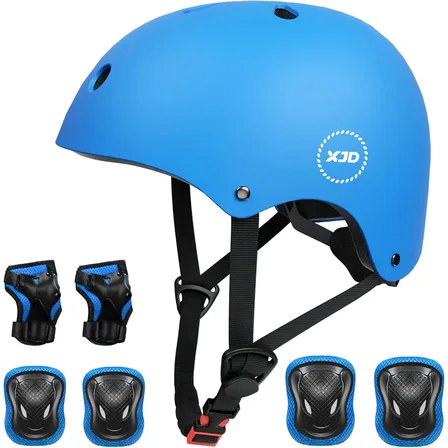
Blue XJD Helmet & Protective Gear Set for Kids, Sizes S/M
The Blue XJD Helmet & Protective Gear Set is made for kids roughly 3 to 8 years …$23.79
-
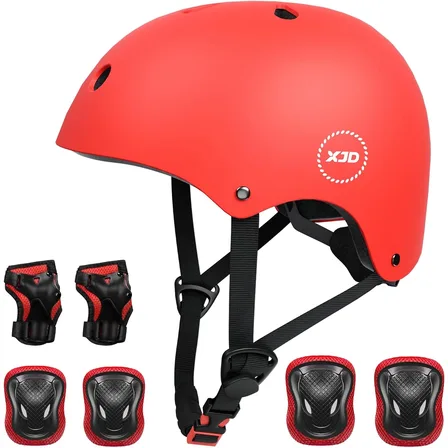
Red XJD Helmet & Protective Gear Set for Kids, Medium
If your child rides a bike, scooter, or skateboard, this red XJD helmet and prot…$25.49
$29.99 -
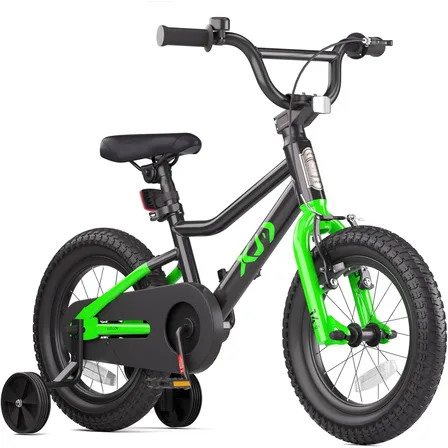
Black XJD Kids' BMX Bicycle with Training Wheels
The XJD Kids' BMX Bicycle with Training Wheels is built for children roughly 3 t…$99.99
$119.99