

Can a girl ride a boys bike
Yes, a girl can ride a boys bike. The label does not determine fit: choose a bike she can stand over, reach, steer and brake confidently.
What matters more than the boys label
“Boys” and “girls” are usually shopping labels, not rules about who can use a bicycle. A bike is suitable when its dimensions and controls match the individual rider. Color and styling can influence preference, but they do not establish whether the bike fits.
Have the child try the actual bicycle whenever possible. Do not choose an oversized bike simply to leave room for growth. A bike that is difficult to stand over, reach or control now is not made appropriate by the expectation that she will grow into it.
Measure the rider before comparing bikes
Start with her current height and inseam, measured while wearing the shoes she will normally use for riding. Height provides a useful wheel-size starting point. Inseam helps you judge whether she can stand over the bicycle comfortably rather than being forced onto her toes or against the bike.
Then check the fit in person:
- Stand-over: She should be able to straddle the bike securely without the frame pressing uncomfortably against her.
- Reach: She should reach the handlebar without stretching, locking her arms or leaning so far forward that steering becomes awkward.
- Brake control: If the bike has hand-operated controls, she must be able to reach and operate them reliably. Follow the exact product manual for permitted adjustments.
- Confidence: She should be able to start, stop, steer and put a foot down without appearing frightened or unstable.
Use wheel size only as a starting point
| Wheel size | Starting age | Rider height |
|---|---|---|
| 12 Inch | 3–4 | 34–40 in / 86–102 cm |
| 14 Inch | 3–6 | 37–45 in / 94–114 cm |
| 16 Inch | 4–7 | 40–48 in / 102–122 cm |
| 18 Inch | 5–9 | 43–52 in / 109–132 cm |
| 20 Inch | 7–12 | 48–60 in / 122–152 cm |
| 24 Inch | 10–14 | 54–64 in / 137–163 cm |
| 26 Inch | Youth and adults | Over 60 in / 153 cm |
These ranges help narrow the search, but overlapping sizes are normal. When a rider falls into more than one row, compare both candidate sizes through an individual fit check. Give measured height, inseam, reach, brake control and present confidence more weight than age.
How the supplied bike helps with the comparison
The XJD Boys & Girls BMX Bike with Training Wheels, 12/14/16" – Blue is directly relevant because its catalog title identifies it for both boys and girls, and its available size labels are 12 Inch, 14 Inch and 16 Inch. Those options let parents compare three adjacent starting points for riders within the supplied height ranges; the title alone still does not prove an individual fit.

Consider its 12 Inch label for a measured height of 34–40 in / 86–102 cm, 14 Inch for 37–45 in / 94–114 cm, or 16 Inch for 40–48 in / 102–122 cm. Where the ranges overlap, do not assume the larger option is preferable. Have her try the relevant sizes and choose according to stand-over, reach, control and confidence.
This product is not relevant when the rider’s measurements and fit check point outside those three wheel sizes. Its training wheels may also make it irrelevant to a rider who does not need or want that configuration. For assembly, adjustments, compatibility, maintenance, load limits or torque, follow the exact product manual or consult a qualified bicycle mechanic.
Check control before approving the bike
Ask her to straddle the bicycle, settle into a riding position and hold the handlebar. Watch for excessive stretching, cramped posture or difficulty placing a foot down. She should turn the handlebar without losing balance and reach every braking control the bicycle provides.
A familiar rider label cannot rescue a poor fit, and an unfamiliar label does not disqualify a good one. If she cannot control the bike comfortably during the check, try another size or design rather than expecting practice to solve a basic mismatch.
Finish with helmet fit and a clear decision
Use a bicycle helmet that fits properly, sits level and has its straps arranged according to the helmet manufacturer’s instructions. Recheck the bicycle fit as the child grows or if her confidence changes.
The decision is simple: let her ride the boys bike if she likes it and can stand over, reach, steer and brake it confidently. If any of those checks fail, choose a better-fitting bicycle—not a different gender label.
Bikes for your next adventure
-
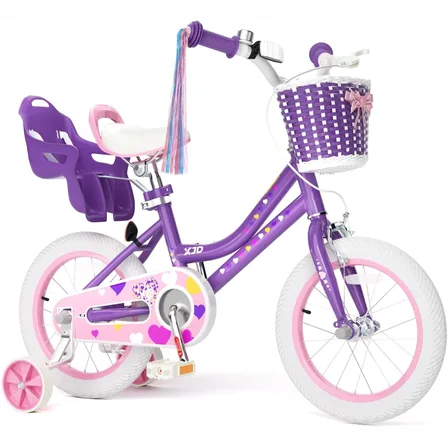
XJD Light Purple Girls Bike with Basket, Training Wheels, 12/14/16/20 Inch
The XJD Girls Bike with Basket in Light Purple is a single-speed training-wheel …$99.99
$119.99 -
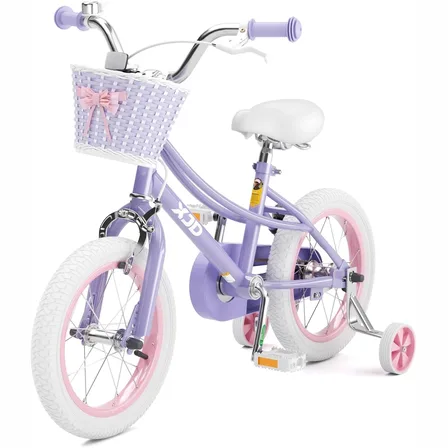
Girls' Training Wheel Bike by XJD with Basket – Purple
If you're shopping for a first bike for a girl roughly 3 to 12 years old (91–152…$75.99
-
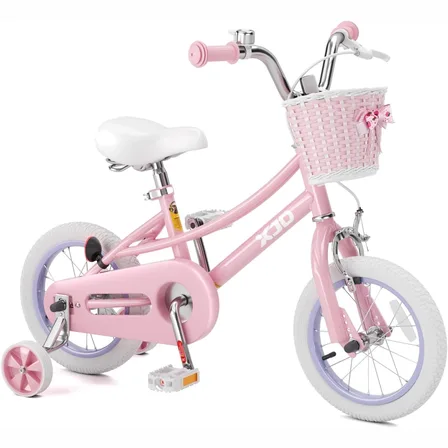
Pink 12/14/16/20" XJD Girls Bike with Training Wheels & Basket
The Pink XJD Girls Bike with Training Wheels & Basket is a first-bike pick f…$65.99
$75.99