

Is there a difference between boy and girl bikes
No: a child does not need a bike because it is labelled for a boy or a girl. The meaningful differences are fit, control, wheel size and personal preference.
What “boy” and “girl” usually changes
Gender labels may describe colour, graphics or frame styling, but they do not determine whether a bicycle fits. Children of the same age can have different heights, inseams, arm lengths and confidence levels. A child should be able to mount, stop, steer and operate the brakes comfortably, regardless of the label on the bike.
Some frame shapes may make mounting easier for a particular rider, but judge that through an actual fit check. Do not assume that a frame marketed to one gender will have better proportions for that child.
Measure before comparing bikes
Measure the child’s height without shoes. Then measure inseam from the floor to the crotch while the child stands upright with feet slightly apart. Height helps identify a starting wheel size; inseam helps you assess clearance and the child’s ability to put a foot down.
When the child tries the bicycle, check five things:
- Stand-over: the child can straddle the bike with appropriate clearance rather than being pressed against the frame.
- Reach: the handlebars are reachable without stretching, locked elbows or an awkwardly folded posture.
- Brake control: the child can reach and operate the controls confidently with their hands in a stable riding position.
- Starting and stopping: the rider can get moving, stop predictably and place a foot down without panic.
- Steering: the child can turn the bars while remaining balanced and in control.
Have the child try the bike whenever possible. Do not choose an oversized bicycle merely to leave room for growth; excess size can make mounting, braking and steering harder.
Use wheel size as a starting point
| Wheel size | Starting age | Rider height |
|---|---|---|
| 12 Inch | 3–4 | 34–40 in / 86–102 cm |
| 14 Inch | 3–6 | 37–45 in / 94–114 cm |
| 16 Inch | 4–7 | 40–48 in / 102–122 cm |
| 18 Inch | 5–9 | 43–52 in / 109–132 cm |
| 20 Inch | 7–12 | 48–60 in / 122–152 cm |
| 24 Inch | 10–14 | 54–64 in / 137–163 cm |
| 26 Inch | Youth and adults | Over 60 in / 153 cm |
Overlapping ranges are normal. Prioritize measured height, inseam, reach, brake control and current confidence over age. Wheel size alone does not prove that the frame or controls fit.
How the supplied bikes relate to the question
The catalog itself shows why gender is not the deciding factor. The XJD Boys & Girls BMX Bike with Training Wheels, 12/14/16" – Blue is listed as a Kids’ BMX Bike, while the XJD Kids' Training Wheel Bike for Boys & Girls, 12/14/16 Inch – White is listed as a Training Wheel Bike. Both are offered with 12 Inch, 14 Inch and 16 Inch SKU labels and are described for boys and girls.
These particular options help answer the title because each is explicitly presented for both boys and girls, yet they differ in catalog category and appearance wording. Compare the relevant size and intended bike category, not whether blue, white or a gender label seems more appropriate.
 XJD Boys & Girls BMX Bike with Training Wheels, 12/14/16" – Blue
A Kids’ BMX Bike offered in 12 Inch, 14 Inch and 16 Inch SKU labels and explicitly titled for boys and girls; relevant when measurements and an individual fit check support one of those sizes.
 XJD Kids' Training Wheel Bike for Boys & Girls, 12/14/16 Inch – White
A Training Wheel Bike offered in 12 Inch, 14 Inch and 16 Inch SKU labels and explicitly titled for boys and girls; compare its category and suitable size rather than choosing by gender wording.
These products are relevant only when the child’s measurements place them near the supplied 12, 14 or 16 Inch starting ranges and an individual try-on confirms control. For a rider who needs 18, 20, 24 or 26 Inch wheels, these listings are smaller-size comparison points, not equal substitutes.
Make the choice in the right order
- Measure height and inseam.
- Use the XBikes ranges to shortlist a wheel size.
- Have the child straddle and try the bicycle.
- Compare reach, brake access, steering and stopping confidence.
- Let the child choose between suitable colours or styles only after fit is confirmed.
For assembly, adjustment, maintenance, load limits, compatibility and torque requirements, follow the exact product manual or ask a qualified bicycle mechanic. A properly fitting bicycle helmet is also essential: it should sit level and its straps should be adjusted according to the helmet manufacturer’s instructions.
The practical answer
Choose neither a “boy bike” nor a “girl bike” on the label alone. Choose the wheel size and frame the child can physically control today; if both supplied models pass that check, category and preferred appearance can decide between them.
Bikes for your next adventure
-
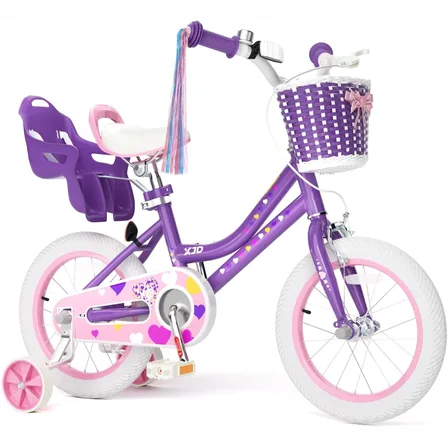
XJD Light Purple Girls Bike with Basket, Training Wheels, 12/14/16/20 Inch
The XJD Girls Bike with Basket in Light Purple is a single-speed training-wheel …$99.99
$119.99 -
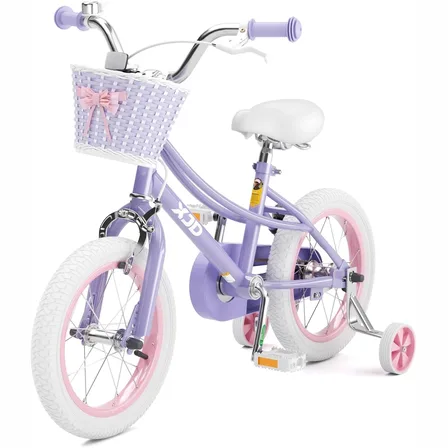
Girls' Training Wheel Bike by XJD with Basket – Purple
If you're shopping for a first bike for a girl roughly 3 to 12 years old (91–152…$75.99
-
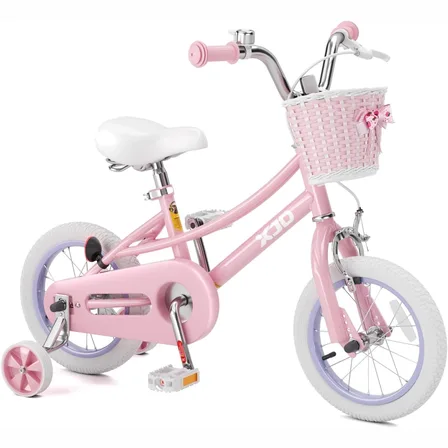
Pink 12/14/16/20" XJD Girls Bike with Training Wheels & Basket
The Pink XJD Girls Bike with Training Wheels & Basket is a first-bike pick f…$65.99
$75.99