

What Age Is a 20-Inch Girls' Bike For?
A 20-inch girls’ bike is generally for ages 7–12 and riders 48–60 inches (122–152 cm) tall. Height is only the starting point: check inseam, reach, brake control and confidence before choosing.
Start with the rider’s measured height
Measure the child without shoes, standing straight against a wall. If she is between 48 and 60 inches (122–152 cm), a 20-inch bike is the XBikes starting point. Age helps narrow the search, but it cannot confirm fit because children of the same age can have different proportions and riding abilities.
Next, measure inseam from the floor to the crotch while the child stands naturally. Compare both measurements with the exact bicycle’s geometry and fitting guidance. Wheel diameter alone does not reveal frame height, saddle range or reach, so two 20-inch bicycles may feel different.
Have the child try the bike
A suitable 20-inch bike should let the rider mount, start, steer, stop and dismount without struggling. Check these points during a supervised fit test:
- Stand-over: The child should be able to straddle the bicycle with stable footing and appropriate clearance rather than balancing on tiptoes.
- Seated position: The saddle must adjust to a usable position under the instructions in the exact product manual.
- Reach: The rider should hold the handlebar and turn it comfortably without stretching or losing a controlled posture.
- Brake control: She should reach and operate the fitted brakes confidently while keeping control of the handlebar.
- Confidence: Starting, turning and stopping should look controlled, not merely possible with effort.
Do not buy an oversized bicycle just so the child can grow into it. If she cannot control a 20-inch bike now, choose a size that fits now and reassess later.
Compare the neighboring wheel sizes
This compact comparison helps when the rider is near the edge of the 20-inch range. It is a screening tool, not a substitute for trying the bicycle.
| Wheel size | XBikes age starting point | XBikes height starting point |
|---|---|---|
| 16 Inch | Ages 4–7 | 40–48 in / 102–122 cm |
| 18 Inch | Ages 5–9 | 43–52 in / 109–132 cm |
| 20 Inch | Ages 7–12 | 48–60 in / 122–152 cm |
| 24 Inch | Ages 10–14 | 54–64 in / 137–163 cm |
The overlapping ranges are intentional starting points. A 10-year-old might fall within the height guidance for both 20-inch and 24-inch wheels, but that does not make the sizes equivalent. Inseam, frame clearance, reach, brake operation and present skill should decide which bicycle is manageable.
How the supplied girls’ bikes relate
The two catalog options make the size decision concrete: one provides an exact 20-inch choice, while the other shows smaller available sizes for riders who are not yet ready for 20-inch wheels.
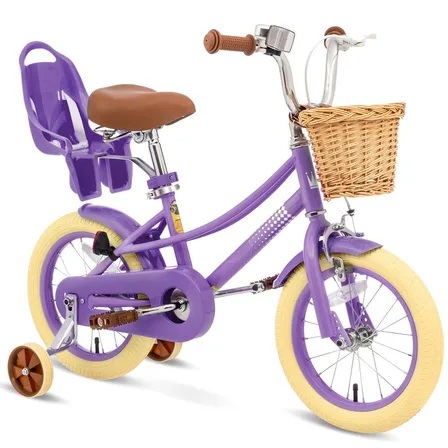
 XJD Light Purple Girls Bike with Basket, Training Wheels, 12/14/16/20 Inch
The supplied available SKUs are 12, 14 and 16 Inch, so this product is a smaller-size comparison point; despite “20 Inch” appearing in its catalog title, no 20 Inch SKU is listed as available.
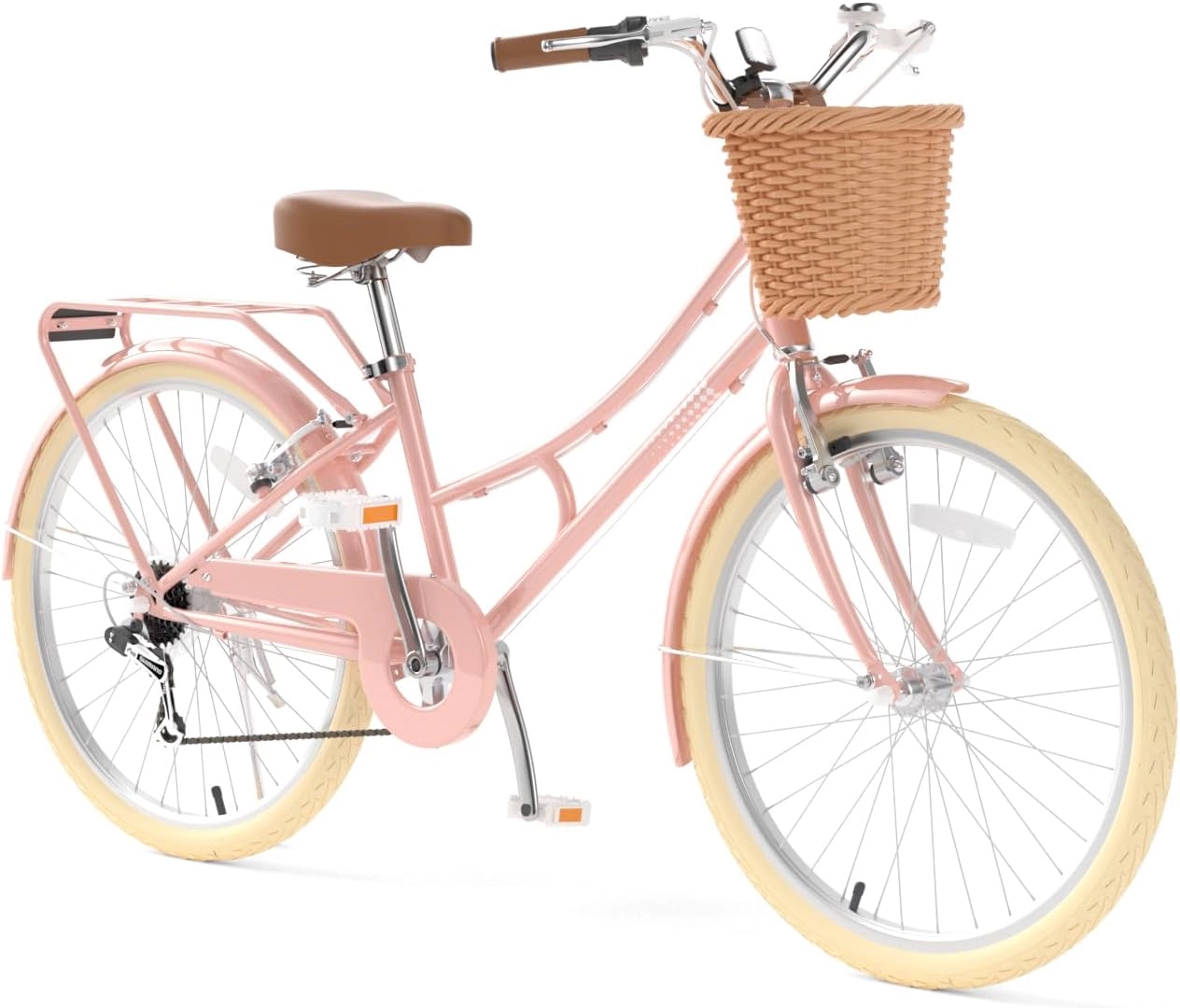 XJD Pink Beach Cruiser for Girls – Rear Rack & V-Brake
This model has a 20 Inch SKU directly relevant to the question, plus 24 Inch and 26 Inch options for comparison. Final selection still requires an individual height, inseam, reach, brake-control and confidence check.
XJD Pink Beach Cruiser for Girls – Rear Rack & V-Brake is offered in 20 Inch, 24 Inch and 26 Inch. Its 20 Inch SKU is relevant when the rider falls near the 20-inch starting range and passes an individual fit check. The 24 Inch option begins at ages 10–14 and 54–64 inches (137–163 cm); it should not be treated as equivalent to the 20 Inch option merely because the ranges overlap. The 26 Inch starting point is for youth and adults over 60 inches (153 cm).
XJD Light Purple Girls Bike with Basket, Training Wheels, 12/14/16/20 Inch includes “20 Inch” in its catalog title, but the supplied available SKU labels are only 12 Inch, 14 Inch and 16 Inch. Those available choices are smaller-size comparison points, not substitutes for a 20-inch bike. The 16 Inch SKU, for example, starts at ages 4–7 and heights of 40–48 inches (102–122 cm). Confirm the selectable size before relying on the title.
Safety and setup before the first ride
Use a bicycle helmet that fits properly, sits level and has straps adjusted according to the helmet manufacturer’s instructions. A helmet cannot correct a bicycle that is too large or difficult to control.
Assembly and adjustment can affect fit and braking. Follow the exact bicycle’s product manual for assembly, maintenance, compatibility and torque requirements. If instructions are missing, unclear or beyond your experience, use a qualified bicycle mechanic rather than guessing.
Make the 20-inch decision
- Measure height and inseam without shoes.
- Use 48–60 inches (122–152 cm) and ages 7–12 only as the 20-inch starting range.
- Try the exact bike and check stand-over, seated position, reach and brake control.
- Watch the child start, steer and stop under supervision.
- Choose 20 inches only if it fits and feels controllable today; otherwise compare the appropriate neighboring size without sizing up for growth.
Bikes for your next adventure
-
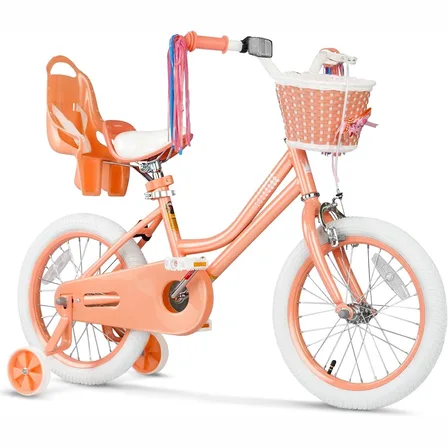
Girls 12/14/16 Inch Kids Bike by XJD with Training Wheels – Peach
The XJD Girls Bike in Peach is a training-wheel bike built for girls roughly 3 t…$149
$169 -
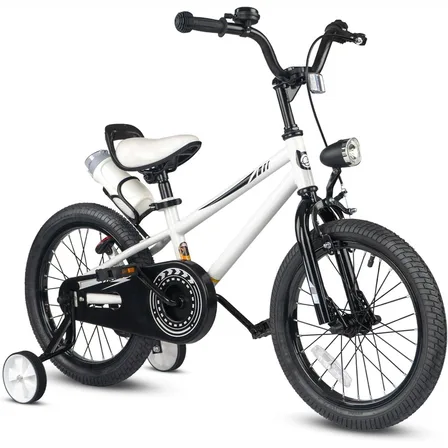
XJD Kids' Training Wheel Bike for Boys & Girls, 12/14/16 Inch – White
The XJD kids' training wheel bike in White is made for riders ages 3–8 (roughly …$169
$199 -
XJD Girls' Bike with Training Wheels, 12/14/16/20 Inch – Purple
The XJD girls' bike with training wheels in Purple is built to grow with your ri…$139
$159