

What is the best bike for teenage girl
The best bike for a teenage girl is one that fits her measured body and riding ability—not one chosen by gender or bought oversized. Start with a 24-inch bike at 54–64 in (137–163 cm), or compare 26-inch bikes if she is over 60 in (153 cm), then confirm stand-over clearance, reach and brake control in person.
Measure her before choosing a wheel size
Measure her height without shoes and record her inseam. Height provides a starting wheel-size range; inseam helps determine whether she can stand over the actual frame comfortably. Because frame shapes vary, a wheel-size label cannot establish fit by itself.
| Wheel size | XBikes starting point | Relevance to a teenager |
|---|---|---|
| 20 Inch | Ages 7–12; 48–60 in / 122–152 cm | Consider only when her measured height and an individual fit check support it. |
| 24 Inch | Ages 10–14; 54–64 in / 137–163 cm | A common starting comparison for a shorter or younger teenager. |
| 26 Inch | Youth and adults over 60 in / 153 cm | A starting comparison once she is taller than 60 in / 153 cm. |
The ranges overlap, especially around 60–64 inches. That does not make the sizes interchangeable. Compare the complete bicycles and choose according to her proportions, reach, control and confidence rather than automatically selecting the larger wheels.
What a correct fit should feel like
Have her try the bicycle instead of relying on an age label. She should be able to stand over it with appropriate clearance, reach the handlebars without an uncomfortable stretch and steer while maintaining control. She must also be able to reach and operate the brakes confidently.
Do not buy a bicycle that is too large so she can “grow into it.” An oversized frame can make starting, stopping and handling more difficult. If she is between sizes, compare both in person and favor the bicycle she can presently control. A qualified bicycle shop can assess stand-over position, reach and setup when the choice is close.
Match the bike to how she will ride
After narrowing the size, compare bicycles intended for her actual riding: neighborhood trips, paved paths, school travel or another specific use. Ask her to take part in the decision. Color and styling can matter to whether she enjoys the bike, but “girls’ bike” wording does not establish fit or performance.
- Current confidence: A hesitant rider may benefit from predictable handling and an easy-to-control fit rather than a larger bicycle.
- Reach: Her arms should not be locked or excessively stretched while holding the bars.
- Brake access: She must be able to reach and operate the controls reliably from her normal riding position.
- Practical use: Compare the features of the exact bicycles under consideration against the surfaces and distances she expects to ride.
How the supplied XBikes options relate
The supplied catalog choices help show the smaller training-wheel end of the range, but none offers a 24-inch or 26-inch option. For most teenagers, they are therefore nearest-size comparison points rather than substitutes for a correctly fitted teenage bike. The one 20-inch option may warrant consideration only when the rider’s measured height falls within the 20-inch starting range and an individual check confirms fit and control.
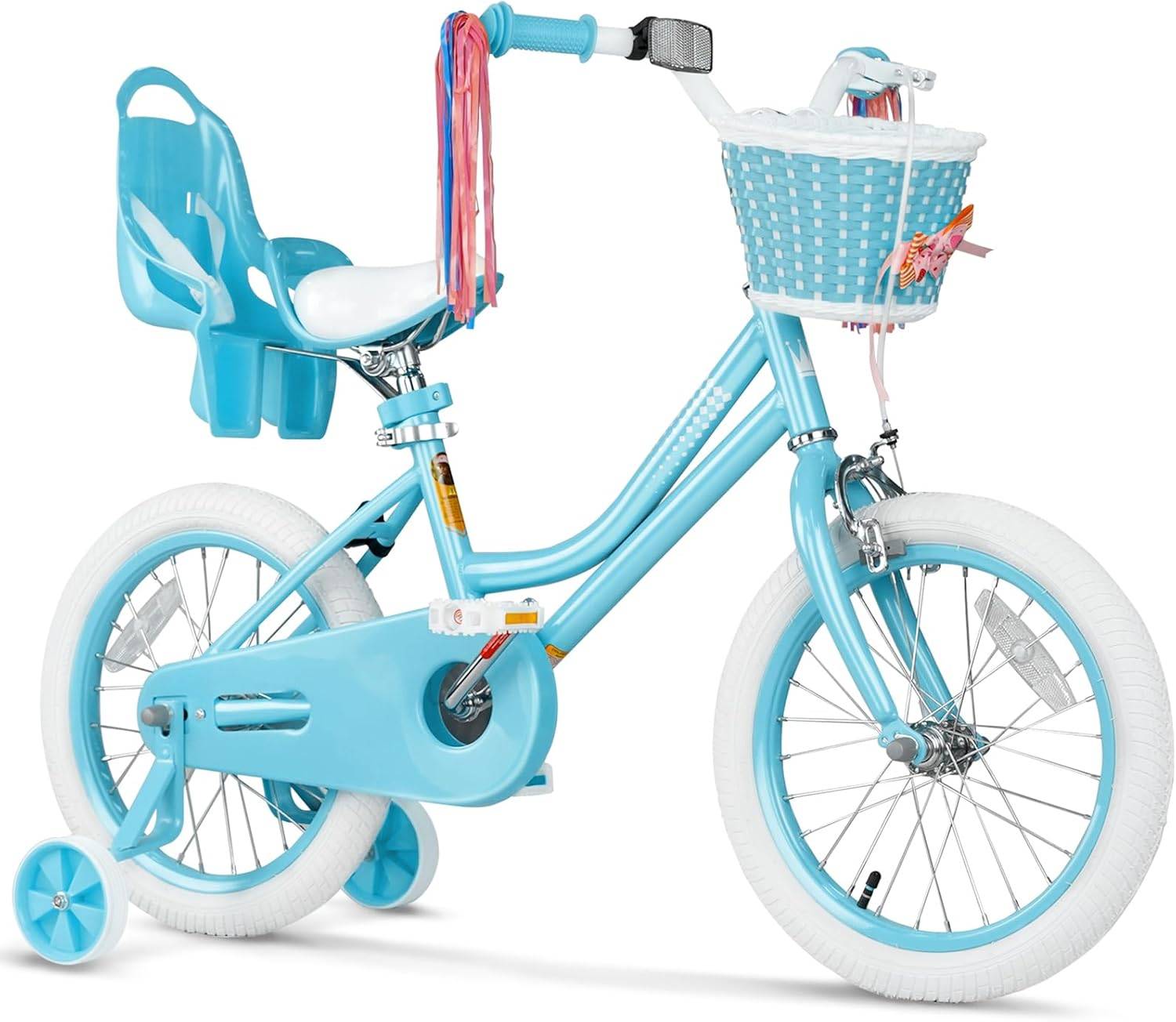 Blue XJD Girls Bike with Training Wheels – 12/14/16 Inch
A training-wheel bike offered in 12-, 14- and 16-inch sizes. These sizes are generally below teenage starting points, so compare only if the rider's measurements independently support one.
 XJD Kids' Training Wheel Bike for Boys & Girls, 12/14/16 Inch – White
This white training-wheel model offers 12-, 14- and 16-inch choices. Its catalog title does not establish fit, and its available wheel sizes are generally not relevant for a teenager.
 Girls' Training Wheel Bike by XJD, 12–20 Inch Wheels – Blue
This blue training-wheel bike offers 12-, 14-, 16- and 20-inch choices. Its 20-inch option is the nearest supplied comparison, but it is not a substitute for a required 24- or 26-inch size.
Blue XJD Girls Bike with Training Wheels – 12/14/16 Inch is listed as a training-wheel bike with 12-, 14- and 16-inch choices. Those sizes have XBikes starting ranges ending at 48 in (122 cm), so this is generally not relevant to a teenage rider.
XJD Kids' Training Wheel Bike for Boys & Girls, 12/14/16 Inch – White is also a training-wheel bike offered only in 12-, 14- and 16-inch sizes. Its catalog wording does not demonstrate teenage fit, and its available sizes sit below the usual teenage starting comparisons.
Girls' Training Wheel Bike by XJD, 12–20 Inch Wheels – Blue extends the comparison to a 20-inch choice, alongside 12, 14 and 16 inches. The 20-inch XBikes starting point is 48–60 in (122–152 cm), but height alone is not enough; confirm stand-over, reach, brake operation and confidence. Do not treat it as equivalent to a 24- or 26-inch bicycle.
Complete the safety and setup check
Choose a bicycle helmet that fits properly, sits level and has its straps adjusted according to the helmet manufacturer’s instructions. Before riding, follow the exact bicycle manual for assembly, maintenance, adjustments, compatibility, load limits and torque requirements. If the manual is unavailable or any setup is uncertain, use a qualified bicycle mechanic rather than guessing.
The decision to make now
- Measure her height and inseam.
- Use 24 inches as the first comparison at 54–64 in, or include 26 inches when she is over 60 in.
- Have her try each candidate and reject any bike that compromises stand-over clearance, reach, braking or confidence.
- Choose for her current riding needs and present control—not gender labeling or hoped-for growth.
For a teenage girl, proceed only with the size she can comfortably control today; if the supplied 12–20-inch training-wheel bikes do not pass that fit check, continue comparing suitable 24- or 26-inch bicycles.
Bikes for your next adventure
-
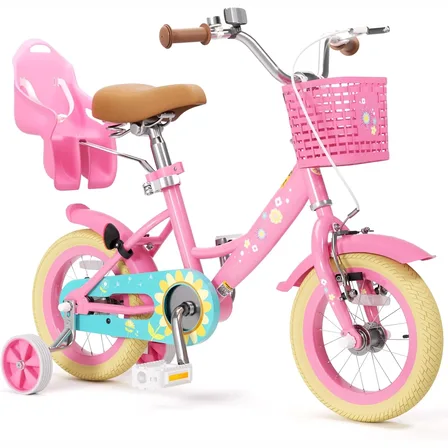
Flower Pink XJD Girls Bike with Doll Seat & Basket
The XJD Flower Pink girls' bike is made for riders 71–122 cm tall (roughly ages …$69.99
-

Kids Bike Helmet by XJD for Girls – Pink
The XJD Kids Bike Helmet in Pink is a lightweight multi-sport helmet for girls r…$59.99
$99 -

Light Purple XJD Toddler Bike Helmet, Adjustable, Size XS (46–51 cm)
This Light Purple XJD toddler bike helmet is made for the smallest riders — the …$20.39