

What the difference between boy and girl bikes
The main difference between boy and girl bikes is usually the label, colour or styling—not the fit a child needs. Choose by body measurements, control and confidence.
What actually matters more than the label
A bike marked for boys or girls is not automatically shaped or equipped correctly for every child in that group. Treat the label as a design description, then compare the actual wheel size, stand-over clearance, reach and controls.
Have the child try the bicycle whenever possible. They should be able to stand over it comfortably, reach the handlebar without stretching, steer with control and operate the brakes confidently. Do not choose an oversized bicycle simply to leave room for growth.
Measure the rider before comparing bikes
Measure the child's height without shoes. Also measure inseam from the floor to the crotch while the child stands upright with feet slightly apart. Height gives you a wheel-size starting point; inseam helps you judge whether the child can stand over the bike comfortably.
During a fit check, look beyond the numbers. Ask the child to hold the handlebar, turn it in both directions and demonstrate that they can reach and use the brake controls. A suitable size should feel manageable at the child's current confidence level, not merely become manageable later.
Use wheel size only as a starting point
| Wheel size | Starting age | Rider height |
|---|---|---|
| 12 Inch | 3–4 | 34–40 in / 86–102 cm |
| 14 Inch | 3–6 | 37–45 in / 94–114 cm |
| 16 Inch | 4–7 | 40–48 in / 102–122 cm |
| 18 Inch | 5–9 | 43–52 in / 109–132 cm |
| 20 Inch | 7–12 | 48–60 in / 122–152 cm |
| 24 Inch | 10–14 | 54–64 in / 137–163 cm |
| 26 Inch | Youth and adults | Over 60 in / 153 cm |
Overlapping ranges are normal. If a child's height falls into two rows, compare both sizes in person rather than choosing by gender or age. Prioritize measured height, inseam, comfortable reach, brake control and current riding confidence.
How the supplied bikes clarify the comparison
The two catalog options are useful because both exact titles explicitly include boys and girls, yet they represent different categories. That shows why the meaningful comparison is category, available wheel size and individual fit—not whether the listing is informally called a boy bike or a girl bike.
 XJD Kids' Training Wheel Bike for Boys & Girls, 12/14/16 Inch – White
A Training Wheel Bike offered in 12 Inch, 14 Inch and 16 Inch SKU labels for boys and girls; relevant only when one of those sizes passes the rider's individual fit check.
 XJD Boys & Girls BMX Bike with Training Wheels, 12/14/16" – Blue
A Kids' BMX Bike with training wheels, labeled for boys and girls and offered in 12 Inch, 14 Inch and 16 Inch sizes; compare category and fit rather than gender wording.
XJD Kids' Training Wheel Bike for Boys & Girls, 12/14/16 Inch – White is categorized as a Training Wheel Bike and is offered with 12 Inch, 14 Inch and 16 Inch SKU labels. It is relevant when those wheel-size starting points suit the child's measurements and a training-wheel category is being considered.
XJD Boys & Girls BMX Bike with Training Wheels, 12/14/16" – Blue is categorized as a Kids' BMX Bike and also has 12 Inch, 14 Inch and 16 Inch SKU labels. Compare it when the Kids' BMX Bikes category is relevant and one of those sizes passes the child's individual fit check.
Neither supplied title provides enough information to compare weight, materials, brake type, load limits or detailed geometry. Do not infer those features from colour, category or gender wording. Check the exact product information and manual, and use a qualified bicycle mechanic for assembly, compatibility, maintenance or torque questions not answered there.
When these products are not relevant
These catalog options are not substitutes when the fit check points to 18, 20, 24 or 26 Inch wheels; their supplied SKU labels stop at 16 Inch. They are also not automatically suitable merely because the child falls within an age band. If stand-over clearance, reach or brake operation is poor, compare a different bicycle or size.
Likewise, training wheels appear in both supplied product titles, so these choices are most relevant when that feature fits the family's current plan. The catalog facts do not establish how the training wheels adjust, when they should be removed or whether separate parts are compatible. Follow the exact manual or consult a qualified bicycle mechanic.
Make the boy-versus-girl decision
- Ignore the gender label during the first fit comparison.
- Measure height and inseam, then identify one or two candidate wheel sizes from the table.
- Have the child try each candidate and check stand-over clearance, reach, steering, brake control and confidence.
- Compare category and verified features only after both bikes fit properly.
- Choose the design the child likes from the options that pass every fit check.
Add a properly fitting bicycle helmet that sits level, with straps used according to the helmet manufacturer's instructions. The final answer to “boy or girl bike?” is therefore simple: select the correctly sized, controllable bike the child is comfortable riding, regardless of the label.
Bikes for your next adventure
-
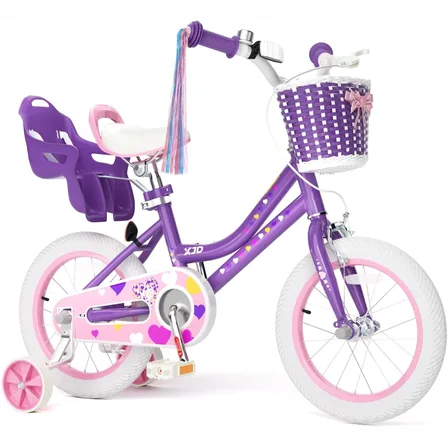
XJD Light Purple Girls Bike with Basket, Training Wheels, 12/14/16/20 Inch
The XJD Girls Bike with Basket in Light Purple is a single-speed training-wheel …$99.99
$119.99 -
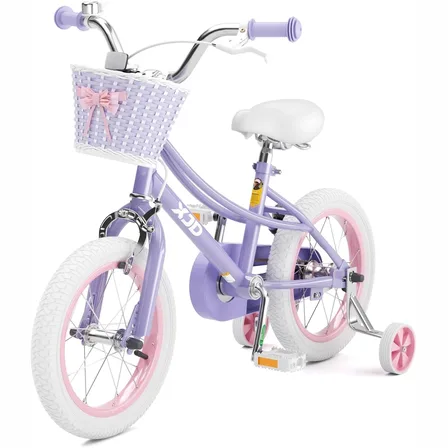
Girls' Training Wheel Bike by XJD with Basket – Purple
If you're shopping for a first bike for a girl roughly 3 to 12 years old (91–152…$75.99
-

Pink 12/14/16/20" XJD Girls Bike with Training Wheels & Basket
The Pink XJD Girls Bike with Training Wheels & Basket is a first-bike pick f…$65.99
$75.99