

Where to pick up girls on bikes
Pick up a girls’ bike only where the rider can try it for fit, or where returns and exchanges can be confirmed before ordering. XBikes has not supplied a physical pickup location for this page, so check the storefront’s current collection or delivery details rather than assuming local pickup is available.
Measure the rider before choosing a bike
Measure the child’s standing height without shoes. Then measure inseam from the floor to the crotch while the child stands straight with feet slightly apart. Height provides the XBikes wheel-size starting point; inseam helps you judge whether the child can stand over the bicycle comfortably.
Do not choose from age alone. The American Academy of Pediatrics advises having the child try the bicycle and avoiding an oversized bike bought merely for future growth. On the actual bike, check that the rider can stand over it, reach the handlebar without stretching, steer confidently and operate the brakes comfortably.
Use wheel size as a starting point
| Wheel size | Starting age | Rider height |
|---|---|---|
| 12 Inch | 3–4 | 34–40 in / 86–102 cm |
| 14 Inch | 3–6 | 37–45 in / 94–114 cm |
| 16 Inch | 4–7 | 40–48 in / 102–122 cm |
| 18 Inch | 5–9 | 43–52 in / 109–132 cm |
| 20 Inch | 7–12 | 48–60 in / 122–152 cm |
| 24 Inch | 10–14 | 54–64 in / 137–163 cm |
| 26 Inch | Youth and adults | Over 60 in / 153 cm |
Overlapping ranges are normal and do not make two sizes equivalent. When a rider falls into an overlap, compare both sizes in person if possible. Favor the bicycle on which the child has better stand-over room, reach, brake control and confidence—not the larger number or broader age label.
Where should you collect or buy it?
A suitable place is one that permits a meaningful fit check before the bike is used. A bicycle shop can help position the child and identify obvious reach or control problems. For an online order or collection point, confirm the exact model and wheel-size label, inspect the bike on receipt, and keep the exchange route clear until the rider has tried it.
Do not treat a convenient pickup location as evidence that the bike fits. If the child cannot stand over the frame comfortably, looks stretched toward the handlebar, cannot use the brakes reliably or feels intimidated, pause and compare another size. Questions about assembly, adjustments, torque, maintenance, load limits or compatibility should be answered by the exact product manual or a qualified bicycle mechanic.
How the supplied XBikes options compare
The two supplied catalog options are relevant when measurements point toward a 12, 14 or 16 Inch training-wheel bike. They let you compare the same three wheel-size labels within the Training Wheel Bikes category, but the titles alone do not establish individual fit, braking ability or readiness.
Blue XJD Girls Bike with Training Wheels – 12/14/16 Inch is cataloged as a Training Wheel Bike with 12 Inch, 14 Inch and 16 Inch SKU labels. XJD Kids' Training Wheel Bike for Boys & Girls, 12/14/16 Inch – White is also cataloged as a Training Wheel Bike with those same three available size labels. Choose between their size variants only after matching the rider’s measured height and completing the physical checks.
These particular catalog options help answer the title because they provide girls’ or boys-and-girls training-wheel choices across the three smallest supplied XBikes starting sizes, making them relevant comparison points for riders whose measurements fall within those ranges.
 Blue XJD Girls Bike with Training Wheels – 12/14/16 Inch
A girls’ Training Wheel Bike offered with 12 Inch, 14 Inch and 16 Inch SKU labels; relevant only when the rider’s measurements and hands-on fit check support one of those sizes.
 XJD Kids' Training Wheel Bike for Boys & Girls, 12/14/16 Inch – White
A boys-and-girls Training Wheel Bike with 12 Inch, 14 Inch and 16 Inch SKU labels, useful as a comparison when measured height and individual control checks point to those sizes.
If measurements indicate 18, 20, 24 or 26 Inch, neither supplied product offers that exact wheel-size label. In that case, the listed products are nearest-size comparison points only—not substitutes for the required size. Look for the measured size elsewhere in the storefront and repeat the same fit check.
Check control and confidence before leaving
- Confirm the selected SKU label matches the wheel size you intended to evaluate.
- Have the child stand over the bicycle and check that the frame does not obstruct a comfortable stance.
- Watch the rider reach the handlebar, turn it both ways and operate the brakes without straining.
- Ask whether the bike feels manageable, then observe a controlled start, stop and turn in a traffic-free area.
- If any check fails, do not rely on training wheels or future growth to correct the mismatch.
A properly fitting bicycle helmet is also essential. The U.S. Consumer Product Safety Commission advises that it fit properly, sit level and use its straps according to the helmet manufacturer’s instructions.
Make the pickup decision
Measure height and inseam first, identify the starting wheel size, and arrange pickup only after confirming that the selected size can be tried or exchanged. Take home the girls’ bike only when the rider—not merely the age chart—shows comfortable stand-over, easy reach, reliable brake control and present-day confidence.
Bikes for your next adventure
-
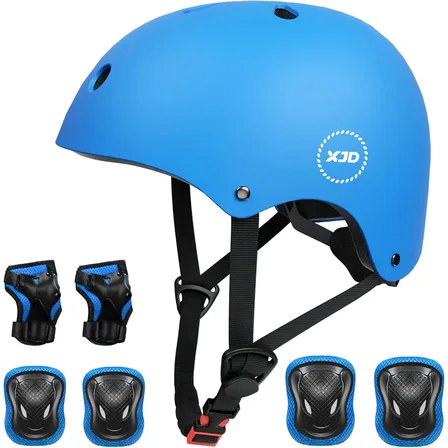
Blue XJD Helmet & Protective Gear Set for Kids, Sizes S/M
The Blue XJD Helmet & Protective Gear Set is made for kids roughly 3 to 8 years …$23.79
-
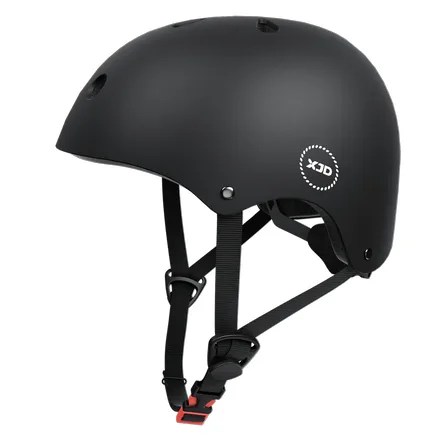
7-in-1 Kids Helmet & Protective Gear Set from XJD – Black or Blue
If you're outfitting one kid (or a couple of siblings) for biking, scootering, o…$59.99
-

Pink 12/14/16/20" XJD Girls Bike with Training Wheels & Basket
The Pink XJD Girls Bike with Training Wheels & Basket is a first-bike pick f…$65.99
$75.99