

Which bike is best for girls
The best bike for a girl is the correctly sized bike she can stand over, reach, steer and brake confidently—not a larger bike chosen for growth.
Start with her measurements, not the label
Measure the rider’s height without shoes, then measure her inseam from the floor to the crotch. Use height to identify a likely wheel size, but confirm the choice on the actual bicycle. Age is only a starting point because children of the same age can have very different proportions and confidence levels.
When she tries the bike, check that she can stand over it comfortably, reach the handlebars without stretching, turn the bars without losing balance and operate the brakes with control. The American Academy of Pediatrics advises having the child try the bicycle and avoiding an oversized bike bought merely to allow room for growth.
Compare the likely wheel sizes
Use these XBikes ranges to narrow the search. They are starting points, not a replacement for an individual fit check.
| Wheel size | Starting age | Rider height |
|---|---|---|
| 12 Inch | 3–4 | 34–40 in / 86–102 cm |
| 14 Inch | 3–6 | 37–45 in / 94–114 cm |
| 16 Inch | 4–7 | 40–48 in / 102–122 cm |
| 18 Inch | 5–9 | 43–52 in / 109–132 cm |
| 20 Inch | 7–12 | 48–60 in / 122–152 cm |
| 24 Inch | 10–14 | 54–64 in / 137–163 cm |
| 26 Inch | Youth and adults | Over 60 in / 153 cm |
Where ranges overlap, do not automatically choose the larger wheel. Compare stand-over clearance, seated reach, brake control and how calmly she starts, turns and stops. A smaller option that gives her full control is preferable to a larger one she will supposedly grow into.
What should feel right during a trial
A suitable bike should let the rider adopt a relaxed position rather than leaning or stretching to reach the controls. Ask her to show that she can manage the bike instead of relying only on an adult’s visual judgment.
- Stand-over: She should be able to straddle the bicycle comfortably rather than being forced onto tiptoes by an oversized frame.
- Reach: Her hands should meet the handlebars naturally, with enough freedom to steer through a controlled turn.
- Braking: She must be able to reach and use the fitted braking controls reliably.
- Confidence: Starting, stopping and changing direction should look deliberate, not hurried or fearful.
If any of these checks fail, compare a different size or design. Do not try to solve poor fit with an invented adjustment procedure; follow the exact product manual or ask a qualified bicycle mechanic.
When the supplied girls’ bikes are relevant
The two catalog options are relevant when the fit check points to a 12, 14 or 16 Inch bike and training wheels suit the rider’s current confidence. They help compare the same three available size labels in two color choices.
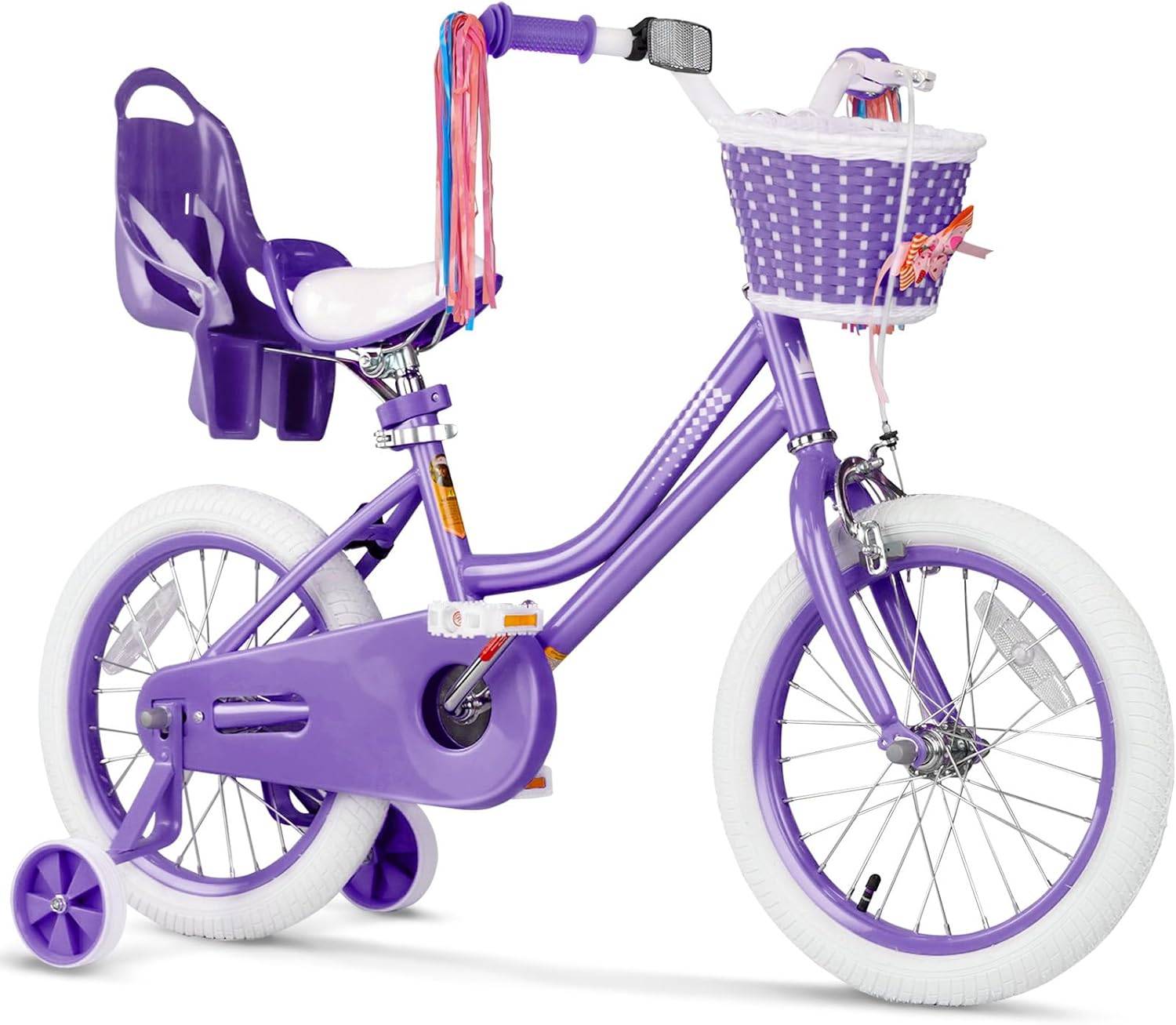 XJD Girls Bike for Kids Ages 3-8, 12/14/16 Inch with Training Wheels – Purple
A purple training-wheel bike available in 12 Inch, 14 Inch and 16 Inch labels. Its title’s age wording is a catalog label; confirm size through measured height and an individual fit check.
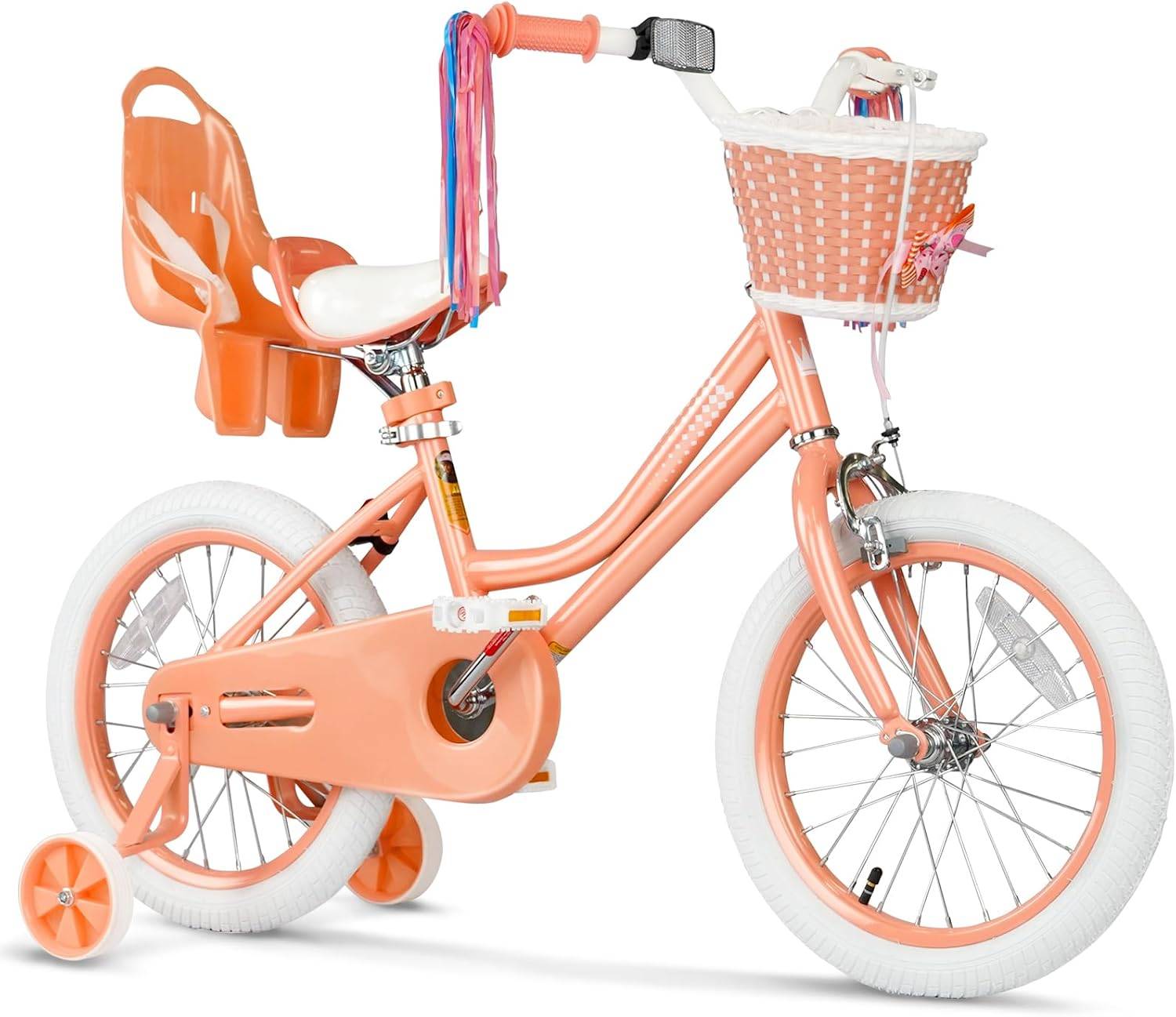 Girls 12/14/16 Inch Kids Bike by XJD with Training Wheels – Peach
A peach training-wheel bike offered with 12 Inch, 14 Inch and 16 Inch labels. It is relevant when one of those sizes fits and training wheels suit the rider’s current confidence.
XJD Girls Bike for Kids Ages 3-8, 12/14/16 Inch with Training Wheels – Purple is a training-wheel bike offered with 12 Inch, 14 Inch and 16 Inch labels. The age wording in its title is a catalog label, not proof of fit; use the XBikes height ranges and an actual trial.
Girls 12/14/16 Inch Kids Bike by XJD with Training Wheels – Peach is also a training-wheel bike with 12 Inch, 14 Inch and 16 Inch labels. On the supplied facts, its distinguishing catalog detail is the peach color rather than a verified fit or performance difference.
Neither supplied product is the right comparison if her measurements and trial indicate 18, 20, 24 or 26 Inch wheels. In that case, these products are smaller-size reference points, not substitutes; another wheel size is not equivalent merely because the style appeals to her.
Decide whether training wheels match her stage
Training wheels can make these particular catalog options relevant for a rider who currently needs that configuration. They should not override fit, reach or brake control. If she already rides confidently without them, compare bikes suited to that ability rather than assuming a girls’ color or title determines the best design.
For assembly, adjustments, maintenance, load limits, compatibility and torque, follow the manual for the exact product. If the instructions are unavailable or the setup is uncertain, use a qualified bicycle mechanic rather than guessing.
Complete the choice with a helmet check
A correctly sized bicycle still requires a properly fitting bicycle helmet. The U.S. Consumer Product Safety Commission advises that the helmet sit level and that its straps be used according to the helmet manufacturer’s instructions. Check helmet fit each time she rides.
Measure her height and inseam now, shortlist the matching wheel range, and arrange a hands-on fit check. Choose the girls’ bike she can control today; if 12, 14 or 16 Inch is confirmed and training wheels are appropriate, compare the purple and peach catalog options by preferred color.
Bikes for your next adventure
-

Kids Bike Helmet by XJD for Boys & Girls – Black, Blue, Green, Pink, Purple
The XJD Kids Bike Helmet covers a wide 2-to-8-year age range thanks to two head-…$59.99
-
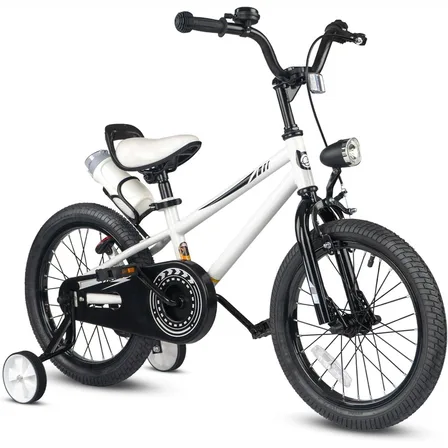
XJD Kids' Training Wheel Bike for Boys & Girls, 12/14/16 Inch – White
The XJD kids' training wheel bike in White is made for riders ages 3–8 (roughly …$169
$199 -

Pink 12/14/16/20" XJD Girls Bike with Training Wheels & Basket
The Pink XJD Girls Bike with Training Wheels & Basket is a first-bike pick f…$65.99
$75.99