

Why are boy bikes and girl bikes different
Boy bikes and girl bikes are usually different because of styling, color, accessories and sometimes frame shape—not because children need gender-specific bicycles.
What actually makes the labels different?
“Boys’ bike” and “girls’ bike” are mainly catalog or design labels. A manufacturer may use different colors, graphics, themes, accessories or frame profiles to appeal to different shoppers. Traditional girls’ models sometimes use a lower or more open frame shape, while traditional boys’ models may use a straighter top tube.
Those conventions do not determine which bicycle a child can ride. What matters is whether the individual bicycle fits the child’s body, provides a comfortable riding position and lets the child control it confidently. Any child can choose either label or style.
Measure the rider before comparing bikes
Measure the child’s standing height and inseam without relying on age alone. To measure inseam, have the child stand in shoes with feet slightly apart, place a book firmly between the legs like a saddle, and measure from the floor to the book’s top edge.
Then have the child try the actual bicycle. Check that the child can stand over it with comfortable clearance, get on and off without struggling, reach the handlebars without stretching, steer smoothly and operate the brakes with control. Current confidence matters too: a cautious beginner may need a more reassuring fit than an experienced rider of the same height.
Do not choose an oversized bicycle simply to allow room for growth. A bike that is too large can make mounting, stopping, steering and reaching the controls harder.
Use wheel size only as a starting point
XBikes uses these age and height ranges as initial comparison points. Height is more useful than age, but neither replaces an individual fit check.
| Wheel size | Starting age | Rider height |
|---|---|---|
| 12 Inch | 3–4 | 34–40 in / 86–102 cm |
| 14 Inch | 3–6 | 37–45 in / 94–114 cm |
| 16 Inch | 4–7 | 40–48 in / 102–122 cm |
| 18 Inch | 5–9 | 43–52 in / 109–132 cm |
| 20 Inch | 7–12 | 48–60 in / 122–152 cm |
| 24 Inch | 10–14 | 54–64 in / 137–163 cm |
| 26 Inch | Youth and adults | Over 60 in / 153 cm |
Overlap between ranges is normal. When a child falls into two ranges, compare both actual bikes rather than automatically choosing the larger one. Stand-over clearance, reach, brake control and confidence should settle the decision.
Compare fit, not the boy-or-girl label
Place candidate bikes side by side and use the same practical test for each:
- Confirm that the wheel size is a sensible starting point for the rider’s measured height.
- Check whether the child can stand over the frame and mount or dismount comfortably.
- Watch for an easy, natural reach to the handlebars rather than locked arms or a forward stretch.
- Make sure the child can steer and operate the brakes confidently while maintaining control.
- Ask which design the child genuinely likes, once both options pass the fit check.
A lower-looking frame may make mounting easier for one rider, but the label alone cannot prove that it will fit better. Likewise, color, graphics and accessories can influence preference without changing the essential fit decision.
How the supplied XBikes option relates
The XJD Boys & Girls BMX Bike with Training Wheels, 12/14/16" – Blue is especially relevant because its exact catalog title includes both boys and girls. Its available 12 Inch, 14 Inch and 16 Inch labels provide three adjacent wheel-size comparison points, showing that rider size—not a gender label—should lead the choice. These facts do not establish geometry, brake type, materials or suitability for a particular child.

Use the 12 Inch option as a starting point for heights of 34–40 in / 86–102 cm, the 14 Inch option for 37–45 in / 94–114 cm, and the 16 Inch option for 40–48 in / 102–122 cm. Where those bands overlap, try the relevant sizes and compare control directly. For assembly, adjustment, compatibility, load limits, maintenance and torque requirements, follow the exact product manual or consult a qualified bicycle mechanic.
Make the final decision
First eliminate any bicycle the child cannot comfortably stand over, reach or control. Among the bikes that fit, let the child choose the styling and frame appearance they prefer, regardless of whether a store calls it a boys’ or girls’ model.
Before riding, provide a bicycle helmet that fits properly, sits level and has its straps adjusted according to the helmet manufacturer’s instructions. The useful answer to “Why are boy bikes and girl bikes different?” is therefore simple: appearance and tradition may differ, but measured fit and confident control should decide which bike your child rides.
Bikes for your next adventure
-
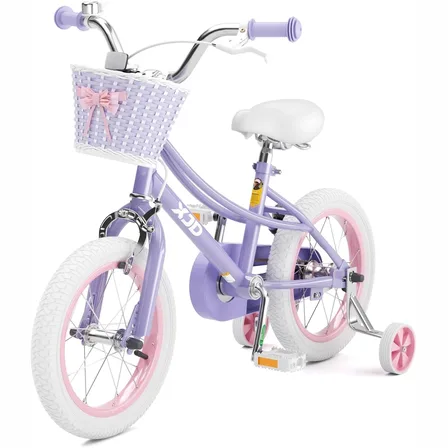
Girls' Training Wheel Bike by XJD with Basket – Purple
If you're shopping for a first bike for a girl roughly 3 to 12 years old (91–152…$75.99
-
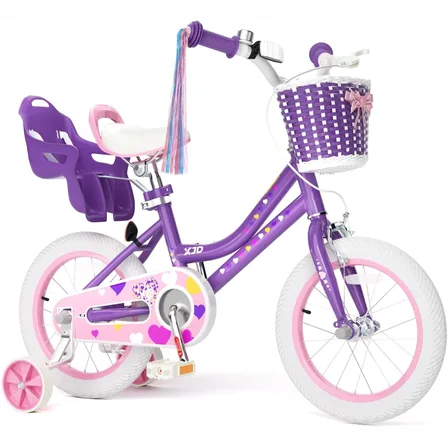
XJD Light Purple Girls Bike with Basket, Training Wheels, 12/14/16/20 Inch
The XJD Girls Bike with Basket in Light Purple is a single-speed training-wheel …$99.99
$119.99 -

Pink 12/14/16/20" XJD Girls Bike with Training Wheels & Basket
The Pink XJD Girls Bike with Training Wheels & Basket is a first-bike pick f…$65.99
$75.99