

Why are girls bikes different
Girls’ bikes are usually different because of styling, colours, accessories or frame shape—not because girls need a fundamentally different kind of bicycle.
What “girls’ bike” actually means
The label is mainly a way to describe a design theme. A manufacturer may use particular colours, graphics, baskets or doll seats, and some models may have a lower or more sloping top tube. None of those features creates a universal girls-only fit standard.
Children of the same height can have different inseams, arm lengths and confidence levels. For that reason, compare the individual bicycle with the individual rider instead of choosing by gender label or age alone. A correctly fitting bike that the child can control is more important than whether its catalogue description says “girls.”
Measure before comparing designs
First measure the child’s standing height without shoes. Then measure inseam from the floor to the crotch while the child stands naturally. Use height to identify a starting wheel size, but have the child try the bicycle before buying it.
During the fit check, look at four practical points:
- Stand-over: the child should be able to straddle the bicycle with appropriate clearance rather than being forced onto tiptoes.
- Reach: the handlebars should be reachable without an exaggerated stretch or locked arms.
- Brake control: if hand brakes are fitted, the child must be able to reach and operate them confidently.
- Confidence: starting, steering, stopping and getting off should feel manageable at the child’s present skill level.
Do not move up to an oversized bicycle merely to leave room for growth. If the child cannot control the larger option now, its longer useful life does not make it an appropriate fit.
Use wheel size only as a starting point
| Wheel size | Starting age | Rider height |
|---|---|---|
| 12 Inch | 3–4 | 34–40 in / 86–102 cm |
| 14 Inch | 3–6 | 37–45 in / 94–114 cm |
| 16 Inch | 4–7 | 40–48 in / 102–122 cm |
| 18 Inch | 5–9 | 43–52 in / 109–132 cm |
| 20 Inch | 7–12 | 48–60 in / 122–152 cm |
| 24 Inch | 10–14 | 54–64 in / 137–163 cm |
| 26 Inch | Youth and adults | Over 60 in / 153 cm |
These ranges overlap because age and height do not predict proportions or riding ability perfectly. Start with measured height, then resolve any overlap by checking inseam, reach, brake operation and confidence on the actual bicycle.
What to compare besides the label
Once likely wheel size is known, compare the actual frame’s stand-over clearance and riding position. Examine whether included accessories suit how the child expects to use the bike, but do not let appearance outweigh control. A basket or doll seat can make one design more appealing without changing the fit requirement.
Also distinguish the bicycle’s configuration from its gendered presentation. Training wheels, for example, describe a riding setup rather than a reason the bike fits girls differently. For assembly, adjustments, accessory compatibility, load limits and maintenance, follow the exact product manual or ask a qualified bicycle mechanic; those details cannot be inferred from a title.
How the supplied girls’ bikes compare
The supplied options help illustrate what the “girls’ bike” label can describe: all three are catalogued as Training Wheel Bikes, all offer 12 Inch, 14 Inch and 16 Inch SKU labels, and their titles distinguish colour plus basket and doll-seat accessories. They are relevant only if the rider’s measurements and individual fit check point to one of those wheel sizes.
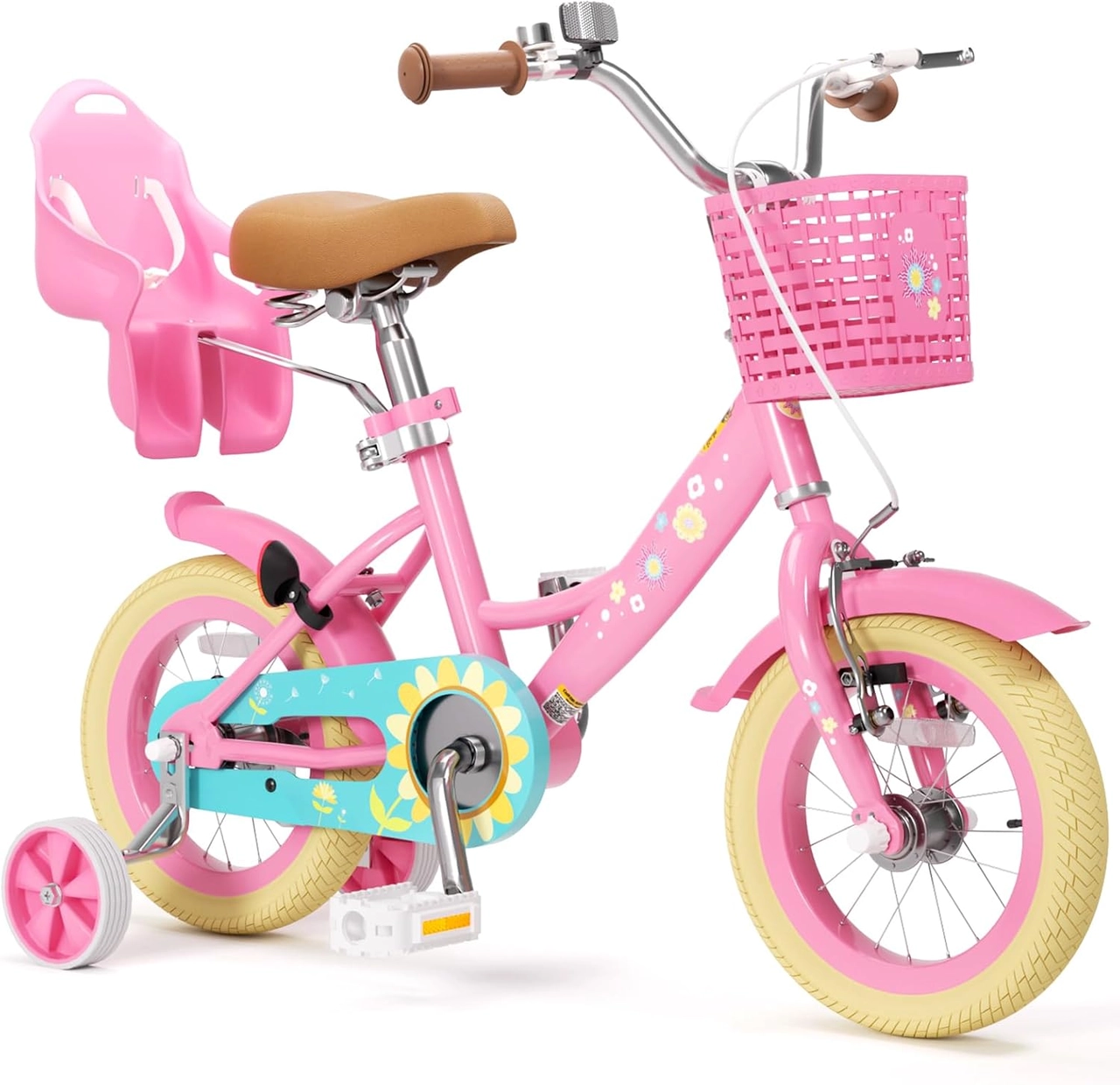 Flower Pink XJD Girls Bike with Doll Seat & Basket
A Training Wheel Bike offered in 12 Inch, 14 Inch and 16 Inch labels, with a flower-pink presentation plus a doll seat and basket named in the title.
 Purple XJD Girls' Bike with Doll Seat & Basket
This purple Training Wheel Bike provides 12 Inch, 14 Inch and 16 Inch size labels and includes a doll seat and basket according to its catalog title.
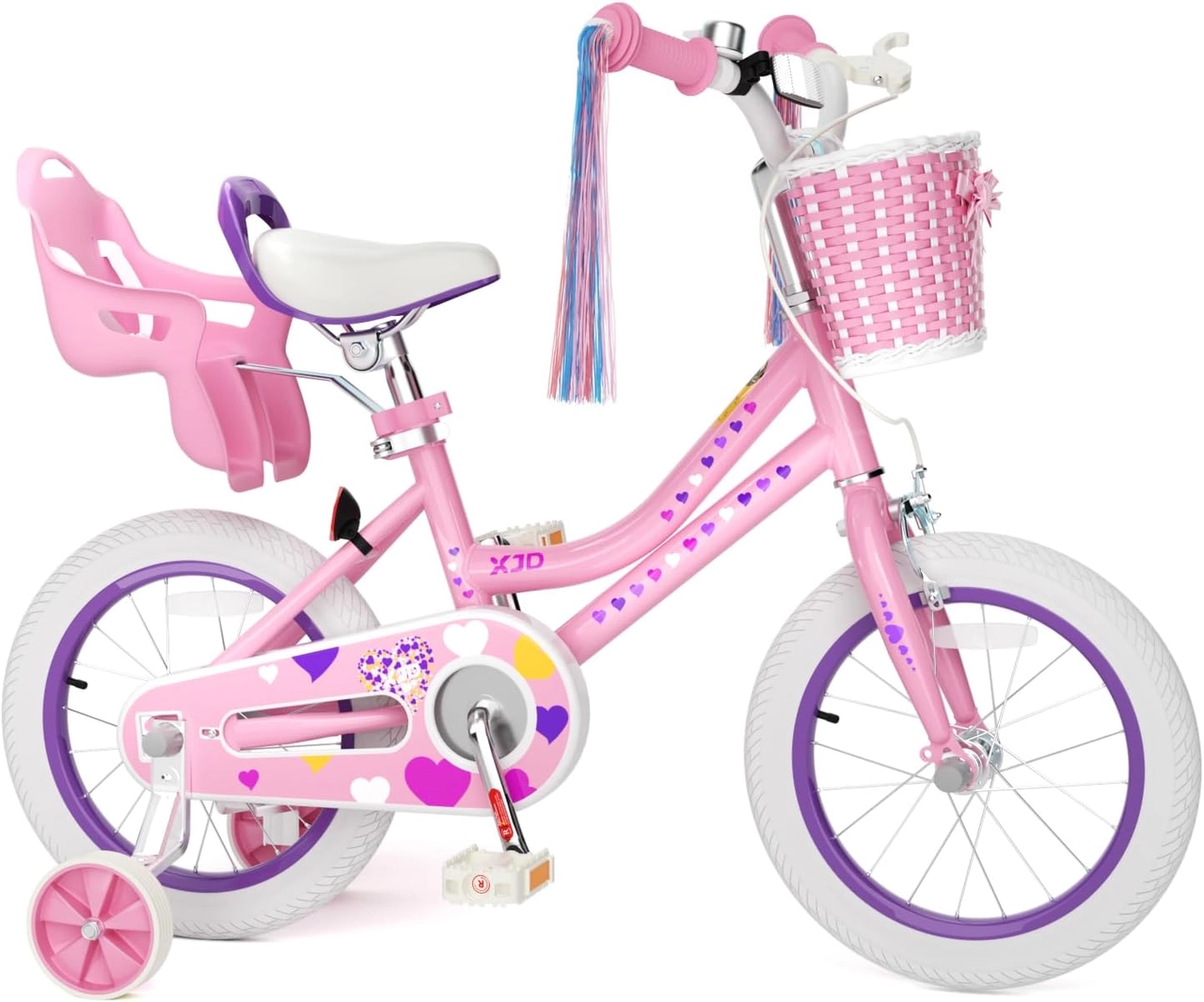 Pink Girls' 12/14/16" Bike by XJD – Basket & Doll Seat
A pink Training Wheel Bike with listed 12 Inch, 14 Inch and 16 Inch choices; its catalog title identifies a basket and doll seat.
Flower Pink XJD Girls Bike with Doll Seat & Basket is offered with 12 Inch, 14 Inch and 16 Inch labels. Purple XJD Girls' Bike with Doll Seat & Basket has the same listed size choices, with a purple presentation. Pink Girls' 12/14/16" Bike by XJD – Basket & Doll Seat likewise lists those three sizes and names the same accessory types.
The supplied facts do not establish differences in weight, frame geometry, materials, brakes, durability or certification, so those qualities should not be assumed from the names. If measurements indicate 18 Inch, 20 Inch, 24 Inch or 26 Inch, these products are nearest-size comparison points only—not substitutes for the required wheel size.
Make the decision in this order
- Measure height and inseam.
- Use the XBikes ranges to shortlist a wheel size.
- Have the child try that size and check stand-over, reach, braking and present confidence.
- Only after fit is confirmed, choose among colours and useful accessories.
- Fit a bicycle helmet so it sits level, fits properly and uses its straps according to the helmet manufacturer’s instructions.
The practical answer is simple: choose a girls’ bike only when its look or accessories suit the child, but choose its size and setup by measurements and demonstrated control.
Bikes for your next adventure
-

Kids Bike Helmet by XJD for Boys & Girls – Black, Blue, Green, Pink, Purple
The XJD Kids Bike Helmet covers a wide 2-to-8-year age range thanks to two head-…$59.99
-

Kids Bike Helmet by XJD for Girls – Pink
The XJD Kids Bike Helmet in Pink is a lightweight multi-sport helmet for girls r…$59.99
$99 -

XJD Kids Bike for Girls – Pink, 12/14/16/20 Inch with Training Wheels
The XJD Kids Bike for Girls in Pink is a training-wheel bike built to carry your…$139
$159